
Gustav Stresemann Biography Quotes 31 Report mistakes
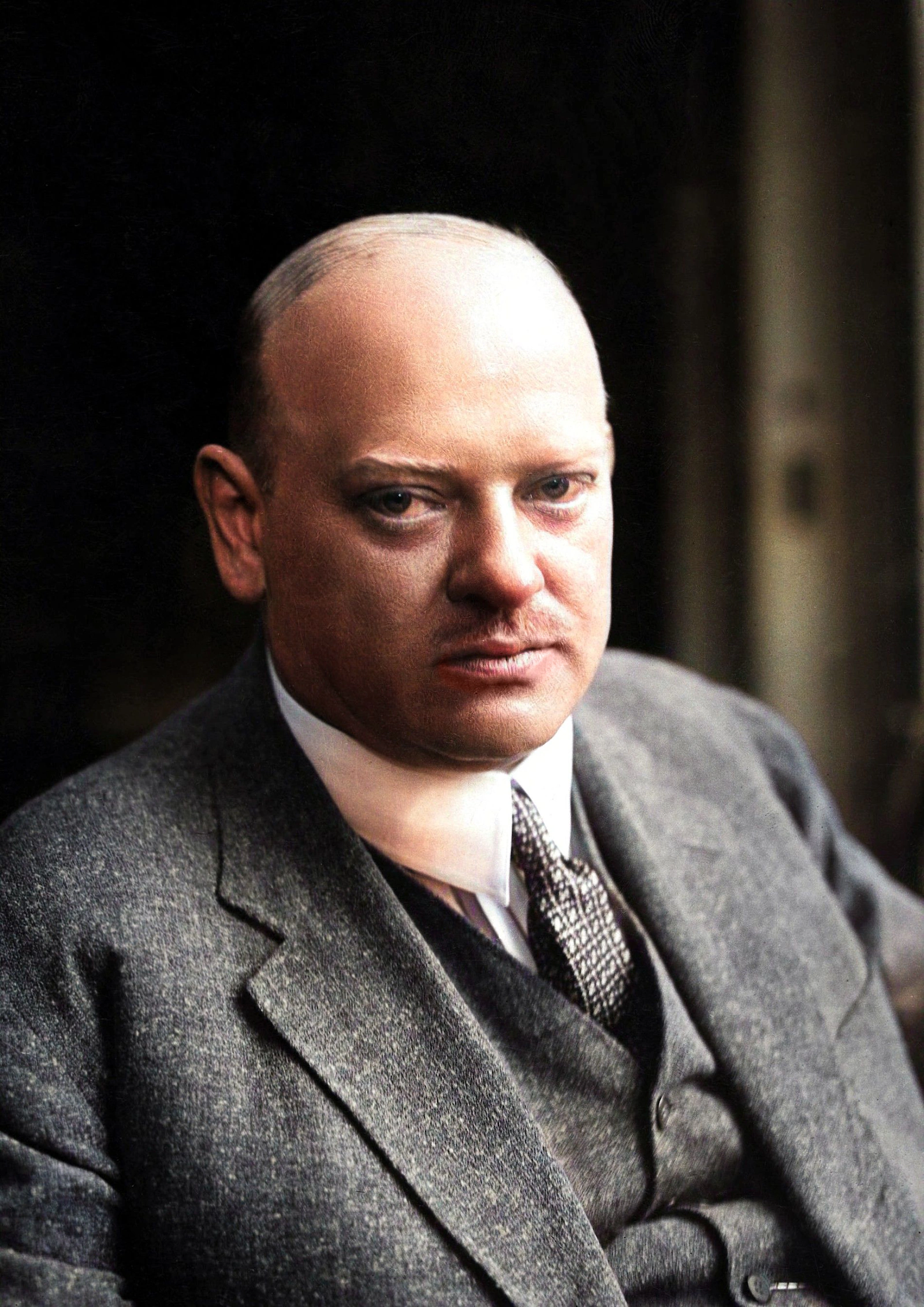
| 31 Quotes | |
| Born as | Gustav Ernst Stresemann |
| Occup. | Politician |
| From | Germany |
| Spouse | Käte Kleefeld |
| Born | May 10, 1878 Berlin, German Empire |
| Died | October 3, 1929 Berlin, Weimar Republic |
| Cause | Stroke |
| Aged | 51 years |
| Cite | |
Citation Formats
APA Style (7th ed.)
Gustav stresemann biography, facts and quotes. (2026, February 11). FixQuotes. https://fixquotes.com/authors/gustav-stresemann/
Chicago Style
"Gustav Stresemann biography, facts and quotes." FixQuotes. February 11, 2026. https://fixquotes.com/authors/gustav-stresemann/.
MLA Style (9th ed.)
"Gustav Stresemann biography, facts and quotes." FixQuotes, 11 Feb. 2026, https://fixquotes.com/authors/gustav-stresemann/. Accessed 25 Mar. 2026.
Early Life and Background
Gustav Ernst Stresemann was born on May 10, 1878, in Berlin, in the Kingdom of Prussia, to a lower-middle-class family whose small business life exposed him early to the anxieties and ambitions of urban Germany. Growing up in the imperial capital during the Wilhelmine years, he absorbed a world that prized national strength, industrial expansion, and social discipline, but also simmered with labor conflict and the rise of mass politics. This was the atmosphere that would later make him both a nationalist by instinct and a pragmatist by necessity.The young Stresemann learned to read Germany through its institutions: shop floors and street life, party newspapers, and the new power of organized interests. He was not born into aristocratic certainty, and that mattered. His hunger for recognition helped form a politician unusually attentive to reputation, bargaining, and the psychology of opponents - a man who would later argue for Germany abroad while trying to steady a fragile republic at home.
Education and Formative Influences
Stresemann studied economics, history, and political science, earning a doctorate and gravitating toward the liberal-national camp that tried to reconcile market modernity with national cohesion. Before national fame, he worked in business and as a lobbyist-organizer for industrial and commercial interests, experiences that trained him in negotiation and in the hard arithmetic of trade, credit, and employment. The intellectual backdrop was the belief that Germany belonged among great powers, yet his practical schooling came from committees, contracts, and the constant need to build coalitions inside a divided society.Career, Major Works, and Turning Points
A Reichstag deputy before World War I, Stresemann supported wartime aims and spoke the language of national power; the defeat of 1918 forced a remaking. He helped found the German People's Party (DVP) and, after years of turmoil, became chancellor in August 1923 at the crisis peak of hyperinflation and Ruhr occupation. Though his chancellorship was brief, it anchored a decisive turn: ending passive resistance in the Ruhr, backing currency stabilization through the Rentenmark, and moving toward a diplomacy that traded recognition for relief. As foreign minister from 1923 to 1929, he made his central wager - that Germany could revise Versailles not by revolt but by patient reintegration. The Dawes Plan (1924) restructured reparations and opened credit; the Locarno Treaties (1925) secured Germany's western borders and unlocked trust; Germany entered the League of Nations in 1926; and the Kellogg-Briand Pact (1928) reflected the era's legalist hopes. He shared the 1926 Nobel Peace Prize with Aristide Briand, even as he privately insisted that reconciliation was the route to national recovery, not a renunciation of German interests.Philosophy, Style, and Themes
Stresemann's inner life was a tension between wounded patriotism and disciplined realism. He carried the trauma of collapse as a psychological datum: “As a result of the World War, this old Germany collapsed. It collapsed in its constitution, in its social order, in its economic structure. Its thinking and feeling changed”. The line is less lament than diagnosis - a recognition that statecraft after 1918 required rebuilding legitimacy, not merely reclaiming territory. His diplomacy treated morale, currency, and international standing as one system, each capable of tipping the others into catastrophe.His governing theme was synthesis, not purity: “To contrast national solidarity and international cooperation as two opposites seems foolish to me”. In practice, that meant binding Germany to European frameworks so that revision of Versailles could be pursued as a legal and economic process, not a military one. Yet his style was never sentimental; he understood hierarchy and humiliation as forces in international politics, admitting, “For the victor peace means the preservation of the position of power which he has secured. For the vanquished it means resigning himself to the position left to him”. This cool appraisal explains both his patience and his restlessness: he sought respect for Germany without triggering the fear that would freeze Europe against it, a balancing act that demanded constant, exhausting calculation.
Legacy and Influence
Stresemann died on October 3, 1929, in Berlin, months before the Wall Street crash detonated the credit system that had underwritten Weimar stabilization. His legacy is therefore double-edged: he embodied the Weimar Republic's most sophisticated bid to survive through economic stabilization and international reconciliation, yet his achievements proved dependent on conditions he could not control and on a domestic coalition he could not permanently hold together. Later democrats remembered him as the model of "revision through integration"; later nationalists recast him as either insufficiently hard or strategically farsighted. In European memory, he endures as a statesman who tried to convert defeat into leverage, and who understood that Germany's future power would have to be rebuilt through trust, institutions, and time.Our collection contains 31 quotes written by Gustav, under the main topics: Truth - Writing - Leadership - Honesty & Integrity - Overcoming Obstacles.
Other people related to Gustav: Rudolf Hilferding (Economist), Rudolf Hiferding (Economist)
Source / external links