
Gustave Moreau Biography Quotes 4 Report mistakes
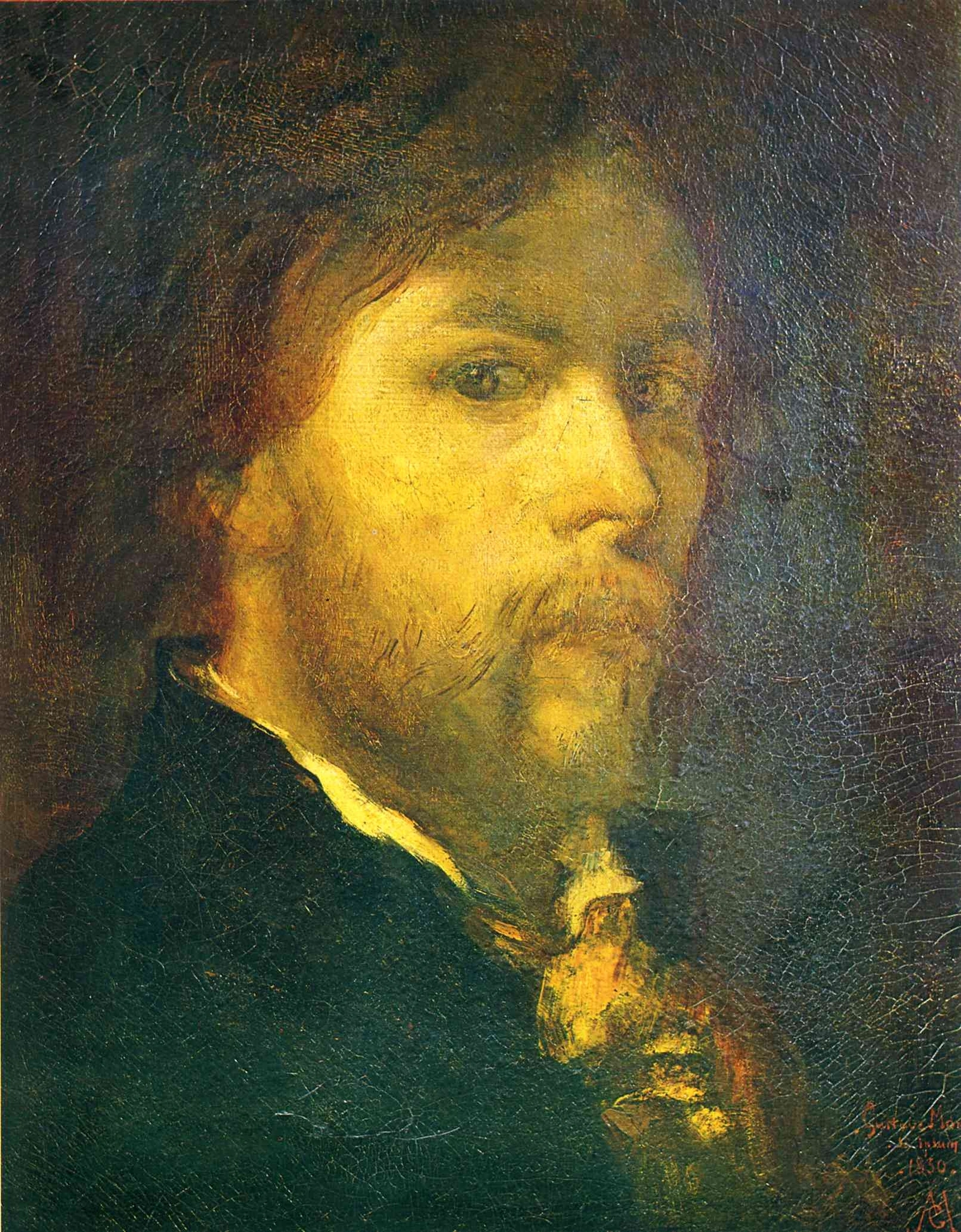
| 4 Quotes | |
| Occup. | Artist |
| From | France |
| Born | June 6, 1826 |
| Died | April 18, 1898 |
| Aged | 71 years |
| Cite | |
Citation Formats
APA Style (7th ed.)
Gustave moreau biography, facts and quotes. (2026, February 11). FixQuotes. https://fixquotes.com/authors/gustave-moreau/
Chicago Style
"Gustave Moreau biography, facts and quotes." FixQuotes. February 11, 2026. https://fixquotes.com/authors/gustave-moreau/.
MLA Style (9th ed.)
"Gustave Moreau biography, facts and quotes." FixQuotes, 11 Feb. 2026, https://fixquotes.com/authors/gustave-moreau/. Accessed 12 Feb. 2026.
Early Life and Education
Gustave Moreau was born in Paris on April 6, 1826, into a cultivated household that encouraged his artistic vocation from an early age. His father, Louis Moreau, worked as an architect and draughtsman, while his mother, Pauline Desmoutier, provided steady personal support and would remain one of the central figures in his life. Recognized for his precocious facility with drawing, he studied first with private tutors, then entered the studio of Francois-Edouard Picot, a respected academic painter, before enrolling at the Ecole des Beaux-Arts. Under Picot he learned exacting draftsmanship and the canonical hierarchy of subjects, acquiring the technical foundation that would later serve his audacious reinvention of myth, scripture, and legend in a modern key.Formative Influences and Italian Sojourn
In the 1840s and 1850s, Moreau sought out the models who would shape his language: he admired Eugene Delacroix for color, drama, and the poetry of suggestion, and he revered Theodore Chasseriau, a gifted peer slightly older than he, whose synthesis of Ingres-like line and Delacroix-inspired chromaticism left a lasting mark. The early death of Chasseriau in 1856 affected Moreau deeply; he preserved works and memories of the friend he saw as a beacon. A pivotal period followed in Italy from 1857 to 1859. In Rome, Florence, and Venice, he studied monumental cycles and drawings by Michelangelo, Leonardo, Raphael, and Correggio, absorbing the gravitas of Renaissance composition and the expressive possibilities of contour and anatomy. The notebooks and copies he made there became a lifelong resource, anchoring his imagination in a lineage he considered both sacred and inexhaustible.Rise at the Salon and the Mythic Imagination
Returning to Paris, Moreau focused on history painting, not as a record of public events but as a theater of inner states. His breakthrough came at the Salon of 1864 with Oedipus and the Sphinx, a work that announced his signature mix of archaeological detail, visionary atmosphere, and psychological tension. The acclaim positioned him as a singular talent between academic classicism and the new sensibilities of the later nineteenth century. He followed with Orpheus, the haunting image of the poet's severed head cradled by a young girl, and then with a constellation of biblical and mythic scenes: Salome Dancing before Herod, The Apparition, and the densely imagined Jupiter and Semele. Painted in oil and elaborated with jewels of color, arabesque line, and intricately patterned surfaces, these canvases proposed a Symbolist ideal before the movement had a manifesto, translating states of ecstasy, dread, temptation, and revelation into visionary tableaux.Isolation, Illustration, and the Cult of the Image
Moreau cultivated a deliberate independence from fashionable circles. Though he exhibited at the Salon, he preferred the privacy of his studio, where he amassed thousands of drawings and studies exploring alternative compositions, gestures, and ornamental systems. Watercolor became an essential medium for him, allowing crystalline precision and luminous transparency. In the 1870s and 1880s he created extensive watercolor cycles inspired by Gustave Flaubert's The Temptation of Saint Anthony and by the Fables of La Fontaine, works that reveal his literary affinities and his belief that images could amplify and transfigure a text rather than merely illustrate it. Writers such as Theophile Gautier recognized the intensity of his imaginative project, while later critics like J.-K. Huysmans and poets such as Stephane Mallarme admired the hermetic richness of his pictorial language. Their attention helped establish his reputation as a painter of inner visions, committed to the sovereignty of the symbol and the dream.Teacher and Mentor
In 1891 Moreau accepted a professorship at the Ecole des Beaux-Arts. Contrary to the rigid academic instruction often associated with that institution, he encouraged students to cultivate personal vision and to study the past as a reservoir of forms rather than a set of rules. In his studio he fostered a climate of respectful freedom that shaped a generation of artists who would define modern painting. Henri Matisse, Georges Rouault, Albert Marquet, Charles Camoin, and Henri Manguin all passed through his class, absorbing from him the conviction that color and form must answer to an inner necessity. While their later styles diverged radically from his own jeweled allegories, they credited the generosity with which he treated their experiments and the seriousness with which he discussed composition, color harmonies, and the dramatic power of line.Personal Life
Reserved and devoted to work, Moreau never married. Among the few intimate attachments that punctuated his life, none was more important than his long relationship with Alexandrine Dureux. She was a confidante and companion whose presence, letters, and shared intellectual pursuits provided emotional equilibrium during periods of intense labor and public scrutiny. Her death in 1890 was a profound loss; he honored her memory with the same quiet dignity that characterized his private habits. Family ties, especially with his mother, remained strong throughout his life, and the domestic setting of his house and studio on the rue de La Rochefoucauld became both sanctuary and cabinet of wonders.Later Years, Legacy, and the Museum
In his final decade, Moreau dedicated himself to consolidating his oeuvre and clarifying his intentions for posterity. He continued to develop ambitious allegories, culminating in late masterworks such as Jupiter and Semele, and he organized his drawings, watercolors, and canvases with a curator's foresight. He conceived his house as a museum that would allow viewers to trace the genesis of his images from quick notations to finished paintings, and he installed rooms and cabinets to display thousands of sheets. When he died in Paris on April 18, 1898, he left an immense archive of paintings and works on paper that testified to a lifelong pursuit of symbolic form and spiritual narrative. The museum he envisioned, opened a few years after his death, preserved not only the works but also the atmosphere of his studio, inviting future artists and scholars to encounter the process behind the images.Gustave Moreau's place in the history of art rests on this double legacy: his own visionary canvases, which made myth and scripture contemporary by treating them as dramas of the soul, and his influence as a teacher who emboldened younger painters to trust their imaginations. Delacroix and Chasseriau had shown him how modern sensibility could inhabit the grand tradition; Moreau, in turn, showed Matisse, Rouault, and their peers that tradition could be renewed from within by the power of symbolic invention. His biography thus traces a continuous thread from the academies and salons of mid-nineteenth-century Paris to the experimental studios that would give birth to modern art, a testament to the enduring vitality of an artist who bridged past and future through the alchemy of images.
Our collection contains 4 quotes written by Gustave, under the main topics: Art - Love - Deep.
Source / external links