
Haile Selassie Biography Quotes 10 Report mistakes
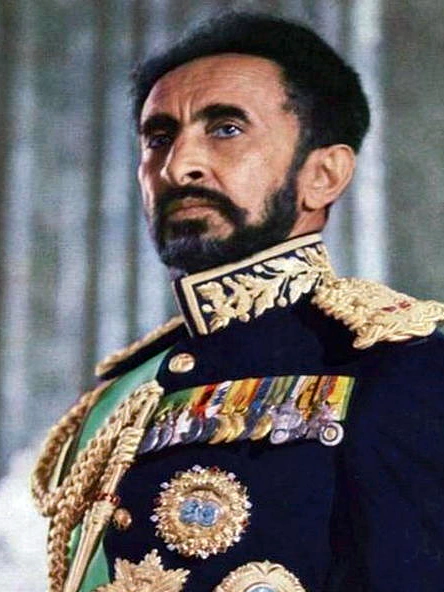
| 10 Quotes | |
| Born as | Tafari Makonnen |
| Known as | Ras Tafari, Tafari Makonnen |
| Native name | ቀዳማዊ ኃይለ ሥላሴ |
| Occup. | President |
| From | Ethiopia |
| Spouse | Menen Asfaw |
| Born | July 23, 1892 Ejersa Goro, Harar, Ethiopia |
| Died | August 27, 1975 Addis Ababa, Ethiopia |
| Cause | Assassination by strangulation |
| Aged | 83 years |
| Cite | |
Citation Formats
APA Style (7th ed.)
Haile selassie biography, facts and quotes. (2026, March 14). FixQuotes. https://fixquotes.com/authors/haile-selassie/
Chicago Style
"Haile Selassie biography, facts and quotes." FixQuotes. March 14, 2026. https://fixquotes.com/authors/haile-selassie/.
MLA Style (9th ed.)
"Haile Selassie biography, facts and quotes." FixQuotes, 14 Mar. 2026, https://fixquotes.com/authors/haile-selassie/. Accessed 3 Apr. 2026.
Early Life and Background
Haile Selassie I was born Tafari Makonnen, probably in 1892, at Ejersa Goro near Harar, in the eastern marches of the Ethiopian empire. He entered a world where dynasty, regional lordship, and sacred kingship were inseparable. His father, Ras Makonnen Wolde Mikael, was a trusted general and governor under Emperor Menelik II and one of the architects of Ethiopia's late nineteenth-century consolidation after the victory over Italy at Adwa in 1896. Through his father, Tafari belonged to the high aristocracy; through his mother, Woizero Yeshimebet Ali, he inherited a more private line of piety and courtly discipline. Orphaned young by his mother's death and later by his father's, he grew up in a culture that treated rank as obligation as much as privilege.Those early losses mattered. Tafari learned caution, reserve, and the art of self-command in a political environment where flamboyance could be fatal. He was raised in the Ethiopian Orthodox Christian world, with its liturgy, fasts, chronicles, and belief that the Solomonic dynasty descended from King Solomon and the Queen of Sheba. That sacred history did not merely flatter rulers; it burdened them with the duty to preserve Ethiopia as a Christian empire in a hostile century of imperial partition. His adulthood would be shaped by a paradox inherited from birth: he had to defend an ancient sacral monarchy by borrowing instruments from the modern state.
Education and Formative Influences
Unlike many Ethiopian rulers formed chiefly in war camps, Tafari received a more textual and administrative education. He was taught Ge'ez and Amharic traditions, Orthodox doctrine, and court history, but he also encountered foreign languages, diplomacy, and the practical workings of modern government through Harar's cosmopolitan setting and his father's ties to Europeans and Armenians. Appointed governor of Selale, then of Harar, he learned finance, provincial administration, and the value of image. Menelik II's declining health, Empress Taytu's intrigues, and the brief, turbulent reign of Lij Iyasu showed him how fragile legitimacy could be. When Iyasu was deposed in 1916 for alleged apostasy and political recklessness, Tafari emerged as heir apparent and regent under Empress Zewditu. The lesson was permanent: survival required balancing reform with ritual, innovation with inherited sanctity, and personal ambition with the language of service.Career, Major Works, and Turning Points
As regent from 1916 and emperor from 1930, when he was crowned Haile Selassie I - "Power of the Trinity" - he became the chief face of Ethiopian state-building. He expanded ministries, courts, schools, and diplomatic ties; secured Ethiopia's entry into the League of Nations in 1923; and issued the 1931 constitution, which centralized authority while preserving aristocratic hierarchy. His reign's decisive trauma came with Mussolini's invasion in 1935. After the use of poison gas and the collapse of organized resistance, he went into exile in Britain and in 1936 delivered his famous appeal to the League, transforming himself from monarch of a distant African empire into a global symbol of anti-fascist witness. Restored to Addis Ababa in 1941 with British support, he resumed centralization, abolished slavery in law and practice, revised the constitution in 1955, and tried to bind a diverse empire to the throne through bureaucracy, military reform, and diplomacy. Internationally he was a founder of the Organization of African Unity in Addis Ababa in 1963 and an advocate for decolonization and collective security. Yet the same reign accumulated contradictions: land inequality, court conservatism, student radicalism, an Eritrean war, famine hidden by official culture, and a widening gap between imperial ceremony and rural suffering. Deposed by the Derg in 1974, he died in captivity in 1975, almost certainly killed, ending the longest and most symbolically charged monarchy in modern Africa.Philosophy, Style, and Themes
Haile Selassie's public thought joined Christian universalism, monarchical duty, and hard-earned internationalism. He spoke as a sovereign who had seen treaties fail and empires lie, yet he never fully abandoned the hope that law and institutions might restrain force. “Here, in this Assembly, reposes the best - perhaps the last - hope for the peaceful survival of mankind”. That sentence, spoken in the setting of world diplomacy, reveals less naive faith than disciplined necessity: a ruler of a vulnerable state had to believe in collective order because the alternative was annihilation by stronger powers. His anti-racial language was equally strategic and moral. “Apart from the Kingdom of the Lord there is not on this earth any nation that is superior to any other”. This was not abstract egalitarianism alone; it was the creed of a black emperor defending Ethiopia against the pseudo-science of fascist hierarchy and the everyday condescension of colonial Europe.His style was grave, aphoristic, and paternal. He preferred compressed moral formulations to emotional display, partly from temperament and partly from court training. “Leadership does not mean domination. The world is always well supplied with people who wish to rule and dominate others”. The line illuminates both aspiration and blind spot. He genuinely conceived authority as stewardship under God, not mere appetite; yet his own regime centralized power so relentlessly that the distinction between guardianship and domination often blurred in practice. Religion anchored his imagination. He regarded modern science, education, and administration as necessary, but only if held inside an ethical order rooted in faith, hierarchy, and duty. That fusion explains both his grandeur and his limits: he could imagine world peace and African solidarity with remarkable clarity, but he struggled to imagine a political community in which imperial subjects became equal participants rather than loyal beneficiaries of a sacred crown.
Legacy and Influence
Haile Selassie's legacy is unusually divided and therefore unusually durable. In Ethiopian memory he remains at once modernizer, anti-fascist hero, centralizing autocrat, and tragic relic of an unequal imperial order. In African and diplomatic history, his 1936 speech and his role in hosting the OAU made him a precursor of postcolonial internationalism. In global religion and culture, his afterlife became stranger still: among Rastafarians, who read his coronation as messianic fulfillment, he became a living sign of black redemption, despite his own Orthodox Christianity and political reserve about such devotion. Scholars continue to debate whether he failed because he reformed too slowly or because the empire he inherited was structurally resistant to reform. The answer may be both. He personified Ethiopia's claim to antiquity and sovereignty in an age of conquest, but he also embodied the old regime's inability to absorb mass politics, social justice, and revolutionary impatience. That tension - between sacred continuity and necessary change - is the key to his life and to the fascination he still exerts.Our collection contains 10 quotes written by Haile, under the main topics: Ethics & Morality - Leadership - Deep - Equality - Faith.
Other people related to Haile: Ryszard Kapuscinski (Journalist), Girma Woldegiorgis (Statesman)
Source / external links