
Haim Ginott Biography Quotes 4 Report mistakes
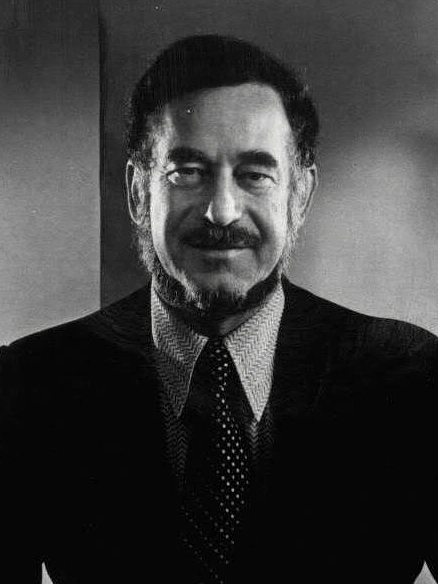
Attr: Haimginott.com
| 4 Quotes | |
| Born as | Haim G. Ginott |
| Occup. | Teacher |
| From | Israel |
| Born | 1922 |
| Died | 1973 |
| Cite | |
Citation Formats
APA Style (7th ed.)
Haim ginott biography, facts and quotes. (2026, February 11). FixQuotes. https://fixquotes.com/authors/haim-ginott/
Chicago Style
"Haim Ginott biography, facts and quotes." FixQuotes. February 11, 2026. https://fixquotes.com/authors/haim-ginott/.
MLA Style (9th ed.)
"Haim Ginott biography, facts and quotes." FixQuotes, 11 Feb. 2026, https://fixquotes.com/authors/haim-ginott/. Accessed 26 Mar. 2026.
Early Life and Background
Haim G. Ginott was born in Mandate Palestine around 1922, part of a Hebrew-speaking society being built amid immigration, ideological argument, and periodic violence. The world that formed him was small in geography and large in consequence: kibbutzim and city neighborhoods, new schools and youth movements, and the sharpening pressure of British rule and Arab-Jewish conflict. Even before he became a public voice, he absorbed a central problem of the era - how to raise a generation for a future that adults could not fully predict or control.The Second World War and the lead-up to Israeli statehood intensified the stakes of everyday life: scarcity, grief, and the moral weight placed on youth. Ginott gravitated toward teaching not as a job but as a civic practice. In classrooms and homes, he saw how language could either recruit children into resilience or break them into compliance, and he began to treat ordinary talk - reprimands, praise, sarcasm, silence - as the real curriculum shaping character.
Education and Formative Influences
Ginott trained in education and psychology and later made his career largely in the United States, where postwar optimism collided with Cold War anxiety and rapidly changing family norms. He drew from humanistic psychology, the emerging attention to child development, and a Jewish ethical tradition that prizes the dignity of the person; he also borrowed the clinical discipline of counseling to study how adults speak when angry, frightened, or ashamed. These influences converged into his signature focus: communication that is firm about behavior yet protective of the child's inner life.Career, Major Works, and Turning Points
By the 1960s Ginott had become a widely read teacher-educator and counselor, translating therapeutic insight into practical guidance for parents and teachers. His most influential books, including Between Parent and Child (1965) and Between Teacher and Child (1972), argued that tone and wording are not cosmetic - they are instruments that shape self-concept and cooperation. He championed "congruent communication": adults should name feelings without dumping them, describe problems without degrading the person, and set limits without humiliation. The turning point in his public influence was the era's hunger for humane authority - families and schools wanted order, but many were rejecting the older model of obedience enforced by fear.Philosophy, Style, and Themes
Ginott wrote with the brisk clarity of a classroom veteran: short scenarios, dialog rewrites, and principles that read like rehearsal notes for difficult moments. Underneath the practical surface lay a psychological thesis - children do not merely react to rules; they react to how adults see them. He treated speech as an environment. Praise, if it was vague or performative, could become another form of control; criticism, if it fused the child with the misbehavior, could become identity. In his view, the adult is always modeling how to handle frustration: with accuracy or with insult.His best lines reveal his diagnostic ear for the adult psyche. “Each of us carries within himself a collection of instant insults”. That sentence is not about children at all; it is about grownups and the private archive of put-downs we reach for when we feel powerless. He also punctured the common habit of blaming youth for what adults have cultivated: “Parents often talk about the younger generation as if they didn't have anything to do with it”. The corrective he offered was not permissiveness but responsibility - adults must choose language that makes improvement feel possible. Even his encouragement sounded like technique: “If you want your children to improve, let them overhear the nice things you say about them to others”. For Ginott, overheard respect works because it bypasses the child's defenses; it builds a self-image that can bear correction without collapse.
Legacy and Influence
Ginott died around 1973, but his work became a durable bridge between therapy and everyday education. Later movements - from respectful parenting to social-emotional learning and teacher coaching - echo his insistence that authority is strongest when it is non-humiliating, specific, and emotionally literate. His books remain staples because they address a perennial crisis: adults want children to change, yet under stress they speak in ways that lock children into the very roles they fear. Ginott's lasting influence is the reminder that a classroom or a home is made, minute by minute, out of words.Our collection contains 4 quotes written by Haim, under the main topics: Witty One-Liners - Parenting - Teacher Appreciation.
Source / external links