
Hal Borland Biography Quotes 12 Report mistakes
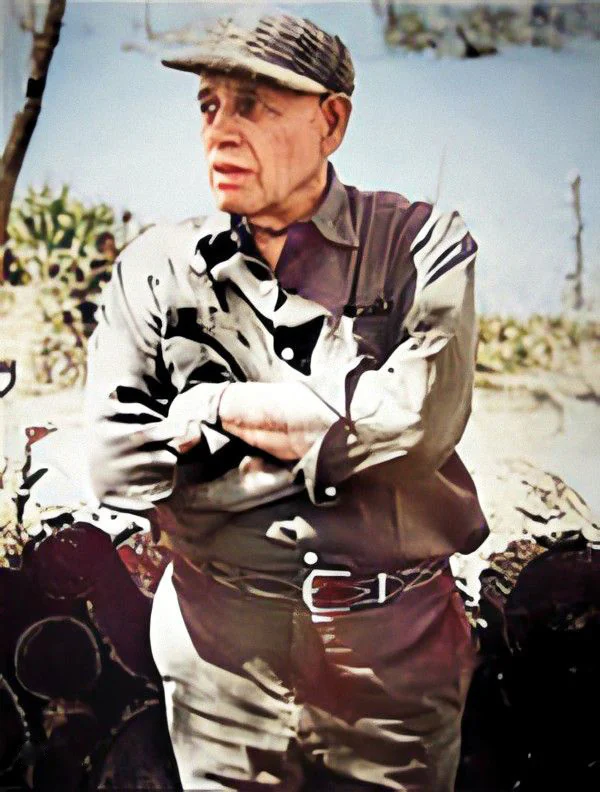
| 12 Quotes | |
| Born as | Harold Glen Borland |
| Occup. | Author |
| From | USA |
| Born | May 14, 1900 Kansas City, Missouri, USA |
| Died | February 22, 1978 West Cornwall, Connecticut, USA |
| Cause | Natural causes |
| Aged | 77 years |
| Cite | |
Citation Formats
APA Style (7th ed.)
Hal borland biography, facts and quotes. (2026, February 2). FixQuotes. https://fixquotes.com/authors/hal-borland/
Chicago Style
"Hal Borland biography, facts and quotes." FixQuotes. February 2, 2026. https://fixquotes.com/authors/hal-borland/.
MLA Style (9th ed.)
"Hal Borland biography, facts and quotes." FixQuotes, 2 Feb. 2026, https://fixquotes.com/authors/hal-borland/. Accessed 26 Mar. 2026.
Early Life and Background
Harold Glen "Hal" Borland was born on May 14, 1900, in the American Midwest, a child of the turn-of-the-century United States when small towns still measured time by harvests, rail schedules, and the weather. He grew up with an ear for plain speech and an eye for the everyday drama of fields, creek bottoms, and back roads - landscapes that would later become both his subject matter and his moral compass. In his writing, the outdoors is not scenery but a living system that instructs, corrects, and endures.His early years unfolded alongside national upheavals that remade rural life: mechanization, migration to cities, and the expanding reach of mass media. Borland would spend his career translating the older, slower knowledge of place into a modern idiom for readers who increasingly lived at a remove from land and season. That tension - between rootedness and acceleration - became a quiet engine in his inner life, pushing him to defend attentiveness as a form of sanity.
Education and Formative Influences
Borland attended local schools and came of age as newspapers and magazines were becoming the dominant storytellers of American life; he learned to write with the compression and clarity of a reporter while keeping the patient gaze of a naturalist. He later lived and worked in New England, especially Vermont, where the cadence of seasons and the sturdiness of hill-country communities deepened his conviction that nature writing could be both literary and practical - a record of what is real, and a guide for how to live within limits.Career, Major Works, and Turning Points
Borland built a long career as a journalist, editor, and author, becoming widely known for essays that joined natural history to reflective autobiography, often shaped as brief, exact observations rather than grand pronouncements. His books include the novel When the Legends Die (1963), a stark story of a Ute boy caught between inherited identity and modern pressures, and collections such as Sundial of the Seasons and other seasonal essays that brought a day-by-day, month-by-month intimacy to American nature writing. A major turning point was his ability to speak to two audiences at once - readers seeking solace and readers seeking instruction - without sentimentalizing either the land or the people who live close to it.Philosophy, Style, and Themes
Borland wrote in a style of controlled warmth: declarative sentences, concrete nouns, and a steady refusal of melodrama. His work assumes that attention is a discipline and that the natural world, properly observed, offers an ethic more reliable than ideology. He distrusted the feverish suspicion of the Cold War era and the noisy abstractions of public life; in his view, the nonhuman world exposes the pettiness of paranoia and returns the mind to proportion. “You can't be suspicious of a tree, or accuse a bird or a squirrel of subversion or challenge the ideology of a violet”. The line is witty, but its psychological core is serious: Borland sought refuge from civic rancor by locating innocence not in people but in processes - growth, migration, dormancy, renewal.Time, for Borland, is best understood through seasons because seasons teach endurance without promising comfort. “No winter lasts forever; no spring skips its turn”. That confidence is not naive optimism; it is a practiced faith that emotional weather, like climate, changes through lawful cycles if one can wait without surrendering. Trees, especially, become his emblem of character: “If you would know strength and patience, welcome the company of trees”. Inwardly, this reads as self-prescription as much as observation - a writer reminding himself that steadiness is learned by long exposure to what cannot be hurried.
Legacy and Influence
Borland endured as a bridge figure between classic American pastoral writing and modern environmental consciousness: neither a polemicist nor a mere celebrant, he modeled how to think in seasons, not headlines. When the Legends Die also left a complicated footprint - admired for narrative force and its critique of cultural displacement, yet inevitably shaped by the era and perspective from which he wrote. Across his work, his lasting influence lies in his insistence that clarity of perception can be an ethical act: to watch carefully, name accurately, and accept cycles without cynicism is, in his hands, a form of resistance to haste, noise, and forgetfulness.Our collection contains 12 quotes written by Hal, under the main topics: Wisdom - Nature - Overcoming Obstacles - New Beginnings - Time.
Hal Borland Famous Works
- 1964 Sundial of the Seasons (Book)
- 1963 When the Legends Die (Novel)
- 1961 The Dog Who Came to Stay (Book)
- 1956 High, Wide and Lonesome: Growing Up on the Colorado Frontier (Book)
Source / external links