
Hamad bin Isa Al Khalifa Biography Quotes 5 Report mistakes
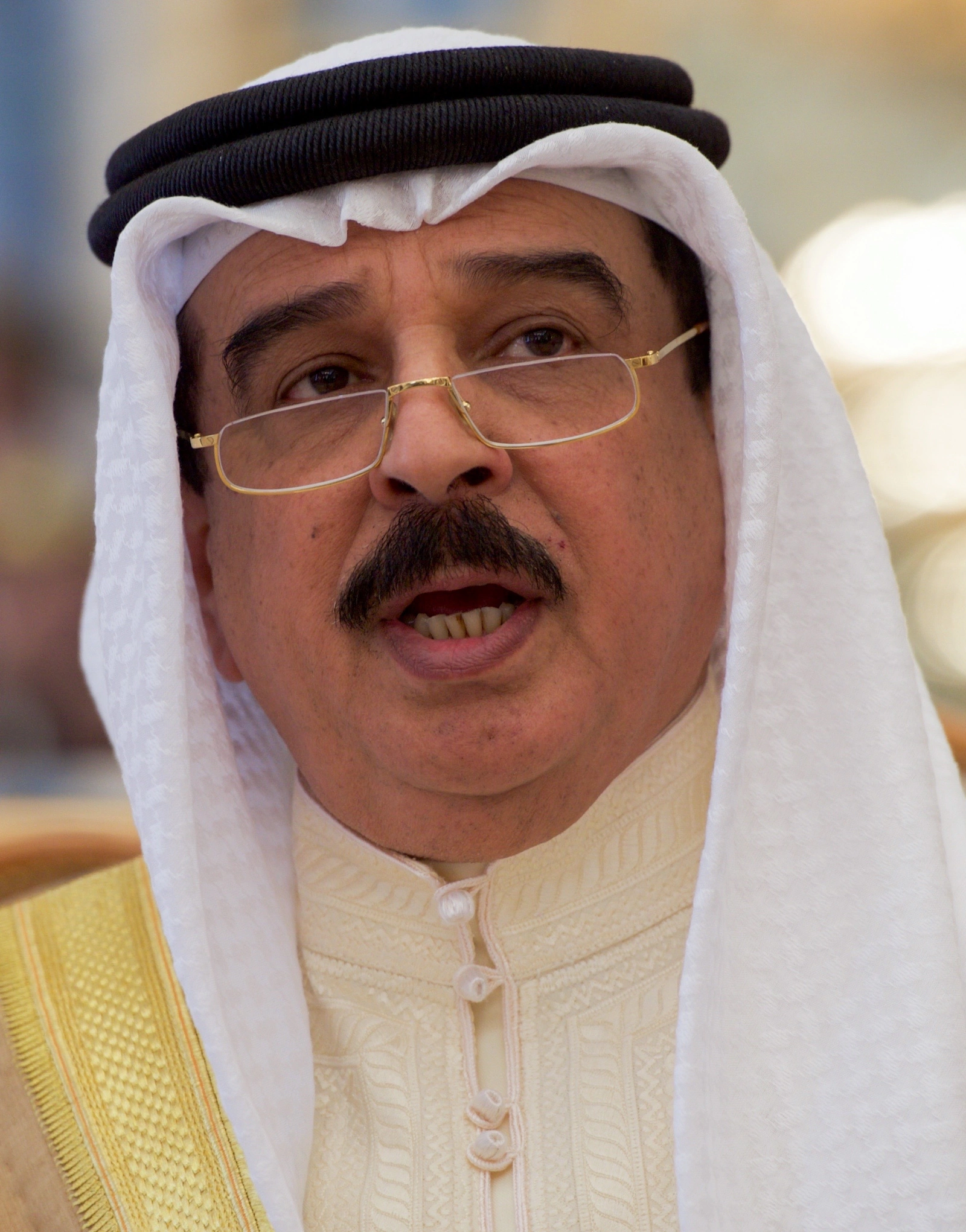
| 5 Quotes | |
| Occup. | Statesman |
| From | Bahrain |
| Born | January 28, 1950 Riffa, Bahrain |
| Age | 76 years |
| Cite | |
Citation Formats
APA Style (7th ed.)
Hamad bin isa al khalifa biography, facts and quotes. (2026, February 11). FixQuotes. https://fixquotes.com/authors/hamad-bin-isa-al-khalifa/
Chicago Style
"Hamad bin Isa Al Khalifa biography, facts and quotes." FixQuotes. February 11, 2026. https://fixquotes.com/authors/hamad-bin-isa-al-khalifa/.
MLA Style (9th ed.)
"Hamad bin Isa Al Khalifa biography, facts and quotes." FixQuotes, 11 Feb. 2026, https://fixquotes.com/authors/hamad-bin-isa-al-khalifa/. Accessed 28 Mar. 2026.
Early Life and Background
Hamad bin Isa Al Khalifa was born on January 28, 1950, into Bahrain's ruling Al Khalifa family, in a small island polity whose fortunes were being remade by oil, British protection, and the politics of decolonization. His childhood unfolded in a society balancing pearl-diving memory with modernization, and in a Gulf region entering an era of coups, Arab nationalism, and Cold War alignment. The proximity of Iran, the rise of republican regimes, and the strategic importance of sea lanes made Bahrain's internal cohesion and external diplomacy unusually consequential for a state of its size.In 1961 he was named Crown Prince, a role that placed him early at the hinge between dynastic continuity and the demands of administration. Bahrain achieved independence in 1971 after Britain withdrew from "East of Suez", and the first years of statehood brought both institution-building and political strain. The dissolution of the elected National Assembly in 1975 and the reliance thereafter on security-first governance shaped the atmosphere in which Hamad matured: order was prized, but the question of participation did not disappear, surfacing repeatedly in petitions, protest cycles, and debates over the social contract.
Education and Formative Influences
Hamad was educated in Bahrain and then trained in Britain, attending the Mons Officer Cadet School at Aldershot, an experience that emphasized hierarchy, command discipline, and the management of complex organizations. He also participated in courses and visits that exposed him to the administrative habits of constitutional monarchies and the emerging Gulf model of state-led development. His formative influences thus blended traditional legitimacy, military professionalism, and the practical lesson that small states survive by institutions, alliances, and calibrated reform.Career, Major Works, and Turning Points
He became Commander-in-Chief of the Bahrain Defence Force in 1968, embedding himself in the kingdom's security architecture before later assuming the premiership and, after his father Isa bin Salman Al Khalifa died in March 1999, ascending as Amir. A defining turning point came with the National Action Charter, approved by referendum in 2001, which reopened a path toward representative politics; in 2002 he proclaimed Bahrain a constitutional kingdom and took the title King, restoring parliamentary life while retaining strong royal prerogatives. His reign also navigated regional shocks - the aftereffects of the 2003 Iraq war, sectarian polarization, and the 2011 uprising that brought mass protests, a crackdown aided by GCC forces, and a contested reform process that reshaped Bahrain's domestic and international reputation. Economically, he presided over diversification efforts in finance, services, and infrastructure while managing fiscal pressures typical of a post-oil-rentier transition.Philosophy, Style, and Themes
Hamad's statecraft has often presented itself as a wager on reconciliation without surrendering control. He repeatedly cast politics as a matter of trust and personal encounter, encapsulated in the sentiment, “If somebody gives me his hand, I will not look at him with suspicion”. Psychologically, this frames authority as paternal and relational: legitimacy is cultivated through gestures of openness, yet the offer also implies that dissent is most acceptable when converted into a handshake - into negotiation within boundaries set by the throne. That helps explain the oscillation in his era between reform initiatives and security retrenchment, as the state alternately invited participation and policed its limits.A second theme is Bahrain's insistence on diplomatic flexibility as survival strategy. “History shows that no enemy remains hostile forever, nor do friends remain friendly forever. For that reason, we intend to have normal relations with all”. This is the worldview of a small monarchy in a crowded neighborhood: sovereignty is preserved by hedging, by keeping channels open, and by refusing to turn foreign policy into permanent enmity. The same impulse appears in the more aphoristic “By being friends with all, we are not alone”. Underneath is an anxiety familiar to microstates - isolation is danger - paired with a ruler's preference for managed stability, incremental change, and the language of unity over ideological confrontation.
Legacy and Influence
Hamad bin Isa Al Khalifa's legacy is inseparable from the question he tried to answer for Bahrain: how to modernize a hereditary state under intense regional pressure while containing internal polarization. Admirers credit him with reopening parliamentary life through the 2001-2002 constitutional reset, expanding education and infrastructure, and pursuing a pragmatic foreign policy in a volatile Gulf; critics argue that the post-2011 trajectory hardened authoritarian practices and narrowed political space, leaving reforms partial and trust fragile. Historically, he stands as a ruler of the transition era between late-20th-century rentier paternalism and 21st-century demands for accountability - a case study in how small states attempt reform from above while guarding regime continuity.Our collection contains 5 quotes written by Hamad, under the main topics: Friendship - Leadership - Kindness - Peace - Brother.
Source / external links