
Hamid Karzai Biography Quotes 12 Report mistakes
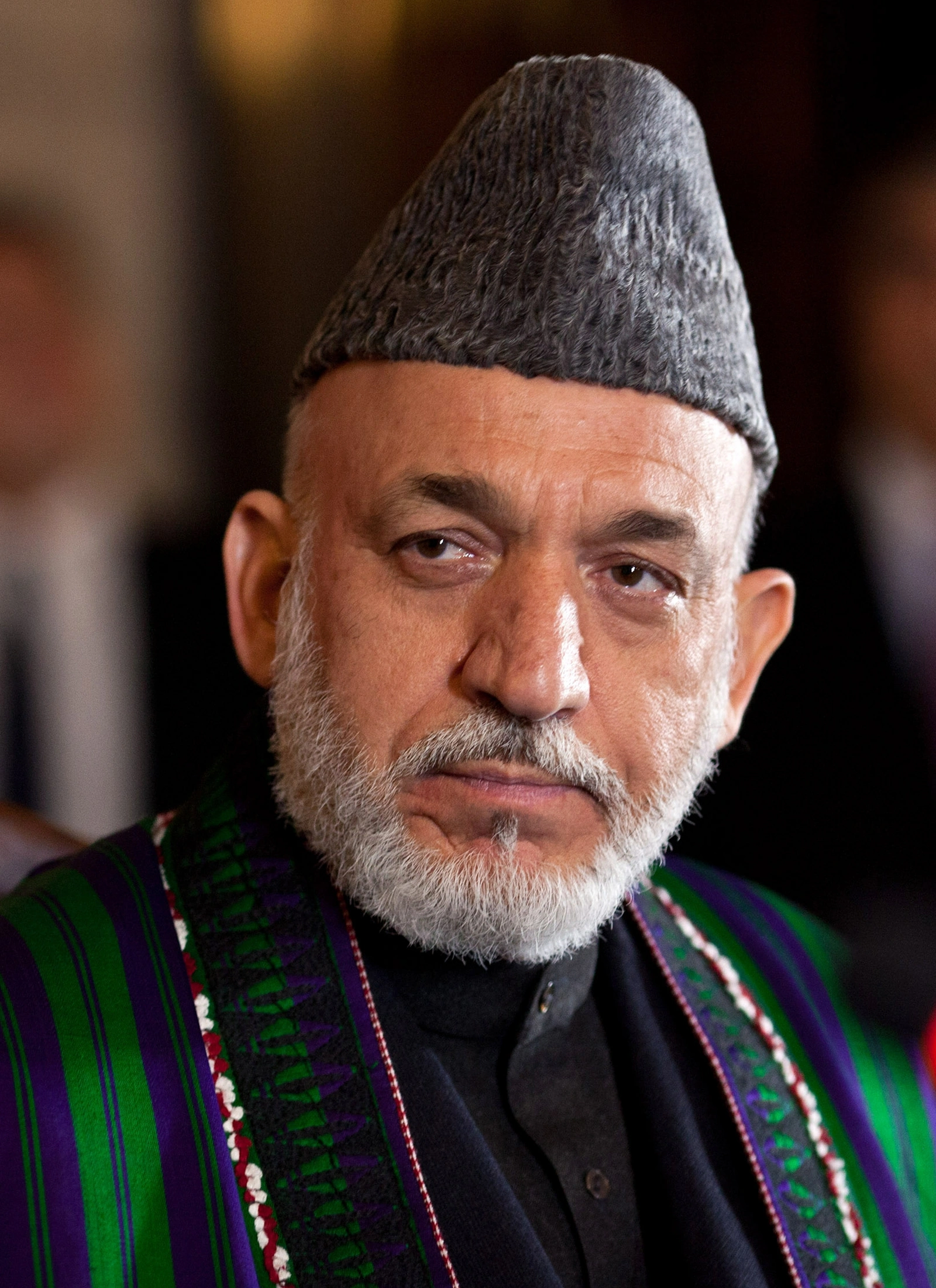
Attr: Pete Souza
| 12 Quotes | |
| Occup. | Statesman |
| From | Afghanistan |
| Born | December 24, 1957 Karz, Afghanistan |
| Age | 68 years |
| Cite | |
Citation Formats
APA Style (7th ed.)
Hamid karzai biography, facts and quotes. (2026, February 11). FixQuotes. https://fixquotes.com/authors/hamid-karzai/
Chicago Style
"Hamid Karzai biography, facts and quotes." FixQuotes. February 11, 2026. https://fixquotes.com/authors/hamid-karzai/.
MLA Style (9th ed.)
"Hamid Karzai biography, facts and quotes." FixQuotes, 11 Feb. 2026, https://fixquotes.com/authors/hamid-karzai/. Accessed 12 Feb. 2026.
Early Life and Background
Hamid Karzai was born on December 24, 1957, in Kandahar, into the Popalzai branch of the Durrani Pashtuns, a lineage long associated with Afghan statecraft. His father, Abdul Ahad Karzai, was a notable local political figure, and the household sat close to the currents of tribal mediation, court politics, and the fragile bargains that held together Afghanistan in the late monarchy and early republic. In Karzai's memory and later rhetoric, Kandahar was not only a birthplace but a moral map - a place where honor, hospitality, and the costs of revenge shaped public life as much as formal law.His early adulthood coincided with Afghanistan's accelerated unraveling: the 1973 overthrow of King Zahir Shah, the communist coup of 1978, and the Soviet invasion of 1979. Karzai's generation watched institutions hollow out while militias, intelligence services, and foreign patrons became decisive actors. That lived experience - the sense that politics could be commandeered by armed networks and outsiders - became a permanent backdrop to his later insistence on sovereignty, dignity, and the restoration of a normal state.
Education and Formative Influences
Karzai studied political science at Himachal Pradesh University in Shimla, India, during the late Cold War, when Afghanistan was increasingly a battlefield of ideologies and proxies. India offered him distance from the immediate pressures of war and exposure to parliamentary argument, bureaucracy, and the idea of a multiethnic civic order. He returned to Afghan politics with a practical temperament: suspicious of dogma, attentive to coalition-building, and fluent in the languages of both tribal legitimacy and modern diplomacy.Career, Major Works, and Turning Points
During the anti-Soviet jihad and the civil war that followed, Karzai aligned himself with mujahideen politics, working in exile and representing Afghan factions abroad; he later broke with the Taliban after initially engaging them as a possible stabilizing force, turning decisively against them as their rule hardened and as Afghanistan became a sanctuary for transnational militants. After 9/11, he re-entered the country and helped organize anti-Taliban forces in the south, then emerged at the 2001 Bonn Conference as a compromise figure acceptable to disparate Afghan leaders and international sponsors. As chairman of the Afghan Interim Administration (2001-2002), then Transitional Administration (2002-2004), and as the first president elected under the 2004 constitution (serving 2004-2014, re-elected 2009), Karzai became the face of the post-2001 order: courting aid and security guarantees while repeatedly contesting foreign interference. Major turning points included the 2004 presidential election, the intensifying insurgency after 2005, the disputed 2009 election that damaged confidence in the new institutions, and the long negotiation over a U.S. security agreement that dramatized his balancing act between dependence and independence.Philosophy, Style, and Themes
Karzai governed as a broker in a country where legitimacy had to be assembled, not assumed. He favored persuasion over coercion, personal ties over party discipline, and symbolic language over technocratic certainty. His speeches constantly sought to fuse the sacred and the civic, treating national dignity as a security requirement. When he warned that "Humiliation of the holy book represents the humiliation of our people". , it revealed both his political instinct and his psychological center: affronts to religion were, in his reading, accelerants of rebellion, and the state had to defend honor as well as territory.He also framed politics as a struggle to restore agency to ordinary Afghans after decades of proxy war. "As the country now turns a new leaf, our ambition is to give hope to each and every Afghan". was more than uplift - it was a diagnosis that despair itself had become an instrument of control. At the same time, his stark moral language about freedom - "Where liberty dies, evil grows". - exposed a tension that shaped his presidency: he defended liberty as a civilizational necessity while presiding over a state compromised by warlords, corruption, and the gravitational pull of foreign militaries. That tension made his style simultaneously conciliatory and defiant, eager for reconciliation yet sensitive to any sign that Afghanistan was being treated as a managed protectorate.
Legacy and Influence
Karzai's legacy is inseparable from the achievements and failures of Afghanistan's first post-Taliban experiment in constitutional government: national elections, a reconstituted bureaucracy, expanded media and civil society, and a diplomacy that returned Afghanistan to the world - alongside endemic corruption, uneven rule of law, and an insurgency that proved resilient. To supporters, he was the indispensable bridge between the Bonn-era state and Afghanistan's complex social reality, a leader who preserved a measure of national coherence while navigating powerful patrons and rivals; to critics, he normalized patronage and blurred accountability in the name of stability. Even after leaving office, his voice remained influential as a symbol of Afghan sovereignty and of the unresolved question he embodied: how to build a legitimate state in a country where legitimacy must be constantly renegotiated amid war, faith, and foreign power.Our collection contains 12 quotes written by Hamid, under the main topics: Justice - Freedom - New Beginnings - Peace - Human Rights.
Other people related to Hamid: Shaukat Aziz (Politician)
Frequently Asked Questions
- What happened to Hamid Karzai: He served as Afghanistan’s president (2001–2014) and afterward remained a political figure in Afghanistan, living in Kabul.
- Hamid Karzai Taliban: He opposed the Taliban, led the post-2001 Afghan government, and later advocated talks with them; he remained in Kabul after their 2021 takeover.
- Hamid Karzai daughter: He has one daughter, Malalai Karzai (born 2014).
- Hamid Karzai Shia or sunni: Sunni Muslim.
- Where is Hamid Karzai now: He has been based in Kabul, Afghanistan, in recent years.
- How old is Hamid Karzai? He is 68 years old
Source / external links