
Hamlin Garland Biography Quotes 4 Report mistakes
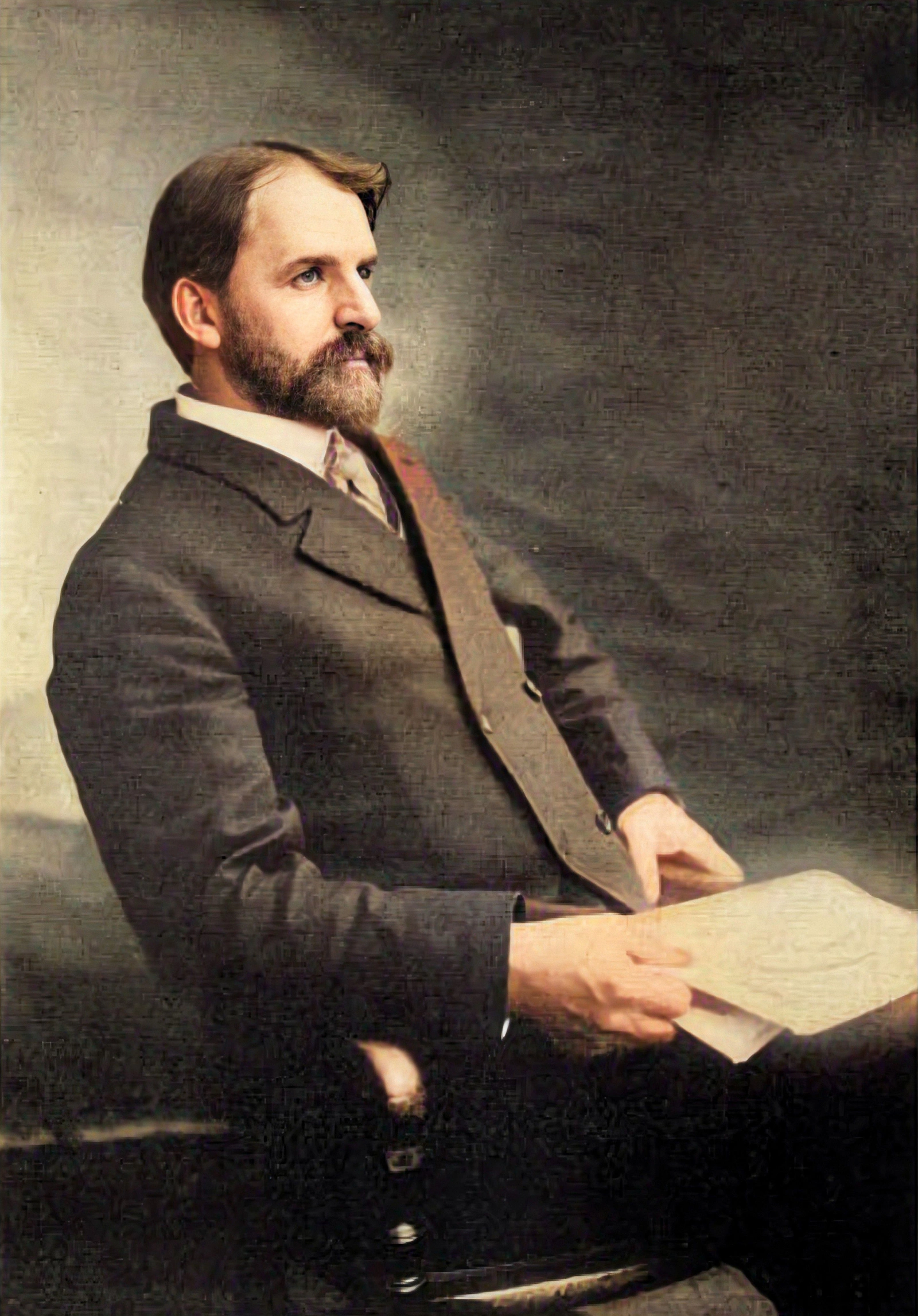
| 4 Quotes | |
| Occup. | Novelist |
| From | USA |
| Spouse | Zulime Taft |
| Born | September 14, 1860 West Salem, Wisconsin, USA |
| Died | March 4, 1940 Hollywood, California, USA |
| Cause | Heart attack |
| Aged | 79 years |
| Cite | |
Citation Formats
APA Style (7th ed.)
Hamlin garland biography, facts and quotes. (2026, February 11). FixQuotes. https://fixquotes.com/authors/hamlin-garland/
Chicago Style
"Hamlin Garland biography, facts and quotes." FixQuotes. February 11, 2026. https://fixquotes.com/authors/hamlin-garland/.
MLA Style (9th ed.)
"Hamlin Garland biography, facts and quotes." FixQuotes, 11 Feb. 2026, https://fixquotes.com/authors/hamlin-garland/. Accessed 12 Feb. 2026.
Early Life and Background
Hamlin Garland was born on September 14, 1860, in West Salem, Wisconsin, in the long shadow of the Civil War and the hard mathematics of homesteading. His parents, Richard and Isabelle Garland, were part of the westering agrarian world that kept moving in search of better soil and solvable debts. The family migrated repeatedly across the upper Midwest, and Garland grew up with the churn of new clearings, new neighbors, and the same old arithmetic of seed, weather, and interest.Those moves-into Iowa and then Dakota Territory-marked him with a double consciousness: loyalty to the prairie household and anger at the systems that squeezed it. He watched women carry a disproportionate share of the labor, and he absorbed the rhythms of rural speech without romantic haze. The Midwest he knew was not a pastoral painting but a workplace, and his earliest emotional education came from seeing endurance treated as normal and exhaustion treated as moral failure.
Education and Formative Influences
Garland attended common schools irregularly because the farm needed hands, but he pursued learning with a self-driven intensity that later became a method: observe, record, revise. He spent time at Cedar Valley Seminary in Osage, Iowa, and later at Boston University, where the city widened his perspective and sharpened his critique of American economic life. In Boston he encountered reform currents and, crucially, the example of writers who treated contemporary social conditions as fit subjects for serious art, helping him fuse prairie experience with an urban intellectual vocabulary.Career, Major Works, and Turning Points
In the late 1880s and early 1890s Garland emerged as a leading voice of American realism with a regional focus he called "veritism" - art tethered to local truth and social consequence. His breakthrough collection, Main-Travelled Roads (1891), offered unsparing stories of Midwestern farm life, followed by novels such as Rose of Dutcher's Coolly (1895) and Boy Life on the Prairie (1899). He became a prominent lecturer and cultural figure, moving between Boston, Chicago, and New York, and later won the Pulitzer Prize for A Daughter of the Middle Border (1921), the first volume of an autobiographical sequence that turned his own family history into a document of national development. Over time, his career widened beyond prairie realism into Western and frontier subjects, and he also pursued interests in psychical research, a late-life sign of his restless desire to test the boundaries of accepted explanation.Philosophy, Style, and Themes
Garland wrote with the conviction that literature should tell the truth about work, especially the work polite culture preferred not to see. His most bracing realism comes from moral attention rather than cynicism, and nowhere is his psychological center clearer than in his refusal to prettify domestic suffering: "There is no gilding of setting sun or glamor of poetry to light up the ferocious and endless toil of the farmers' wives". The sentence is not merely social critique; it is a self-indictment of any observer tempted to use beauty as anesthesia, and it reveals the guilt and loyalty that powered his best pages.At the same time, Garland was not only a chronicler of deprivation but a writer for whom landscape acted as medicine and memory as ballast. When urban modernity felt like physiological assault, he sought a counter-rhythm in wilderness travel: "Whenever the pressure of our complex city life thins my blood and numbs my brain, I seek relief in the trail; and when I hear the coyote wailing to the yellow dawn, my cares fall from me - I am happy". That admission clarifies a pattern in his life: he fled the farm's grind but never stopped returning to the land in imagination, as if the prairie and the trail were opposing cures for the same wound. Even his lyric recollections of the North Woods are structured like therapy, converting sensory detail into calm: "My recollection of a hundred lovely lakes has given me blessed release from care and worry and the troubled thinking of our modern day. It has been a return to the primitive and the peaceful". The tension between protest and refuge, between social indictment and restorative nature, gives his work its distinctive pulse.
Legacy and Influence
Garland died on March 4, 1940, in Hollywood, after a life that tracked the United States from frontier scarcity to urban modernity. His enduring influence lies in how he made the Middle Border central to American realism, insisting that the moral costs of settlement and the economics of farming were not background but plot. Later regionalists and social realists drew from his example: unsentimental empathy, attention to speech, and an ethics of looking squarely at labor. If his name is sometimes eclipsed by contemporaries, his best work remains a bracing record of how progress felt from the kitchen, the field, and the long road outward.Our collection contains 4 quotes written by Hamlin, under the main topics: Nature - Work.
Hamlin Garland Famous Works
- 1921 A Daughter of the Middle Border (Novel)
- 1917 A Son of the Middle Border (Novel)
- 1902 The Captain of the Gray-Horse Troop (Novel)
- 1895 Rose of Dutcher's Coolly (Novel)
- 1891 Main-Travelled Roads (Short Story Collection)
Source / external links