
Han Kang Biography Quotes 5 Report mistakes
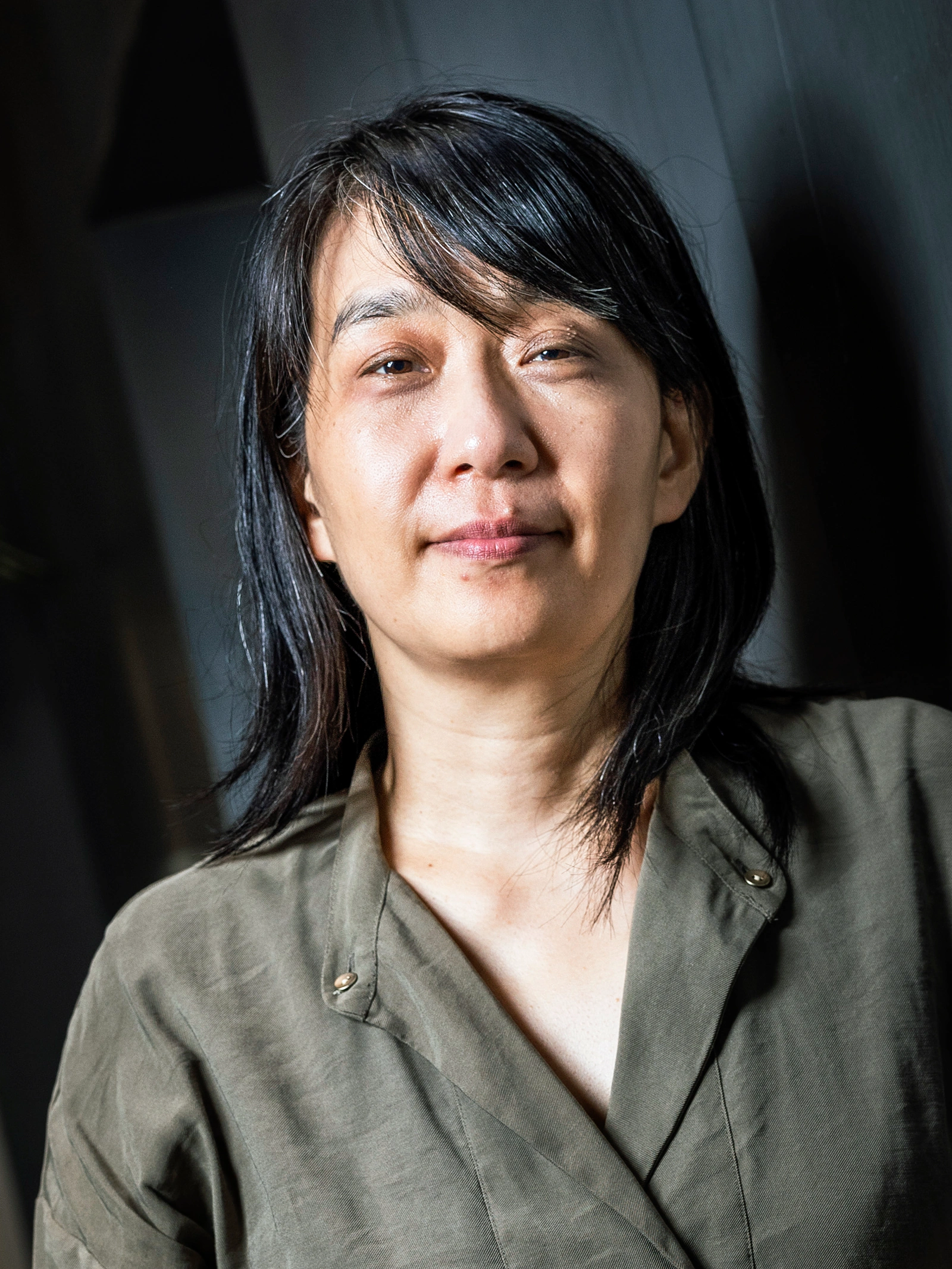
Attr: EL PAÍS English
| 5 Quotes | |
| Native name | 한강 |
| Occup. | Novelist |
| From | South Korea |
| Spouse | Hong Yong-hee |
| Born | November 27, 1970 Gwangju, South Korea |
| Age | 55 years |
| Cite | |
Citation Formats
APA Style (7th ed.)
Han kang biography, facts and quotes. (2026, March 8). FixQuotes. https://fixquotes.com/authors/han-kang/
Chicago Style
"Han Kang biography, facts and quotes." FixQuotes. March 8, 2026. https://fixquotes.com/authors/han-kang/.
MLA Style (9th ed.)
"Han Kang biography, facts and quotes." FixQuotes, 8 Mar. 2026, https://fixquotes.com/authors/han-kang/. Accessed 29 Mar. 2026.
Early Life and Background
Han Kang was born on November 27, 1970, in Gwangju, South Korea, a city whose name would become inseparable from the moral weather of her work. She was born into a literary household - her father Han Seung-won is a noted novelist - and grew up amid books, manuscripts, and the disciplined solitude of writing. When she was still a child, the family moved to Seoul, a shift from a provincial city marked by political trauma to the capital of a rapidly industrializing, authoritarian state. That movement between geographies - from remembered violence to urban anonymity - helped form the double vision that runs through her fiction: intimacy joined to historical rupture.Her generation came of age in the shadow of the 1980 Gwangju Uprising and its brutal suppression, one of the defining events of modern Korean history. Han was too young to witness it fully, yet the event persisted as an inherited wound, a silence inside family and national memory. South Korea in her youth was a place of fierce economic transformation, censorship, student protest, and unresolved grief. In that atmosphere, the body was never merely private; it was where power, fear, shame, and resistance were registered. Han's fiction would later return obsessively to bodies under pressure - starving, bleeding, refusing, breaking, or seeking impossible purity - as if the national unconscious had found its truest language in flesh.
Education and Formative Influences
Han studied Korean literature at Yonsei University in Seoul, one of the country's leading intellectual centers, and this formal training deepened what had already been a domestic apprenticeship in language. She emerged first as a poet in the early 1990s, publishing poems before turning decisively to fiction after winning a literary contest in 1994. The poetic origin mattered: her prose would retain compression, sensory exactness, and an ear for rhythm unusual even in literary fiction. She also belonged to a post-dictatorship generation of Korean writers less bound to direct realism than their predecessors, yet still haunted by history. Her reading ranged widely, but her strongest formative influences seem less imitative than existential - the discipline of Korean literary modernism, the moral gravity of testimony, and the intuition that language must approach pain obliquely if it is to tell the truth.Career, Major Works, and Turning Points
Han published several early works, including the story collection Yeosu and the novel Black Deer, but her career reached a new level with The Vegetarian (original Korean publication 2007), a triptych novel about a woman, Yeong-hye, whose refusal to eat meat widens into a total rejection of bodily and social coercion. Its English translation by Deborah Smith won the 2016 International Booker Prize, making Han globally visible and introducing many readers to her austere, disquieting art. Yet her central work for many Korean readers is Human Acts (2014), a polyphonic novel rooted in the Gwangju massacre, where private mourning opens into an anatomy of state violence and collective memory. She followed with The White Book, a spare meditation on grief, birth, and whiteness, and Greek Lessons, a more intimate novel of muteness, blindness, and fragile relation. Across these books, the turning points are less commercial than artistic: each narrows the emotional field while enlarging the ethical one, moving from domestic estrangement to historical witness without surrendering lyric intensity.Philosophy, Style, and Themes
Han Kang's fiction is driven by radical questions rather than settled beliefs. Again and again she asks how beauty can coexist with cruelty, and whether innocence is imaginable without destruction. “Why is the world so violent and painful? And yet how can the world be this beautiful?” That is not a decorative paradox in her work but its governing engine. Her characters often refuse the ordinary terms of social life - food, speech, sex, family duty, even stable identity - not because she romanticizes withdrawal, but because she is testing what remains of the human when consent collapses. Her moral universe is unsentimental: tenderness exists, but so do humiliation, domination, and complicity. “Humans will not hesitate to lay down their own lives to rescue a child who had fallen onto the train tracks, yet are also perpetrators of appalling violence, like in Auschwitz”. This capacity for simultaneous mercy and atrocity is the psychic contradiction she anatomizes most relentlessly.Stylistically, Han writes with glacial control and sensory charge. She has said, “When I write fiction, I put a lot of emphasis on the senses. I want to convey vivid senses like hearing and touch, including visual images. I infuse these sensations into my sentences like an electric current”. The description is exact: her prose often feels cool on the surface but electrically alive underneath, with images of plants, blood, snow, breath, and skin carrying emotional voltage. She favors ellipsis, fractured perspectives, and quiet tonal pressure over rhetorical display. The result is an art of exposure rather than explanation. Her inner world, as reflected in the fiction, appears marked by disciplined empathy and metaphysical unease - an effort to perceive each person as irreducibly singular, even at history's worst moments, while knowing that language itself may fail before pain.
Legacy and Influence
Han Kang stands among the most important South Korean novelists of her generation and among the writers who most decisively expanded world literature's sense of what contemporary Korean fiction can do. She helped bring Korean literature to a wider international readership, but her importance is not merely representative. She redefined the novel as a site where lyric precision, bodily extremity, feminist critique, and historical testimony can coexist without simplification. Younger writers have learned from her refusal of noise, her faith in formal restraint, and her insistence that the novel can bear witness to public catastrophe through intimate perception. Her books endure because they do not console cheaply. They ask how one lives after violence, how one remembers the dead without appropriating them, and how the vulnerable body can become both archive and protest. In that severe, searching space, Han Kang has made a body of work at once Korean in its historical depth and universal in its moral reach.Our collection contains 5 quotes written by Han, under the main topics: Ethics & Morality - Writing - Deep - Book.
Source / external links