
Hans Selye Biography Quotes 6 Report mistakes
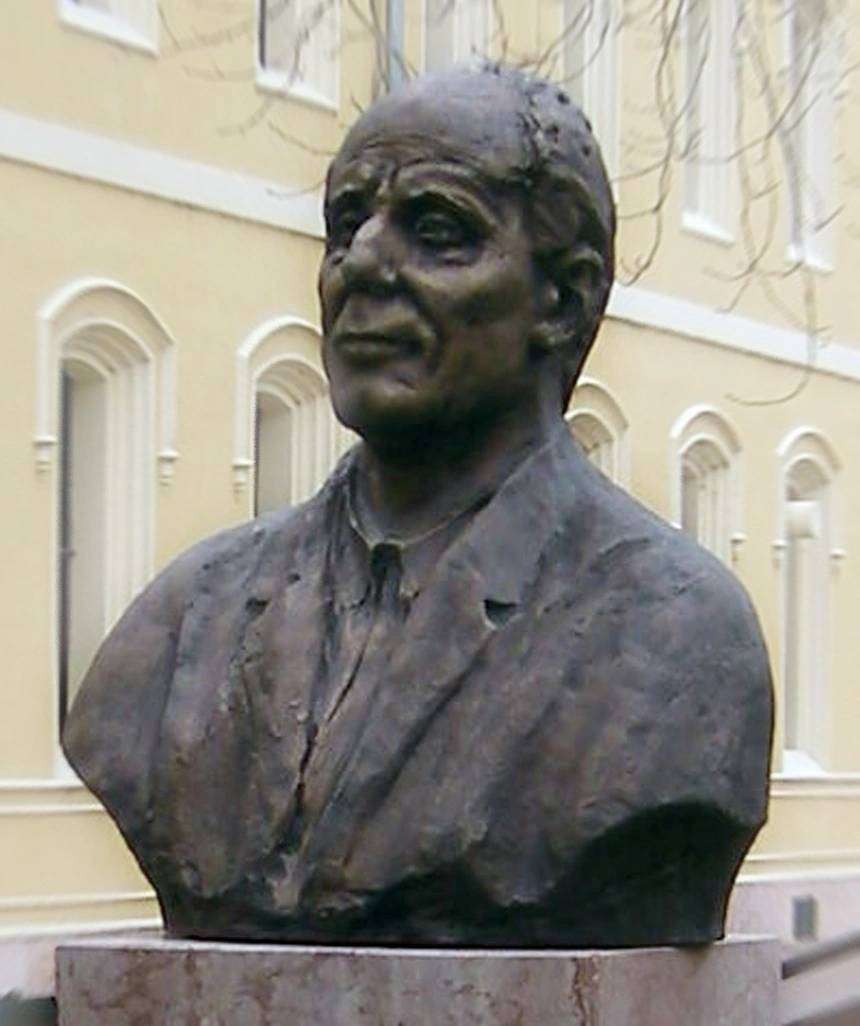
| 6 Quotes | |
| Born as | Hans Hugo Bruno Selye |
| Occup. | Scientist |
| From | Canada |
| Born | January 26, 1907 Vienna, Austria |
| Died | October 16, 1982 Montreal, Quebec |
| Aged | 75 years |
| Cite | |
Citation Formats
APA Style (7th ed.)
Hans selye biography, facts and quotes. (2026, February 11). FixQuotes. https://fixquotes.com/authors/hans-selye/
Chicago Style
"Hans Selye biography, facts and quotes." FixQuotes. February 11, 2026. https://fixquotes.com/authors/hans-selye/.
MLA Style (9th ed.)
"Hans Selye biography, facts and quotes." FixQuotes, 11 Feb. 2026, https://fixquotes.com/authors/hans-selye/. Accessed 6 Mar. 2026.
Early Life and Background
Hans Hugo Bruno Selye was born on January 26, 1907, in Vienna, then the restless capital of the Austro-Hungarian Empire, and spent much of his childhood in Komarno (then Hungary, now Slovakia), where his father, Hugo Selye, practiced medicine. The household placed clinical observation and disciplined routine near the center of daily life. In a region repeatedly re-mapped by war and new borders, he grew up bilingual and border-conscious, absorbing early the idea that the body, like a nation, can be forced to adapt under pressure - sometimes productively, sometimes with hidden cost.The First World War and its aftermath formed the atmosphere of his adolescence: scarcity, mobilization, and the fragility of institutions that had once seemed permanent. Friends and neighbors carried injuries and chronic ailments that were not just mechanical failures but whole-life disturbances - fatigue, weight loss, susceptibility to illness - the kind of diffuse suffering that resisted tidy diagnoses. That early exposure to medicine at the bedside, combined with a boyhood fascination with how diverse diseases could produce a similar "sick look", helped plant the central question he would later formalize: why does the organism respond in patterned ways to many different harms?
Education and Formative Influences
Selye studied medicine and chemistry at the German University in Prague, earning his M.D. and Ph.D. in the late 1920s and early 1930s, then trained further in biochemistry and endocrinology in European laboratories at a moment when hormones were becoming a new language for explaining the body. Moving into North American research culture - first through fellowships and posts in the United States, then to Canada - he encountered a scientific world increasingly committed to controlled animal experimentation, quantification, and the promise that physiology could be unified by general laws. These were the years when endocrinology, pathology, and pharmacology were converging, and Selye learned to see glands, organs, and behavior as parts of one coordinated adaptive system.Career, Major Works, and Turning Points
In the mid-1930s, while working in Montreal, Selye described what he called the "general adaptation syndrome", the recurring triad of physiological changes observed in rats exposed to many noxious agents: adrenal enlargement, thymicolymphatic atrophy, and gastric ulcers. He argued that this was not a specific disease but a nonspecific response of the body to demands - a concept he popularized as "stress", developing a career at the Universite de Montreal and building the Institute of Experimental Medicine and Surgery into an international center. His landmark paper "A syndrome produced by diverse nocuous agents" (1936) and later books such as The Stress of Life (1956) made him a public intellectual as well as a laboratory leader, while also drawing criticism from some clinicians who worried that "stress" could become a vague catch-all. Over time he refined the idea with distinctions such as "eustress" and "distress", and he pursued links between chronic stress and cardiovascular disease, immune change, and aging, remaining scientifically prolific until his death in Montreal on October 16, 1982.Philosophy, Style, and Themes
Selye wrote and spoke with the crisp confidence of a physiologist who wanted one framework to connect the clinic, the laboratory, and ordinary life. His key move was psychological as much as biological: he insisted that the same external event could be toxic or strengthening depending on appraisal, coping, and meaning. “Its not stress that kills us, it is our reaction to it”. This was not a motivational slogan in his hands but a claim about mediation - that perception, neuroendocrine signaling, and behavior shape downstream wear on tissues, and that the organism can learn patterns of response that either conserve or squander its reserves.Yet Selye was never a simple cheerleader for serenity. He argued that a life organized around complete avoidance of pressure is both unrealistic and physiologically impoverished. “Man should not try to avoid stress any more than he would shun food, love or exercise”. The darker current in his work is that adaptation has a price: resilience is not free, and repeated mobilization leaves traces that accumulate across the lifespan. “Every stress leaves an indelible scar, and the organism pays for its survival after a stressful situation by becoming a little older”. This blend of pragmatism and fatalism made his popular writing unusually bracing - a moral physiology in which responsibility lies not in eliminating strain, but in choosing which demands are worthy of the body's limited capacity to adapt.
Legacy and Influence
Selye helped make "stress" a central organizing concept of late-20th-century medicine and culture, influencing psychoneuroendocrinology, behavioral medicine, occupational health, and the study of allostatic load and chronic inflammation. His framing gave clinicians a vocabulary for the measurable links between environment, emotion, and disease while also shaping workplaces, schools, and self-help literature for decades. Even where later researchers revised mechanisms and challenged some generalizations, his enduring achievement was methodological and imaginative: he forced modern biology to take seriously the idea that the body's response to life itself - repeated, interpreted, and paid for over time - can be as consequential as any single pathogen or lesion.Our collection contains 6 quotes written by Hans, under the main topics: Meaning of Life - Stress - Fear.
Hans Selye Famous Works
- 1976 Stress in health and disease (Book)
- 1974 Stress without Distress (Book)
- 1962 Calciphylaxis (Book)
- 1956 The Stress of Life (Book)
Source / external links