
Harald Sohlberg Biography Quotes 2 Report mistakes
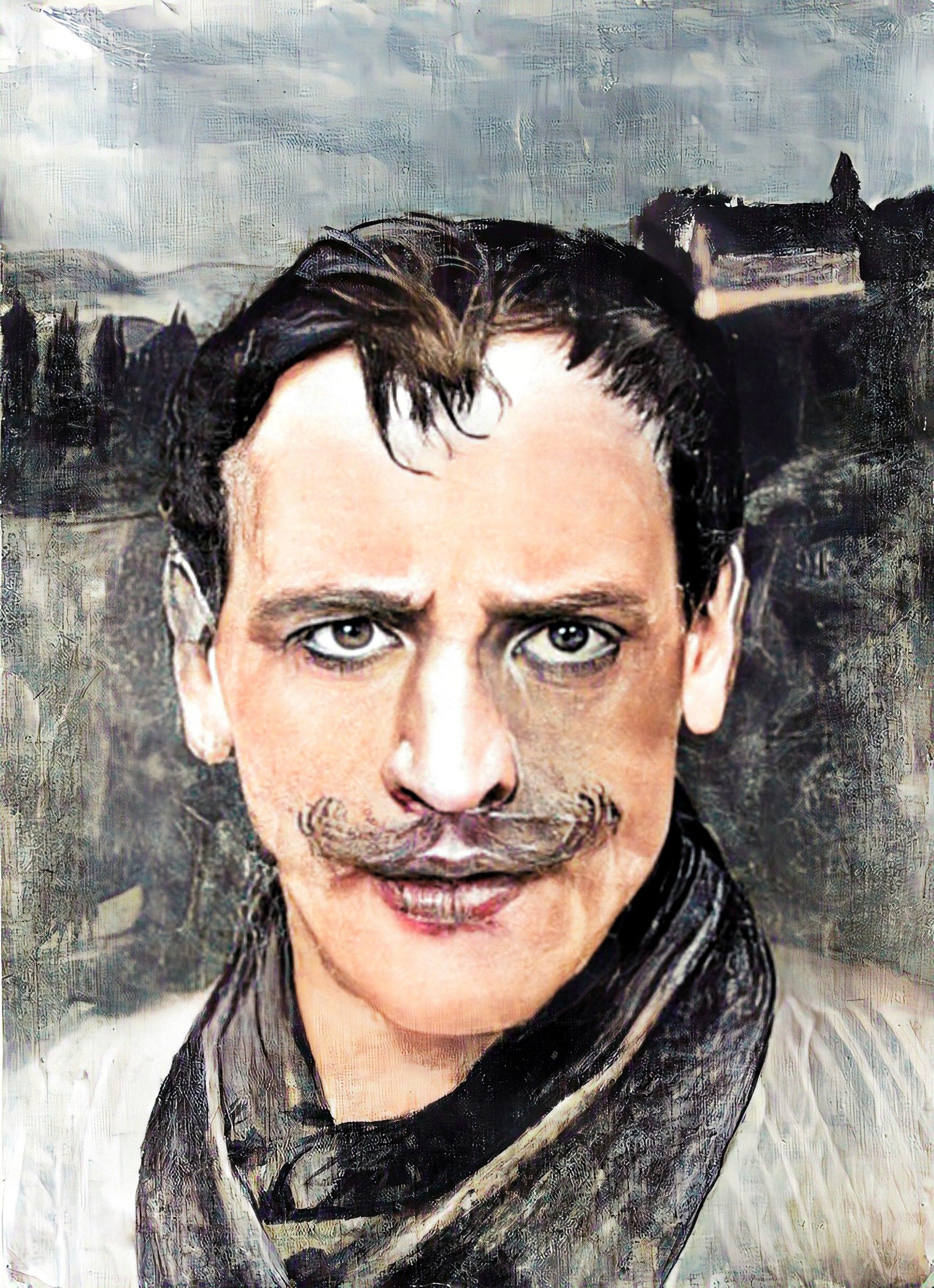
| 2 Quotes | |
| Born as | Harald Oskar Sohlberg |
| Occup. | Painter |
| From | Norway |
| Born | November 29, 1869 Moss, Østfold, Norway |
| Died | June 19, 1935 Oslo, Norway |
| Aged | 65 years |
| Cite | |
Citation Formats
APA Style (7th ed.)
Harald sohlberg biography, facts and quotes. (2026, March 21). FixQuotes. https://fixquotes.com/authors/harald-sohlberg/
Chicago Style
"Harald Sohlberg biography, facts and quotes." FixQuotes. March 21, 2026. https://fixquotes.com/authors/harald-sohlberg/.
MLA Style (9th ed.)
"Harald Sohlberg biography, facts and quotes." FixQuotes, 21 Mar. 2026, https://fixquotes.com/authors/harald-sohlberg/. Accessed 26 Mar. 2026.
Early Life and Background
Harald Oskar Sohlberg was born in Christiania, Norway, on November 29, 1869, into a large middle-class family at a moment when Norwegian culture was sharpening its sense of national distinctiveness within the union with Sweden. He grew up in an urban environment, yet the emotional geography that later defined him was rural and mountainous - the high plateaus, winter nights, pine forests, and luminous summers of eastern Norway. His father was a furrier and merchant, and the household was respectable rather than bohemian; nothing in his beginnings guaranteed an artist's life. But the late 19th century in Norway gave unusual force to landscape as a bearer of identity, and Sohlberg's imagination took shape in a society where painters, writers, and composers were trying to picture the country as spiritually singular rather than merely picturesque.
As a child and adolescent he was often in delicate health, and that inwardness mattered. Sohlberg became a solitary observer, acutely responsive to atmosphere, weather, and the emotional charge of place. Unlike artists drawn to crowds or anecdote, he was pulled toward silence, twilight, and scenes emptied of human bustle, where a house, road, or mountain could seem charged with watchful presence. This habit of feeling nature as both exact and uncanny would become central to his art. Even before his mature style emerged, the tension was there: realism in description, symbolism in mood, and a temperament inclined less toward social spectacle than toward revelation through stillness.
Education and Formative Influences
Sohlberg first trained in decorative painting, an apprenticeship that sharpened his sense of line, surface, and controlled design. He later studied at the Royal School of Drawing in Christiania and worked under leading Norwegian painters including Kristian Zahrtmann and Eilif Peterssen, absorbing both disciplined draftsmanship and a broader modern sense that subject matter could carry inner states. He also spent time in Copenhagen, then a vital Scandinavian art center. Yet his deepest education came outside classrooms: from hiking and sustained looking, from the example of Norwegian landscape traditions after J.C. Dahl, and from European Symbolism, which showed how visible reality could be intensified rather than escaped. Sohlberg did not become an Impressionist, despite painting in an era saturated with the aftereffects of Impressionism. He preferred precision, stillness, and structural simplification, building images slowly from studies, memory, and emotional distillation.
Career, Major Works, and Turning Points
By the 1890s Sohlberg had begun exhibiting and finding his motifs, though recognition came gradually. Early works such as "Night" and views from the district of Akershus already showed his fascination with crepuscular light and psychological landscape. A major turning point was his long engagement with the mining town of Roros, whose church, streets, and winter atmosphere yielded some of his most haunting paintings; another was his repeated return to the Rondane mountains, culminating in "Winter Night in the Mountains", his best-known masterpiece, worked on over many years and completed in mature form in the early 20th century. In that painting the Norwegian mountain world becomes crystalline, remote, and almost metaphysical - exact in contour yet dreamlike in feeling. He also produced memorable images such as "Flower Meadow in the North", "Fisherman's Cottage", "Summer Night" and "Street in Roros in Winter", each marked by patient construction and heightened mood. He married Lilli Hennum in 1891, and family life, financial strain, travel, and periodic ill health ran alongside his career. Though never as internationally famous as Edvard Munch, Sohlberg became one of Norway's most distinctive painters, especially valued for transforming local motifs into states of contemplation.
Philosophy, Style, and Themes
Sohlberg's art rests on a paradox: he painted recognizable places with loving specificity, yet he stripped them of incident until they felt like thresholds to inward experience. He once said, “I have always sought to create a kind of painting that is free of all the unnecessary details, to make it as simple and monumental as possible, and to express the emotions that the landscapes have given me”. That sentence is almost a key to his psychology. He was not simplifying because he saw less, but because he felt too much and needed form to contain intensity. His paintings convert observation into concentration. Houses stand isolated, roads fall silent, mountain ridges harden into emblematic shapes, and color is purified until blue, violet, green, or snow-white seem to carry states of mind. The result is neither photographic nature nor private fantasy, but a purified reality in which external landscape becomes a vessel for longing, awe, estrangement, and repose.
His landscapes are therefore not nationalist decoration, even when they helped define a Norwegian visual identity. “The wide, open expanses of the Norwegian landscape have always fascinated me, and I have tried to capture their unique beauty and the sense of space they evoke”. Fascination, in Sohlberg, was inseparable from metaphysical unease. Space in his pictures is liberating but also severe; beauty is edged with loneliness. This is why his night scenes and winter scenes matter so much. They suggest a mind drawn to extremes of clarity, where the world appears emptied of noise and made almost sacred through distance. His style fuses Naturalism, Art Nouveau linearity, and Symbolist mood, yet the final effect is uniquely his: disciplined, luminous, and emotionally withheld until it becomes all the more powerful.
Legacy and Influence
Sohlberg died on June 19, 1935. By then he had secured a singular place in Norwegian art - not through prolific spectacle but through a body of work whose authority came from slowness, refinement, and emotional exactness. Later generations have repeatedly returned to him because he offers an alternative modernity: inward rather than urban, visionary without abandoning the visible world. "Winter Night in the Mountains" in particular has become an iconic image of Norway, but his deeper legacy lies in how he taught viewers to see landscape as psychic architecture - a place where nation, solitude, memory, and the sublime converge. In Scandinavian painting he remains a crucial figure between 19th-century landscape tradition and 20th-century interiorized modernism, and his best works still feel uncannily present, as if silence itself had been given form.
Our collection contains 2 quotes written by Harald, under the main topics: Art - Nature.
Source / external links