
Harold Bloom Biography Quotes 27 Report mistakes
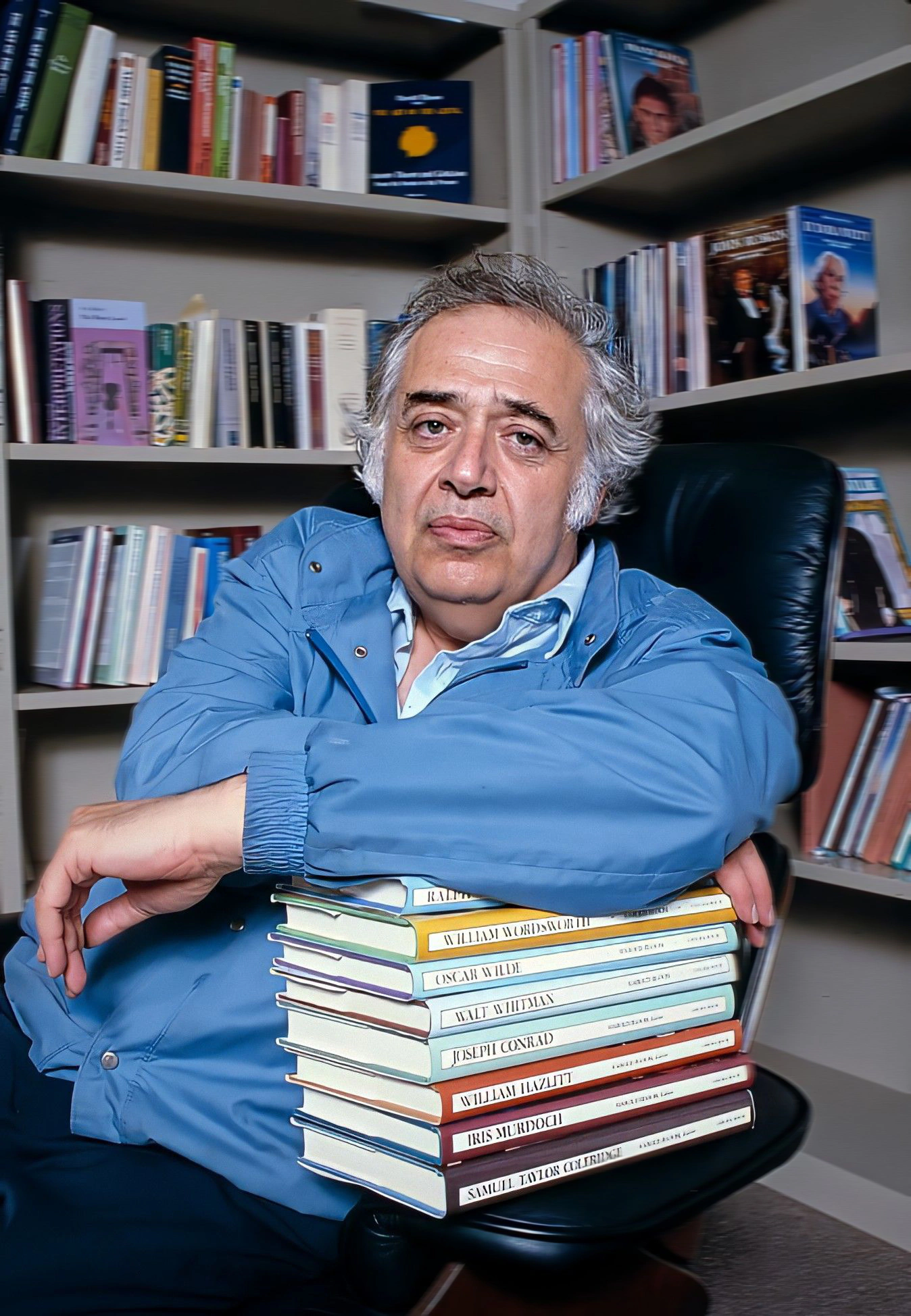
Attr: Gotfryd, Bernard
| 27 Quotes | |
| Occup. | Critic |
| From | USA |
| Spouse | Katharine Silver Bloom |
| Born | July 11, 1930 New York City, New York, USA |
| Died | October 14, 2019 New Haven, Connecticut, USA |
| Cause | Natural causes |
| Aged | 89 years |
| Cite | |
Citation Formats
APA Style (7th ed.)
Harold bloom biography, facts and quotes. (2026, February 11). FixQuotes. https://fixquotes.com/authors/harold-bloom/
Chicago Style
"Harold Bloom biography, facts and quotes." FixQuotes. February 11, 2026. https://fixquotes.com/authors/harold-bloom/.
MLA Style (9th ed.)
"Harold Bloom biography, facts and quotes." FixQuotes, 11 Feb. 2026, https://fixquotes.com/authors/harold-bloom/. Accessed 12 Feb. 2026.
Early Life and Background
Harold Bloom was born on July 11, 1930, in the Bronx, New York City, to Eastern European Jewish immigrants: William Bloom, a garment worker, and Paula Lev, who fed the household an intense Yiddish-speaking culture even as the children became American. He often recalled the formative split of his early life - the neighborhood street vernacular on one side, and on the other a private, inward world of books in which he sensed both refuge and destiny. His brother died young, and the family carried the quiet weight of loss; Bloom would later make a career out of describing how the strongest writing is forged in the pressure of absence, anxiety, and longing.He grew up during the Depression and came of age in the shadow of World War II and the Holocaust, events that sharpened his sense that literary greatness was not a decorative achievement but a confrontation with mortality and spiritual disinheritance. New York in the 1940s offered public libraries, immigrant ambition, and a democratic faith in self-making, yet Bloom's temperament was never simply social. The boy who memorized poems also learned early that intellectual life could be solitary, even combative - an apprenticeship for the critic who would later defend a canon against fashion, and defend private reading against the pull of ideological consensus.
Education and Formative Influences
Bloom attended the Bronx High School of Science and then Cornell University, where he studied under the Shakespeare scholar M. H. Abrams and began to absorb the tradition of Romantic criticism that would remain his deepest native language. Graduate study at Yale University placed him in the postwar American academy as it professionalized and theorized itself; Bloom responded by becoming at once a product of that system and a dissident within it. He read voraciously across English, American, and European literature, with an early allegiance to Shakespeare, Milton, and the Romantics, and with a lifelong devotion to the prophetic strain in writers such as Blake and Emerson, whom he treated as spiritual rivals to theology as much as to other poets.Career, Major Works, and Turning Points
Bloom spent the central span of his career at Yale, rising to Sterling Professor of the Humanities, while also teaching at New York University late in life; he wrote at a pace that made him a public phenomenon and a recurrent target. His first major scholarly book, "Shelley's Mythmaking" (1959), announced a critic whose method fused close reading with metaphysical intensity, but the decisive turning point came with "The Anxiety of Influence" (1973), followed by "A Map of Misreading" (1975) and "Kabbalah and Criticism" (1975), where he cast literary history as a struggle of belated creators against overpowering precursors. Later works widened his audience: "The Western Canon" (1994) made him the best-known defender of aesthetic judgment against what he called the "School of Resentment", while books such as "Shakespeare: The Invention of the Human" (1998) and the many volumes of introductions and guides to reading turned his private passions into a public pedagogy. He died on October 14, 2019, in New Haven, Connecticut, after decades of writing that treated literature as a drama of consciousness.Philosophy, Style, and Themes
Bloom's criticism begins from an existential premise: reading is intimate, even isolating, and the deepest engagements with poems occur far from communal reassurance. He made that solitude explicit when he insisted, "But in the end, in the end one is alone. We are all of us alone... in the end one knows one is alone, that one lives at the heart of a solitude". This was not merely autobiography; it was a theory of reception. For Bloom, the true reader confronts the work as a private life-event, and the critic's responsibility is to clarify that encounter rather than replace it with sociology. Hence his insistence on criticism as art: "I have never believed that the critic is the rival of the poet, but I do believe that criticism is a genre of literature or it does not exist". He wrote with prophetic fervor, aphoristic certainty, and combative wit because he believed interpretation must itself be strong writing, not bureaucratic report.The engine of Bloom's thought is agon - the psychological struggle between a latecomer and the dead giants who still speak through language. In his influence theory, poets misread their precursors to clear imaginative space, yet they never fully escape them; this is why he could say, "No poem, not even Shakespeare or Milton or Chaucer, is ever strong enough to totally exclude every crucial precursor text or poem". The claim reveals Bloom's own inner drama: reverence and rivalry entwined, a critic who loved greatness so intensely that he turned it into a psycho-spiritual battlefield. Shakespeare, for Bloom, was both origin and horizon, the writer who seemed to generate the modern sense of inwardness; his Shakespeare books argue that character and consciousness in the Western tradition are unimaginable without that precedent. Across his work, the central theme remains the idiosyncratic self under pressure - how imagination survives belatedness, how style becomes a defense against extinction, and how reading, in the strongest cases, becomes a way to keep company with the dead while preserving the reader's own singularity.
Legacy and Influence
Bloom's legacy is paradoxical: he was at once an academic theorist of influence and a populist evangelist for reading, a polemicist for aesthetic value and a mystic of literary memory. He reshaped late-20th-century literary study by making influence a psychological and rhetorical drama rather than a ledger of sources, and he helped keep Shakespeare, Milton, the Romantics, and the American prophetic line central in public conversation. Critics faulted him for canon-making and for undervaluing historical context, but even his opponents adopted his vocabulary of strength, belatedness, and misprision. At his best he offered a bracing defense of individual encounter with great writing - the idea that literature matters because it changes the reader's inner weather - and he left behind a model of criticism as an ambitious literary act, aimed not at finishing arguments but at keeping the strongest books alive in the mind.Our collection contains 27 quotes written by Harold, under the main topics: Wisdom - Art - Writing - Learning - Deep.
Other people related to Harold: Jacques Derrida (Philosopher), Paul de Man (Critic), John Crowley (Writer), Cynthia Ozick (Novelist)
Source / external links