
Harold E. Hughes Biography Quotes 3 Report mistakes
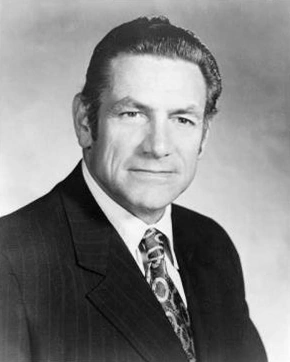
| 3 Quotes | |
| Born as | Harold Everett Hughes |
| Occup. | Politician |
| From | USA |
| Born | February 10, 1922 Ida County, Iowa |
| Died | October 23, 1996 Glendale, Arizona |
| Aged | 74 years |
| Cite | |
Citation Formats
APA Style (7th ed.)
Harold e. hughes biography, facts and quotes. (2026, February 19). FixQuotes. https://fixquotes.com/authors/harold-e-hughes/
Chicago Style
"Harold E. Hughes biography, facts and quotes." FixQuotes. February 19, 2026. https://fixquotes.com/authors/harold-e-hughes/.
MLA Style (9th ed.)
"Harold E. Hughes biography, facts and quotes." FixQuotes, 19 Feb. 2026, https://fixquotes.com/authors/harold-e-hughes/. Accessed 26 Mar. 2026.
Early Life and Background
Harold Everett Hughes was born on February 10, 1922, in rural northern Iowa, in the hard-edged Midwestern world between two world wars where farm income rose and collapsed with commodity prices and the weather. The state that formed him prized self-reliance, thrift, and plain speech, yet it also carried an older Populist memory of mutual aid and suspicion of concentrated power - a tension that would later animate his politics. Hughes grew up in working-class circumstances and learned early how quickly stability could turn to precarity, a lesson the Great Depression made visceral across Iowa.His early adulthood coincided with the mobilization for World War II and the postwar boom that reshaped American life through highways, suburban growth, and mass union labor. Hughes lived those changes from the ground up, working as a truck driver and, later, moving into union leadership. That route into public life was not glamorous, but it trained him in the mechanics of grievance, negotiation, and solidarity. It also brought him into close contact with the strains of the road culture of the era - long hours, isolation, and the omnipresence of alcohol - pressures that would become central to his private crisis and public mission.
Education and Formative Influences
Hughes was not shaped primarily by elite schooling but by experience, labor politics, and the practical education of organizing: listening, translating anger into demands, and building trust across competing loyalties. He became a leader in the Teamsters, absorbing the mid-century language of collective bargaining while also learning how personal weakness can corrode responsibility. The moral vocabulary that later marked his speeches drew from Midwestern Protestant culture and the mid-century recovery movement, fusing civic duty with a candid account of human fragility.Career, Major Works, and Turning Points
After rising in union ranks, Hughes entered politics as a Democrat and became governor of Iowa (1963-1969), a striking feat in a state long comfortable with Republican leadership. As governor, he pushed for modernization of state services, invested political capital in battling discrimination and poverty, and built a reputation for emotional directness rare in public officials of the period. In 1968 he was elected to the U.S. Senate, serving from 1969 to 1975, where he became nationally prominent for his work on alcoholism and drug dependence, including advocacy that helped shift addiction from a purely moral failing toward a public health and treatment framework. His most consequential turning point, however, was personal: after a near-suicidal descent into alcoholism and an experience of recovery that he described in explicitly spiritual terms, he began to treat politics as a form of testimony - an attempt to turn private wreckage into public repair. He retired from the Senate after one term, later leading or supporting treatment and recovery initiatives, and remained a moral voice in Iowa until his death on October 23, 1996.Philosophy, Style, and Themes
Hughes governed and legislated with an ethic of confession and responsibility: he believed democratic authority had to be earned through honesty, not merely won through elections. His style was blunt, sometimes rough, and often urgent, shaped by the cadence of union halls and the emotional intensity of a man who had stared down self-destruction. He was drawn to the idea that government could widen the circle of dignity - not by romanticizing the poor or addicted, but by taking seriously the ordinary ways people fall apart: isolation, shame, and the silence that lets suffering metastasize.The inner life behind that public ethic was unusually exposed for an American politician. He spoke of the moment of surrender in language stripped of ornament: “I know no words of prayer - God help me because I can not help myself”. That admission was not rhetorical; it was a theory of the self, arguing that willpower alone is often insufficient and that community, grace, and structured help are real political goods. In recounting the nadir, he did not soften it - “Let me die because I do not want to see the sun again”. - and that darkness gave weight to his later claim of renewal: “A great sense of peace entered my body, and seemingly into every cell”. Taken together, these lines reveal a psychology that moved from control to surrender to service, and they explain why he treated addiction as both a personal affliction and a civic issue demanding resources, compassion, and accountability.
Legacy and Influence
Hughes endures as one of the clearest examples of a modern American leader who made recovery a public language without turning it into spectacle. In Iowa, he helped expand the moral horizons of state politics during the Great Society era, marrying bread-and-butter liberalism to a stark, personal spirituality that cut through partisan scripts. Nationally, his Senate work helped legitimate treatment-centered approaches and encouraged later policymakers to speak of addiction as illness without abandoning the need for responsibility and structure. His influence lives less in a single statute than in a model of leadership: a belief that the credibility to govern can be rebuilt after failure, and that the most private battles - when told truthfully - can bend public institutions toward mercy.Our collection contains 3 quotes written by Harold, under the main topics: Peace - Prayer - Sadness.
Source / external links