
Harold Macmillan Biography Quotes 27 Report mistakes
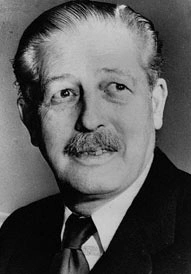
| 27 Quotes | |
| Occup. | Politician |
| From | England |
| Born | February 10, 1894 |
| Died | December 29, 1986 |
| Aged | 92 years |
| Cite | |
Citation Formats
APA Style (7th ed.)
Harold macmillan biography, facts and quotes. (2026, February 11). FixQuotes. https://fixquotes.com/authors/harold-macmillan/
Chicago Style
"Harold Macmillan biography, facts and quotes." FixQuotes. February 11, 2026. https://fixquotes.com/authors/harold-macmillan/.
MLA Style (9th ed.)
"Harold Macmillan biography, facts and quotes." FixQuotes, 11 Feb. 2026, https://fixquotes.com/authors/harold-macmillan/. Accessed 6 Mar. 2026.
Early Life and Background
Maurice Harold Macmillan was born on February 10, 1894, in Chelsea, London, into the Anglo-Scottish publishing dynasty behind Macmillan & Co. His father, Maurice Crawford Macmillan, moved easily between business and Conservative politics; his mother, Helen (Nellie) Artie Tarleton Belles, brought American family connections and a sharp, socially observant intelligence. The combination gave the boy both security and a lifelong sensitivity to status, money, and the small humiliations that divide classes - an awareness that later fed his patrician yet oddly empathetic public style.The First World War split his life into a before and after. Commissioned into the Grenadier Guards, he fought on the Western Front and was badly wounded at the Somme in 1916, an injury that left him in recurring pain and prolonged convalescence. Those experiences - the mass death, the stoic routines of command, and the sense that civilization could fracture overnight - hardened his dislike of ideological extremes and made him suspicious of easy optimism, even when he later became the statesman most associated with prosperity.
Education and Formative Influences
Macmillan attended Eton and went up to Balliol College, Oxford, in 1912, but war largely derailed his university career; he returned only fitfully and left without taking a degree. His real education came from reading - classics, history, and political economy - and from the interwar argument about what Britain owed its veterans and unemployed. The publishing world around him sharpened his sense of language as an instrument, while Oxford and Eton embedded him in the governing class whose habits he would both deploy and, at key moments, try to discipline.Career, Major Works, and Turning Points
After work in the family firm, he entered Parliament as Conservative MP for Stockton-on-Tees in 1924, lost the seat in 1929 amid economic turmoil, and returned in 1931, gradually becoming a prominent Conservative "wets" critic of unemployment policy and appeasement. During the Second World War he served in ministerial roles and, crucially, as resident minister at Allied headquarters in North Africa, where he learned coalition management under pressure. Postwar he rose through Housing (notably presiding over the drive to meet the 300, 000 houses-a-year target), Defence, and the Exchequer before becoming prime minister in 1957 after the Suez debacle discredited Anthony Eden. His government pursued managed growth and decolonization, captured by the 1960 "Wind of Change" speech, while steering Britain through Cold War crises and the early search for European entry. Turning points included the 1962 "Night of the Long Knives" reshuffle that damaged his image of loyalty, the failed attempt to join the European Economic Community after Charles de Gaulle's 1963 veto, and the Profumo affair, which deepened the sense of an exhausted governing style; ill health helped push him to resign in October 1963. Elevated to the peerage as Earl of Stockton in 1984, he died on December 29, 1986.Philosophy, Style, and Themes
Macmillan's politics were less a doctrine than a temperament: Conservative in inheritance, but pragmatic about state intervention, collective bargaining, and social stability. He distrusted technocratic certainty as much as demagoguery, warning, “We have not overthrown the divine right of kings to fall down for the divine right of experts”. The remark exposes a psychological seam in him - a man formed by elite institutions who nonetheless feared the cold impersonality of systems, and who preferred judgment, experience, and human fallibility to the algebra of planners.His public persona - the languid "Supermac" with umbrella and theatrical pauses - masked a mind preoccupied with the emptiness that can follow ambition. “Power? It's like a Dead Sea fruit. When you achieve it, there is nothing there”. Coming from a prime minister, it reads like confession as well as warning: he treated office as a burden of stewardship rather than personal fulfillment, and his melancholy wit often served as self-protection against disappointment. At the same time, his instinct for trust and reciprocity in politics was acute: “In long experience I find that a man who trusts nobody is apt to be the kind of man nobody trusts”. That belief explains both his success in international relationships - especially the cultivated "special relationship" with the United States - and his occasional miscalculation at home when loyalty fractured under scandal and party anxiety.
Legacy and Influence
Macmillan left an enduring model of postwar British Conservatism: socially stabilizing, fiscally flexible, skeptical of dogma, and attentive to international alignment. His era helped normalize the mixed economy and the welfare settlement, while his decolonization accelerated a painful but necessary redefinition of Britain after empire. Later Conservatives alternately revered and repudiated him - as a symbol of humane pragmatism or of complacent managerialism - but his deeper legacy lies in showing how a leader shaped by war and class could still attempt to govern for cohesion, using irony, patience, and historical memory as political tools.Our collection contains 27 quotes written by Harold, under the main topics: Witty One-Liners - Wisdom - Art - Love - Leadership.
Other people related to Harold: Edward Heath (Leader), Arthur Bryant (Historian), Elizabeth II (Royalty), Christine Keeler (Model), Geoffrey Fisher (Clergyman)
Source / external links