
Harold Pinter Biography Quotes 34 Report mistakes
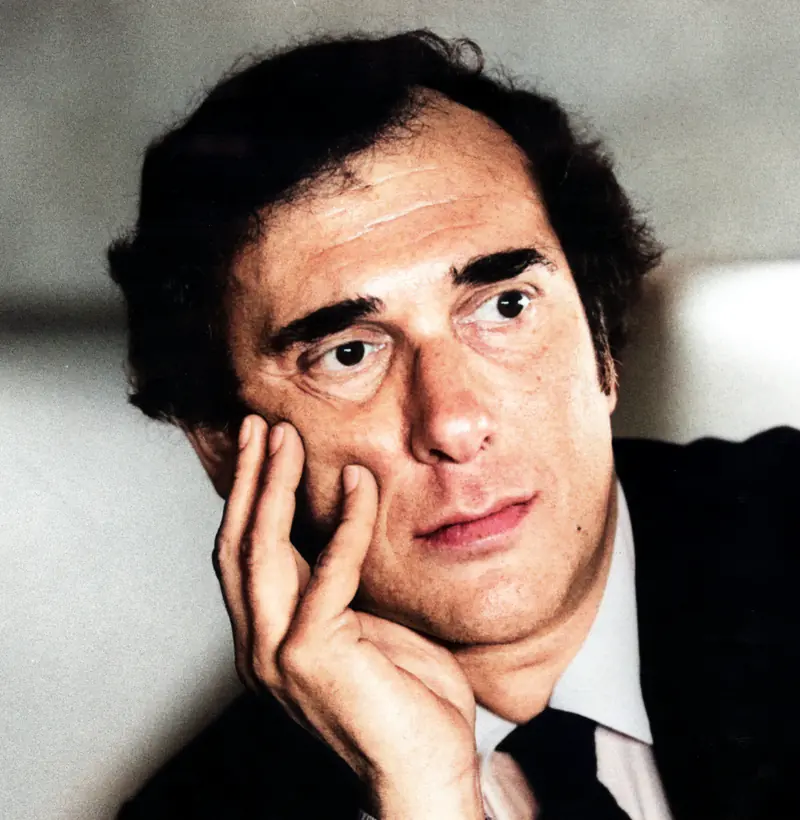
| 34 Quotes | |
| Occup. | Playwright |
| From | England |
| Spouses | Vivien Merchant (1956-1980) Lady Antonia Fraser (1980) |
| Born | October 10, 1930 London, England, U.K. |
| Died | December 24, 2008 London, England, U.K. |
| Aged | 78 years |
Harold Pinter was born on 10 October 1930 in Hackney, East London, into a Jewish working-class family. The experience of the Blitz and wartime evacuation imprinted on his imagination a sense of menace, dislocation, and survival that later surfaced in his drama. At Hackney Downs School he met a formative mentor, the English teacher Joe Brearley, who encouraged his early writing and lifelong love of poetry. After school he briefly enrolled at the Royal Academy of Dramatic Art before leaving to work in repertory theatre. As a young actor he toured extensively, performing under the stage name David Baron, absorbing stagecraft and the rhythms of everyday speech that would become central to his plays.
From Actor to Playwright
Pinter began writing short pieces for radio and stage while supporting himself as an actor. At the urging of his friend Henry Woolf, he wrote his first play, The Room (1957), which was staged at a university venue and announced his distinctive voice. The Dumb Waiter followed, refining a theatrical world in which ordinary rooms became sites of threat, power, and uneasy comedy. The Birthday Party (1958), produced by Michael Codron, opened to harsh reviews and closed quickly in London, but a powerful defense by critic Harold Hobson helped rescue Pinter's reputation and marked him as a writer to watch.
Breakthrough and Major Plays
The Caretaker (1960) established his international standing, with riveting performances by actors such as Alan Bates and Donald Pleasence. Over the next decade he produced a sequence of works that defined postwar British drama: The Homecoming (1965), which won a Tony Award and was championed by director Peter Hall; Old Times (1971), with its probing of memory; No Man's Land (1975), first performed with John Gielgud and Ralph Richardson; and Betrayal (1978), a spare, reverse-chronology dissection of intimacy and deceit. Throughout these plays, domestic spaces became arenas for shifting power games, while jokes, pauses, and silences concealed as much as they revealed.
Cinema and Screenwriting
Pinter's screen career brought his voice to a global audience. His collaboration with director Joseph Losey yielded The Servant (1963), Accident (1967), and The Go-Between (1971), the last winning the Palme d'Or at Cannes. He adapted The Birthday Party for film with William Friedkin, and later wrote the screenplay for The French Lieutenant's Woman (1981) directed by Karel Reisz, starring Meryl Streep and Jeremy Irons, earning major award nominations. He adapted Betrayal (1983) for director David Jones with Irons and Ben Kingsley, crafted The Comfort of Strangers (1990) for Paul Schrader, and wrote for Volker Schlondorff's The Handmaid's Tale (1990). Late in life he reimagined Sleuth (2007) for Kenneth Branagh, with Michael Caine and Jude Law. His scripts balanced precision and ambiguity, and his collaborations with actors like Dirk Bogarde, James Fox, and Julie Christie deepened the interplay of class, desire, and control.
Director, Collaborator, and Actor
Beyond writing, Pinter became a sought-after director. He cultivated a close partnership with playwright Simon Gray, directing plays such as Butley and Otherwise Engaged, and he frequently staged his own work, developing a rigorous rehearsal culture that emphasized cadence and subtext. He had a lasting affinity with the work of Samuel Beckett, whom he admired and with whom he developed a collegial friendship; Pinter directed and performed in Beckett pieces and carried their shared belief in economy and exactness into his own productions. His relationships with theatre leaders like Peter Hall at the Royal Shakespeare Company and at the National Theatre were crucial to the landmark productions that shaped his reputation.
Style and Influence
Critics coined the term "Pinteresque" to describe his unique dramaturgy: spare dialogue punctuated by strategic pauses, a mingling of wit and dread, and a focus on power relations embedded in ordinary conversation. While the phrase "comedy of menace" followed him, he rejected reductive labels, insisting that the music of speech and the truth of character guided his writing. Works like The Hothouse (drafted in the 1950s, produced decades later), A Kind of Alaska (inspired by Oliver Sacks), One for the Road, and Mountain Language show the range of his forms, from intimate chamber pieces to stark political interrogations. Generations of playwrights and directors absorbed his lessons about subtext and silence.
Public Voice and Politics
From the 1970s onward Pinter spoke and wrote publicly on human rights, censorship, and state violence, working with international cultural organizations and lending his name and presence to causes he believed in. He was an early and persistent critic of certain Western foreign policies, and in essays, poems, and interviews he argued for the artist's responsibility to confront abuses of power. In 2005 he was awarded the Nobel Prize in Literature; his Nobel lecture, "Art, Truth and Politics", delivered by video due to illness, combined moral urgency with the unsparing clarity of his dramatic voice.
Personal Life
Pinter married the actor Vivien Merchant in 1956. She appeared memorably in productions of his work during the 1960s, and they had one son together. The marriage eventually foundered, and after a period of upheaval they divorced. In 1980 he married the historian Lady Antonia Fraser, whose companionship was central to his private life and whose literary milieu complemented his own; they remained together until his death. Pinter's passions away from the desk included poetry and cricket, pursuits that revealed the competitive discipline and lyric precision also evident in his plays.
Later Years and Legacy
Despite serious illness diagnosed in the early 2000s, Pinter continued to write for stage and screen, to direct, and to speak publicly. Late plays such as Ashes to Ashes and Celebration, along with revivals of earlier work, affirmed his continuing relevance. He died on 24 December 2008 in London. Tributes from collaborators and peers across theatre and film, including figures like Peter Hall, Karel Reisz, and actors who had embodied his characters, testified to a career that reshaped modern drama. His influence endures in the rehearsal room and on the page: the calibrated pause, the comic line turned threatening, the ordinary room suddenly charged with history and power. In the world that bears his name, Pinteresque, language is never merely speech; it is battle, refuge, and revelation.
Our collection contains 34 quotes who is written by Harold, under the main topics: Witty One-Liners - Wisdom - Truth - Justice - Puns & Wordplay.
Other people realated to Harold: Margaret Atwood (Novelist), John Osborne (Playwright), Kenneth Tynan (Critic), John Simon (Critic), Vincent Canby (Critic), John Pilger (Journalist), Daniel Craig (Actor), Alan Bates (Actor), Tom Hiddleston (Actor), John Gielgud (Actor)
Frequently Asked Questions
- The homecoming Harold Pinter characters: The main characters include Max, Lenny, Sam, Teddy, Ruth, and Joey.
- Harold Pinter as a modern dramatist: Pinter was a key figure in 20th-century British theatre, known for his innovative use of language, ambiguous settings, and complex characters.
- What is Harold Pinter observation on poetry? Pinter believed that poetry could capture the essence of human experience in a concise, powerful way, and often incorporated poetic language into his plays.
- Harold Pinter as an absurd dramatist: Pinter's works were deeply influenced by the Theatre of the Absurd, exploring themes of alienation, existentialism, and the human condition.
- Harold Pinter first full-length play: The Birthday Party (1957)
- How old was Harold Pinter? He became 78 years old
Harold Pinter Famous Works
- 1978 Betrayal (Play)
- 1974 No Man's Land (Play)
- 1964 The Homecoming (Play)
- 1960 The Caretaker (Play)
- 1957 The Birthday Party (Play)
- 1957 The Dumb Waiter (Play)
Source / external links