
Harold S. Geneen Biography Quotes 27 Report mistakes
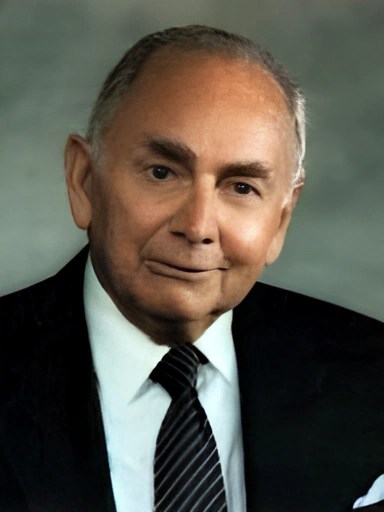
| 27 Quotes | |
| Born as | Harold Stephen Geneen |
| Occup. | Businessman |
| From | United Kingdom |
| Born | 1910 Bournemouth, England |
| Died | 1997 |
| Cite | |
Citation Formats
APA Style (7th ed.)
Harold s. geneen biography, facts and quotes. (2026, February 11). FixQuotes. https://fixquotes.com/authors/harold-s-geneen/
Chicago Style
"Harold S. Geneen biography, facts and quotes." FixQuotes. February 11, 2026. https://fixquotes.com/authors/harold-s-geneen/.
MLA Style (9th ed.)
"Harold S. Geneen biography, facts and quotes." FixQuotes, 11 Feb. 2026, https://fixquotes.com/authors/harold-s-geneen/. Accessed 11 Feb. 2026.
Early Life and Background
Harold Stephen Geneen (1910-1997) was an American business executive whose name became synonymous with the hard-edged conglomerate era and with a style of management that treated numbers as moral evidence. He was born in New York City to immigrant parents (his father from England, his mother from Ireland), an origin story that later fed a self-image of austerity, upward striving, and suspicion of ornamental talk. Although sometimes loosely described as "from the United Kingdom" because of his family roots, his formative environment was distinctly American: interwar New York, where mobility depended on discipline, credentials, and the ability to endure long hours.Growing up during the tail end of the Progressive Era and coming of age amid the Great Depression, Geneen absorbed the lesson that institutions fail, jobs vanish, and rhetoric does not pay rent. Friends and colleagues later recalled a man who preferred data to reassurance and who believed that authority is earned by carrying responsibility in public. That temperament fit a century in which corporate scale was exploding, managerial hierarchies were professionalizing, and postwar America was learning to treat the corporation as a national instrument.
Education and Formative Influences
Geneen attended New York University, earning degrees in accounting and business (B.S. and M.B.A.), training that shaped both his mental habits and his ethics: close reading of financial statements, intolerance for fuzzy definitions, and a conviction that performance can be audited. His early career in accounting and finance sharpened an instinct for controls and reporting systems, and he learned to treat information flow as the bloodstream of large organizations - especially vital in a diversified enterprise where distance and complexity can excuse complacency.Career, Major Works, and Turning Points
After early roles in industry and consumer goods, Geneen rose to prominence as president (1959) and later CEO (1967-1977) of International Telephone and Telegraph (ITT). Under his leadership ITT became a symbol of the conglomerate boom, assembling a sprawling portfolio across telecommunications, insurance, hotels, automotive parts, and more, with major acquisitions such as Hartford Fire Insurance and Sheraton. His tenure coincided with the high-water mark of the belief that disciplined management could outperform industry boundaries, followed by rising skepticism and regulatory pressure, including intense public controversy in the early 1970s around ITT and U.S. politics. Geneen also became a public intellectual of management through his bestselling book with Bill Wallace, Managing (1984), which distilled his methods into a creed of accountability, measurement, and relentless review.Philosophy, Style, and Themes
Geneen's inner life, as reflected in his decisions, was animated by a fear of drift - the slow institutional slide into excuses. He built ITT around systems that made evasion difficult: standardized reporting, frequent operating reviews, and a culture in which managers were expected to know their numbers cold. His worldview is captured by his insistence that "I think it is an immutable law in business that words are words, explanations are explanations, promises are promises - but only performance is reality". The sentence reads like a confession of what he distrusted in himself and others: the human tendency to substitute narrative for results.That emphasis did not mean he ignored people; rather, he treated management as a craft learned under pressure. "In the business world, everyone is paid in two coins: cash and experience. Take the experience first; the cash will come later". For Geneen, careers were forged through exposure to hard problems and unforgiving feedback loops, not through charisma or abstract strategy. He also rejected the idea that leadership could be packaged as slogans, arguing that "Leadership is practiced not so much in words as in attitude and in actions". This triangulation - results, apprenticed competence, and behavioral example - explains both his admirers' reverence and critics' discomfort: his method could energize performance, yet it could also feel like life inside a spreadsheet, where ambiguity was treated as a defect of character.
Legacy and Influence
Geneen endures as a defining figure of 20th-century managerialism: the executive as architect of systems, builder of scale, and enforcer of accountability. His reputation rose with the conglomerate model and later became a cautionary reference point as investors and scholars questioned whether diversification itself creates value, yet his operational disciplines - rigorous reporting, clear responsibility, and intolerance for excuse-making - remain embedded in modern performance management. For biographers, his lasting interest lies in the tension he embodied: a man shaped by scarcity who sought certainty in numbers, and who tried to make the sprawling modern corporation answerable to the simplest verdict he trusted - measurable performance.Our collection contains 27 quotes written by Harold, under the main topics: Witty One-Liners - Truth - Leadership - Work Ethic - Servant Leadership.
Source / external links