
Harold Wilson Biography Quotes 14 Report mistakes
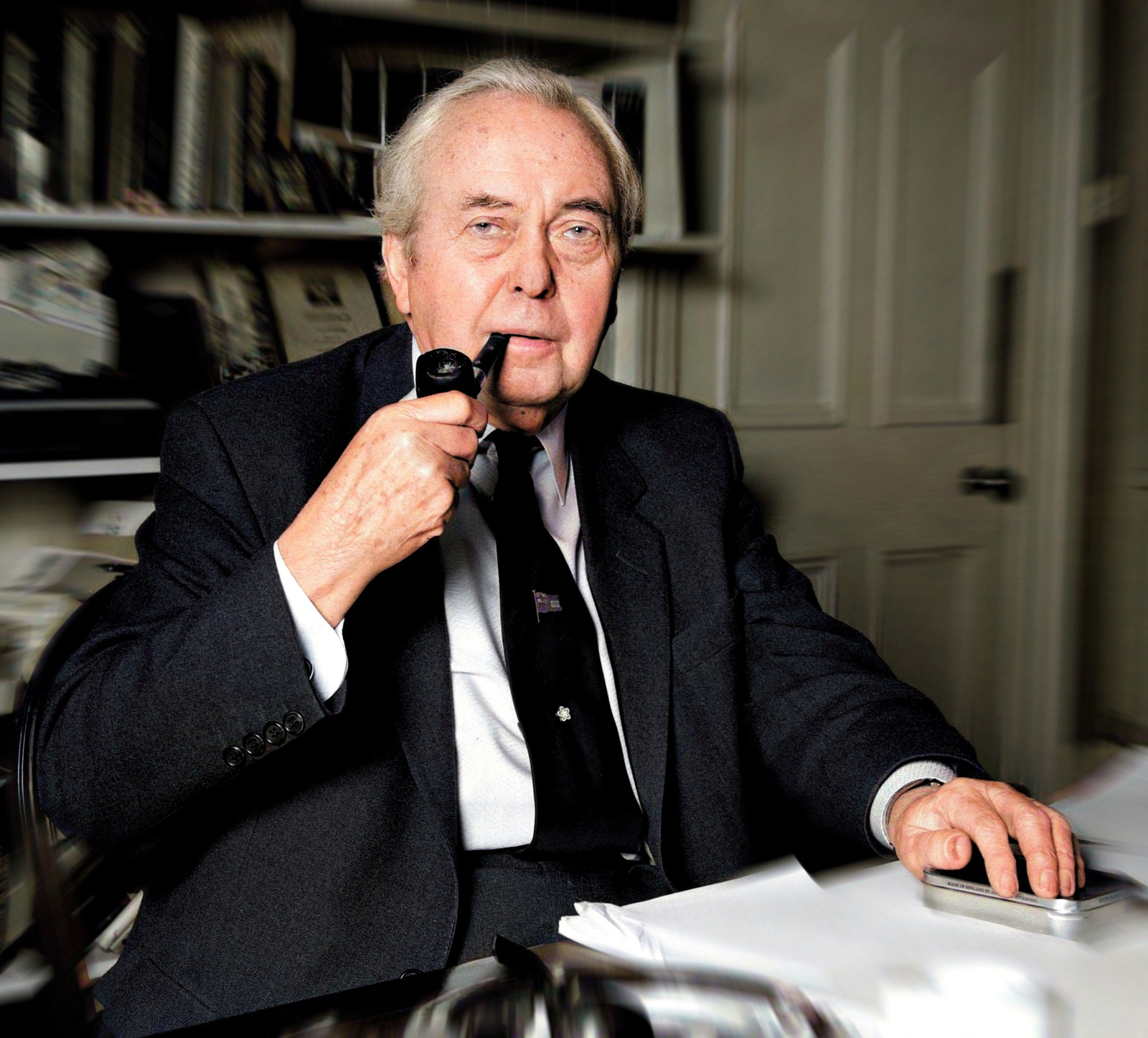
| 14 Quotes | |
| Born as | James Harold Wilson |
| Known as | Baron Wilson of Rievaulx |
| Occup. | Statesman |
| From | England |
| Born | March 11, 1916 Huddersfield, United Kingdom |
| Died | May 24, 1995 London, United Kingdom |
| Cause | Intestinal cancer |
| Aged | 79 years |
| Cite | |
Citation Formats
APA Style (7th ed.)
Harold wilson biography, facts and quotes. (2026, February 11). FixQuotes. https://fixquotes.com/authors/harold-wilson/
Chicago Style
"Harold Wilson biography, facts and quotes." FixQuotes. February 11, 2026. https://fixquotes.com/authors/harold-wilson/.
MLA Style (9th ed.)
"Harold Wilson biography, facts and quotes." FixQuotes, 11 Feb. 2026, https://fixquotes.com/authors/harold-wilson/. Accessed 6 Mar. 2026.
Early Life and Background
James Harold Wilson was born on March 11, 1916, in Huddersfield, West Riding of Yorkshire, into a lower-middle-class household shaped by Nonconformist seriousness and the insecurities of interwar Britain. His father, Herbert Wilson, worked as an industrial chemist; his mother, Ethel Seddon, had been a schoolteacher. The family moved to Spital, Cheshire, when Herbert found work in the chemical industry, and the contrast between Yorkshire mill towns and newer suburban England left Wilson alert to class gradations without ever being fully at ease with social display.That early mix of ambition and restraint became a lifelong habit: he was a man who wanted power but disliked the theatre of deference around it. The Great Depression shadowed his adolescence, and he watched how employment, wages, and prices could shift a family from stability to worry. Even before politics, his private temperament was marked by self-control, an instinct for careful calculation, and a preference for the ordinary - a sensibility that later made his pipe, Gannex raincoat, and plain tastes part of a deliberate public signature.
Education and Formative Influences
Wilson won a place at Wirral Grammar School and then entered Jesus College, Oxford, where he read Philosophy, Politics and Economics and graduated with first-class honours. Oxford refined his belief in statistics, administrative competence, and the primacy of economics in modern government; it also introduced him to the networks through which Britain still ran - colleges, committees, and civil servants. During the Second World War he worked as an economic statistician and civil servant, including at the Board of Trade and in wartime economic administration, gaining a technocratic confidence in planning and an intimate view of how the state could mobilize industry, manage scarcity, and negotiate with business.Career, Major Works, and Turning Points
Elected Labour MP for Ormskirk in 1945, Wilson rose quickly, becoming President of the Board of Trade in 1947 and the youngest Cabinet minister of the century; he resigned in 1951 over NHS charges, a gesture that burnished his left credentials while keeping him within the party's governing mainstream. After Labour's defeats he served as shadow chancellor, then defeated George Brown to become party leader in 1963, presenting himself as modern, managerial, and unflustered by class markers. As prime minister (1964-1970, and again 1974-1976), he pursued the "white heat" modernization agenda, expanded higher education with the Open University, and oversaw a striking liberalizing period - including the partial decriminalization of male homosexuality, abortion reform, and the end of theatre censorship - while navigating chronic sterling pressure, devaluation in 1967, industrial conflict, and Northern Ireland's deteriorating security situation. He won the 1975 referendum for continued membership of the European Economic Community after renegotiation, then resigned unexpectedly in 1976; his later years were darkened by declining health and, ultimately, dementia, before his death on May 24, 1995.Philosophy, Style, and Themes
Wilson's governing psychology was defined by adaptation under constraint: he treated politics as an arena where ideals survived only when translated into numbers, coalitions, and timing. His warning that “A week is a long time in politics”. was not a quip but a creed of tactical elasticity - the belief that public moods, market pressure, and party discipline could shift so fast that a leader had to keep options open and conserve authority for sudden turns. He distrusted grand finalities, preferring incremental change that could be defended as pragmatism rather than dogma.Economically, he saw the state caught between moral promise and wage-price mechanics, a tension he summarized with blunt symmetry: “One man's wage increase is another man's price increase”. That sentence captures both his empathy for workers and his fear of inflationary spirals that could destroy reform from within. Yet he was not an anti-modern conservative; he insisted Labour must speak the language of laboratories and productivity, arguing, “We are redefining and we are restating our socialism in terms of the scientific revolution”. The theme running through his speeches and decisions is a bet on modernization without rupture - engineering national renewal while keeping the party, the unions, and the electorate inside the tent.
Legacy and Influence
Wilson left a complicated inheritance: he helped normalize a more socially liberal Britain and created institutions, most notably the Open University, that widened opportunity beyond traditional elites; he also exemplified the limits of postwar social democracy in an era of currency crises, global competition, and industrial militancy. His leadership style - managerial, tactical, sometimes opaque - became a template for later Labour modernizers who sought power through competence rather than class rhetoric, while his failures on productivity and industrial reform foreshadowed the upheavals of the late 1970s and the Thatcher years. Remembered as both a shrewd operator and a serious reformer, he remains a central figure in the story of how Britain tried to reconcile egalitarian aims with the hard arithmetic of a changing economy.Our collection contains 14 quotes written by Harold, under the main topics: Witty One-Liners - Ethics & Morality - Wisdom - Leadership - Equality.
Other people related to Harold: Clare Short (Politician), Barbara Castle (Politician), Elizabeth II (Royalty), Robin Cook (Politician), Edward Heath (Leader), Denis Healey (Politician), Michael Foot (Politician), Ben Pimlott (Historian), Shirley Williams (Politician), Lord Caradon (Diplomat)
Source / external links