
Harriet Beecher Stowe Biography Quotes 25 Report mistakes
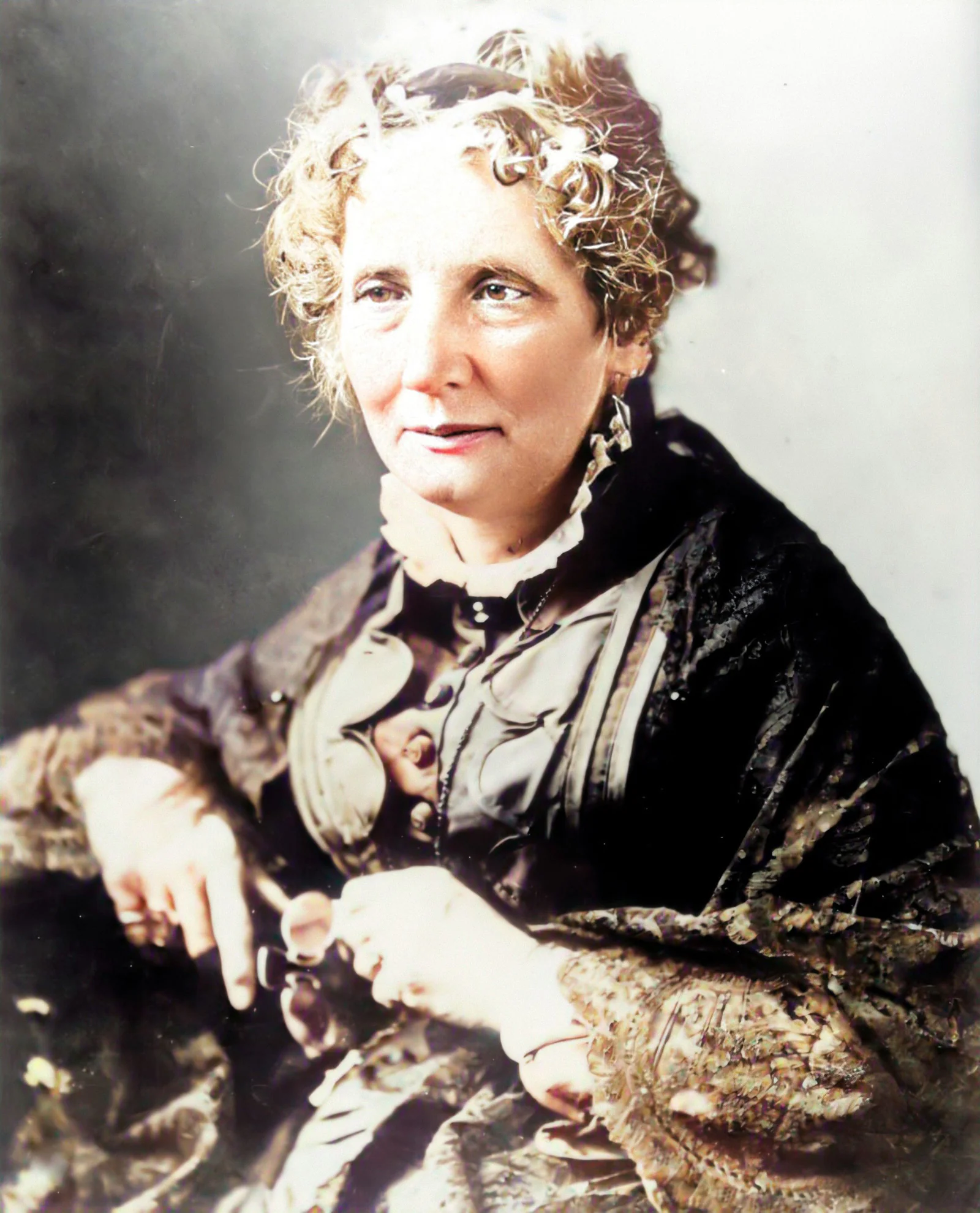
| 25 Quotes | |
| Born as | Harriet Elizabeth Beecher |
| Occup. | Author |
| From | USA |
| Spouse | Calvin Ellis Stowe |
| Born | June 14, 1811 Litchfield, Connecticut, United States |
| Died | July 1, 1896 Hartford, Connecticut, United States |
| Cause | Stroke |
| Aged | 85 years |
| Cite | |
Citation Formats
APA Style (7th ed.)
Harriet beecher stowe biography, facts and quotes. (2026, February 11). FixQuotes. https://fixquotes.com/authors/harriet-beecher-stowe/
Chicago Style
"Harriet Beecher Stowe biography, facts and quotes." FixQuotes. February 11, 2026. https://fixquotes.com/authors/harriet-beecher-stowe/.
MLA Style (9th ed.)
"Harriet Beecher Stowe biography, facts and quotes." FixQuotes, 11 Feb. 2026, https://fixquotes.com/authors/harriet-beecher-stowe/. Accessed 5 Mar. 2026.
Early Life and Background
Harriet Elizabeth Beecher was born on June 14, 1811, in Litchfield, Connecticut, into a family that treated moral argument as daily bread. Her father, Lyman Beecher, was a prominent Congregationalist minister and reform agitator; her mother, Roxana Foote Beecher, died when Harriet was still a child, leaving a vacancy that sharpened her sensitivity to loss and the private costs of public righteousness. The Beecher household was crowded with gifted siblings, including Catharine Beecher and Henry Ward Beecher, and it trained Harriet early in the arts of persuasion, self-scrutiny, and religious imagination.In 1832 the family moved west to Cincinnati, Ohio, a river city where slavery was not an abstraction but a system visible across the water in Kentucky. Cincinnati was also a place of riots, abolitionist organizing, and fugitive stories exchanged in kitchens and boardinghouses. For Harriet, the borderland became a laboratory of conscience: she absorbed the textures of Black life under threat, the compromises of Northern commerce, and the volatile consequences when piety met politics. Those years seeded the scenes and voices she would later write with unsettling intimacy.
Education and Formative Influences
Stowe was educated at Catharine Beecher's Hartford Female Seminary, where rigorous composition, rhetoric, and moral philosophy were treated as intellectual equipment rather than genteel ornament. She read widely in English literature and theology, trained as a teacher, and learned to argue through narrative - a skill honed in family debates that blurred the line between sermon and story. In Cincinnati she joined literary circles, published early sketches, and encountered firsthand accounts of enslavement and escape; just as importantly, she saw how religious language could be used both to justify bondage and to indict it, a duality that would become central to her later method.Career, Major Works, and Turning Points
In 1836 she married Calvin Ellis Stowe, a biblical scholar, and built a writing life amid pregnancies, household strain, and intermittent financial insecurity. The Fugitive Slave Act of 1850, which compelled Northern participation in slave-catching, pushed her from moral revulsion to deliberate intervention: in 1851-1852 she serialized Uncle Tom's Cabin in the National Era and then published it as a book (1852), an international sensation that turned domestic fiction into political shock. She followed with A Key to Uncle Tom's Cabin (1853) to document sources and answer skeptics, then Dred (1856), The Minister's Wooing (1859), and later Oldtown Folks (1869) and the Florida travel-and-reminiscence volume Palmetto Leaves (1873). The war years and Reconstruction did not settle her; instead they deepened her attention to the long afterlife of violence and to the ways sentimental culture could either anesthetize readers or mobilize them.Philosophy, Style, and Themes
Stowe's inner life fused evangelical feeling with a novelist's ear for social performance. She believed moral truth traveled fastest through the "insipid details of everyday life", and her fiction labored to make the kitchen table, the nursery hymn, and the plantation ledger into scenes of judgment: “To be really great in little things, to be truly noble and heroic in the insipid details of everyday life, is a virtue so rare as to be worthy of canonization”. That sentence is also self-portraiture. She wrote under the pressure of the ordinary - interrupted hours, grief, and duty - and converted that pressure into an argument that heroism must be measurable in daily choices, not only in battlefield epics or legislative speeches.Her style mixed sentimental appeal, direct address, dialect, and melodramatic plotting with a polemicist's insistence that empathy is evidence. The psychological engine is her conviction that sorrow can enlarge the moral self: “Any mind that is capable of real sorrow is capable of good”. In Uncle Tom's Cabin, suffering is not decorative; it is an ethical test that reveals which characters can imagine another's interiority and which retreat into legalism or appetite. This is why Stowe repeatedly frames the conflict as a choice between the weak and the strong - “It's a matter of taking the side of the weak against the strong, something the best people have always done”. - and why her villains often cling to institutions, habits, or theologies that allow them to feel blameless. The result is a literature of urgency: flawed, fervent, and designed to make readers feel complicit unless they act.
Legacy and Influence
Stowe died on July 1, 1896, in Hartford, Connecticut, after decades in which her fame and controversy never fully receded. Uncle Tom's Cabin helped internationalize the American slavery debate, strengthened abolitionist resolve, and demonstrated the political force of popular fiction, even as later stage adaptations and caricatures distorted her characters and fed enduring racial stereotypes. Her broader legacy is twofold: she expanded the public authority of women writers in the United States and proved that moral emotion - when organized into story - could move masses, shape discourse, and leave an imprint on how a nation remembers its own sins.Our collection contains 25 quotes written by Harriet, under the main topics: Motivational - Ethics & Morality - Wisdom - Justice - Never Give Up.
Other people related to Harriet: Gamaliel Bailey (Journalist), John Beecher (Poet)
Harriet Beecher Stowe Famous Works
- 1869 Oldtown Folks (Novel)
- 1862 The Pearl of Orr's Island (Novel)
- 1859 The Minister's Wooing (Novel)
- 1856 Dred: A Tale of the Great Dismal Swamp (Novel)
- 1852 Uncle Tom's Cabin (Novel)
Source / external links