
Harriet Van Horne Biography Quotes 4 Report mistakes
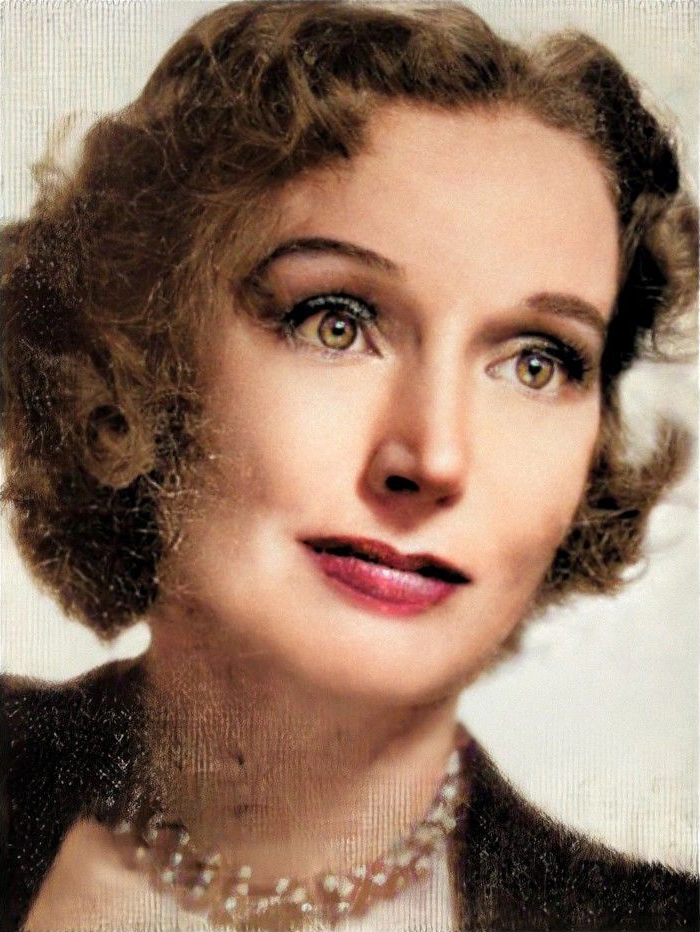
| 4 Quotes | |
| Occup. | Journalist |
| From | USA |
| Born | May 17, 1920 Syracuse, New York |
| Died | January 15, 1998 New York City |
| Aged | 77 years |
| Cite | |
Citation Formats
APA Style (7th ed.)
Harriet van horne biography, facts and quotes. (2026, February 11). FixQuotes. https://fixquotes.com/authors/harriet-van-horne/
Chicago Style
"Harriet Van Horne biography, facts and quotes." FixQuotes. February 11, 2026. https://fixquotes.com/authors/harriet-van-horne/.
MLA Style (9th ed.)
"Harriet Van Horne biography, facts and quotes." FixQuotes, 11 Feb. 2026, https://fixquotes.com/authors/harriet-van-horne/. Accessed 26 Mar. 2026.
Early Life and Background
Harriet Van Horne was born on May 17, 1920, in the United States, into a country learning to live with mass media as a daily fact of life. Her childhood ran through the long shadow of the Great Depression and then the mobilization years of World War II, decades that trained a generation to read between lines, to measure public language against private reality, and to distrust easy optimism. Those early conditions mattered for a critic who would later treat popular culture not as trivia but as a national diary written in commercials, sitcom premises, and the unguarded pauses between pitches.Van Horne came of age as radio, movies, and then television rearranged American evenings and appetites. She developed the habit that would define her journalism: watch closely, listen for the telling phrase, and never confuse novelty with value. The United States was moving toward a postwar consumer order in which the living room became a marketplace; she would spend her career testing that marketplace for honesty, craft, and human consequence, often with a dry wit that made moral seriousness easier to swallow.
Education and Formative Influences
Publicly available accounts of Van Horne's early schooling are less detailed than her later bylines, but her formation is legible in the kind of criticism she practiced: the essay as conversation, the review as character study, and the belief that taste is a civic subject. She matured in the era when the New Yorker style of urbane compression and the rise of professionalized entertainment journalism were reshaping cultural authority, and she learned to write with the brisk confidence of someone addressing readers who were themselves busy, skeptical, and hungry for clarity.Career, Major Works, and Turning Points
Van Horne became best known as a journalist and critic at The New Yorker, where her work on television and popular entertainment helped define how serious magazines could cover mass culture without condescension or surrender. Writing through the medium's explosive postwar expansion and into its more fragmented, ratings-driven maturity, she treated programming, personalities, and broadcast rituals as evidence of broader American moods - aspiration, boredom, loneliness, appetite, and the wish to be distracted. Her career tracked television's shift from novelty to background noise; in that shift she found her central subject: how a nation talks to itself when it is tired, when it is selling, and when it is pretending not to care.Philosophy, Style, and Themes
Van Horne's criticism was built on the premise that entertainment is never only entertainment; it is a form of persuasion, sometimes tender, sometimes predatory. She wrote with the poise of someone who knew that audiences are not dupes but participants, and that the most revealing cultural acts often happen at the edges - the half-attentive viewing, the channel-surfing, the impulse to replace one glow with another. Her line, “One who roams the channels after dark, searching for buried treasure”. , reads as both description and self-portrait: the critic as night walker, alert to small, unexpected flashes of human truth inside an industrial schedule.Her psychology as a writer mixed impatience with tenderness. She had little mercy for false uplift, but she recognized the real needs that make people turn on the set in the first place. When she observed, “There are days when any electrical appliance in the house, including the vacuum cleaner, seems to offer more entertainment possibilities than the television set”. , she was not merely joking; she was diagnosing a modern fatigue in which choice multiplies while satisfaction thins. Even her oft-repeated culinary analogy - “Cooking is like love. It should be entered into with abandon or not at all”. - signals a larger aesthetic ethic: commit fully or do not pretend. In her best work, that ethic became a standard applied to producers, performers, and viewers alike, insisting on sincerity, craft, and the courage to feel something in public.
Legacy and Influence
Harriet Van Horne died on January 15, 1998, leaving behind a model of cultural journalism that remains instructive in an age of infinite screens. She helped legitimize television criticism as a serious form, not by treating TV as high art, but by treating the audience as fully human and the medium as socially consequential. Her influence persists in critics who write about pop culture as moral weather - changing, pervasive, easy to ignore until it shapes the day - and in the enduring idea that a sharp sentence can puncture hype without losing sympathy for the people who want, against their better judgment, to be entertained.Our collection contains 4 quotes written by Harriet, under the main topics: Witty One-Liners - Love - Adventure.
Harriet Van Horne Famous Works
- 1969 Vogue's Book of Etiquette (Book)