
Harry Hay Biography Quotes 3 Report mistakes
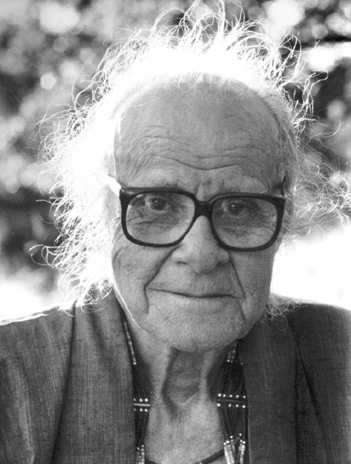
| 3 Quotes | |
| Born as | Henry Hay, Jr. |
| Occup. | Celebrity |
| From | USA |
| Born | April 7, 1912 Worthing, England |
| Died | October 24, 2002 San Francisco, California |
| Aged | 90 years |
| Cite | |
Citation Formats
APA Style (7th ed.)
Harry hay biography, facts and quotes. (2026, March 30). FixQuotes. https://fixquotes.com/authors/harry-hay/
Chicago Style
"Harry Hay biography, facts and quotes." FixQuotes. March 30, 2026. https://fixquotes.com/authors/harry-hay/.
MLA Style (9th ed.)
"Harry Hay biography, facts and quotes." FixQuotes, 30 Mar. 2026, https://fixquotes.com/authors/harry-hay/. Accessed 31 Mar. 2026.
Early Life and Background
Harry Hay was born Henry Hay, Jr., on April 7, 1912, in Worthing, England, to American parents, and he grew up largely in Chile and then in California after the family returned to the United States. His father was an engineer tied to mining interests, and the household combined expatriate privilege with stern conservatism. That mixture mattered. Hay's childhood moved between cultures, languages, and social codes, and from early on he learned to see identity as something contingent rather than fixed. The family's relocation to Los Angeles placed him inside a modernizing West Coast metropolis where film, labor conflict, and sexual subcultures all coexisted uneasily.
The emotional weather of his youth was harsher than the cosmopolitan surface suggested. Hay later described a difficult relationship with his father and a growing sense that his own inward life had no sanctioned place within the moral order around him. He recognized his attraction to men while still young, but the era offered no affirming vocabulary, only danger, secrecy, and medicalized condemnation. That early estrangement became central to his later politics: he did not simply want tolerance for homosexuals, he wanted a transformed understanding of what a minority consciousness could mean. The child who felt out of joint with family, nation, and gender expectation became the adult who would insist that gay people were not failed heterosexuals but a distinct cultural people.
Education and Formative Influences
Hay attended Stanford University in the early 1930s but did not complete a degree. The Depression years were his real education. In California he encountered Marxist analysis, labor organizing, theater, folk music, and bohemian circles that linked art with social struggle. He became active in left politics and joined the Communist Party, finding in it a language of historical change, class solidarity, and disciplined collective action. Just as important, he studied indigenous cultures and comparative social forms, interests that broadened his sense that sexuality could be historically and culturally organized rather than eternally defined by Christian-American norms. His experience in radical theater and workers' education sharpened his talent for manifesto, pedagogy, and symbolic politics - skills he would later transfer to homosexual organizing.
Career, Major Works, and Turning Points
Hay's decisive intervention came after World War II, when he began arguing that homosexuals constituted an oppressed minority analogous, in some respects, to ethnic groups. In 1950 he helped found the Mattachine Society in Los Angeles, one of the first sustained gay rights organizations in the United States. Its early structure, influenced by Communist cell organization, was secretive, educational, and ambitious: not merely social support, but consciousness formation. Under Cold War pressure and anti-communist scrutiny, Hay was pushed out as the Mattachine moved toward a more cautious, respectability-driven approach. He had also married Anita Platky, a fellow radical, and fathered children before eventually living openly with his partner John Burnside. In later decades he remained a catalytic dissenter - active in peace and left causes, critical of mainstream gay politics, and central to the founding of the Radical Faeries in 1979, a movement that fused gay liberation, spirituality, anti-consumerism, and gender nonconformity. If Mattachine was his organizational breakthrough, Radical Faeries was his cultural and mystical sequel.
Philosophy, Style, and Themes
Hay's central idea was that gay people possessed a "subject-SUBJECT" relation to one another - his awkward but revealing phrase for a mode of mutual recognition unavailable in dominant heterosexual culture. He rejected the notion that liberation meant proving homosexuals could mimic middle-class norms. “The assimilationist movement is running us into the ground”. That sentence captures not only a political argument but a temperament: Hay was constitutionally suspicious of inclusion when it came at the price of difference. He saw postwar respectability as a trap that invited homosexuals to become consumers, voters, and patriots before they had become self-knowing. Hence his complaint, “I condemn the national gay press for its emphasis on consumerism”. - less a media critique than a diagnosis of spiritual evacuation.
His style mixed Marxist categories, anthropological speculation, utopian yearning, and prophetic scolding. Friends and critics alike found him visionary, exasperating, brilliant, sectarian, and often incapable of tactical compromise. He believed institutions quickly turned identities into markets and movements into bargaining chips: “Giving votes in exchange for ideological support. To wit: identity politics for homosexuals”. In psychological terms, Hay never lost the outsider's distrust of official belonging. He wanted communal depth, ritual, eros, and political consciousness, not mere civil status. This made him both foundational and difficult. He helped invent gay collective self-understanding in America, yet he was often at war with the forms that understanding later took.
Legacy and Influence
Harry Hay died on October 24, 2002, in San Francisco, a city that had become both refuge and battlefield for the movements he helped shape. His legacy is paradoxical but immense. He stands as a father of modern gay liberation before the phrase fully existed, an architect of minority-conscious homosexual politics, and a precursor to queer critiques of normalization. The Mattachine Society opened organizational ground for later activism; the Radical Faeries preserved a countertradition of anti-assimilation, erotic community, and spiritual experimentation. He also remains controversial, in part because of rigid ideological habits and in part because later generations judged some of his positions harshly. Yet the scale of his influence is undeniable. Hay forced American political culture to confront the idea that homosexual identity could be collective, historical, and insurgent - not merely private behavior asking to be left alone.
Our collection contains 3 quotes written by Harry, under the main topics: Equality - Human Rights.
Source / external links