
Harry Seidler Biography Quotes 15 Report mistakes
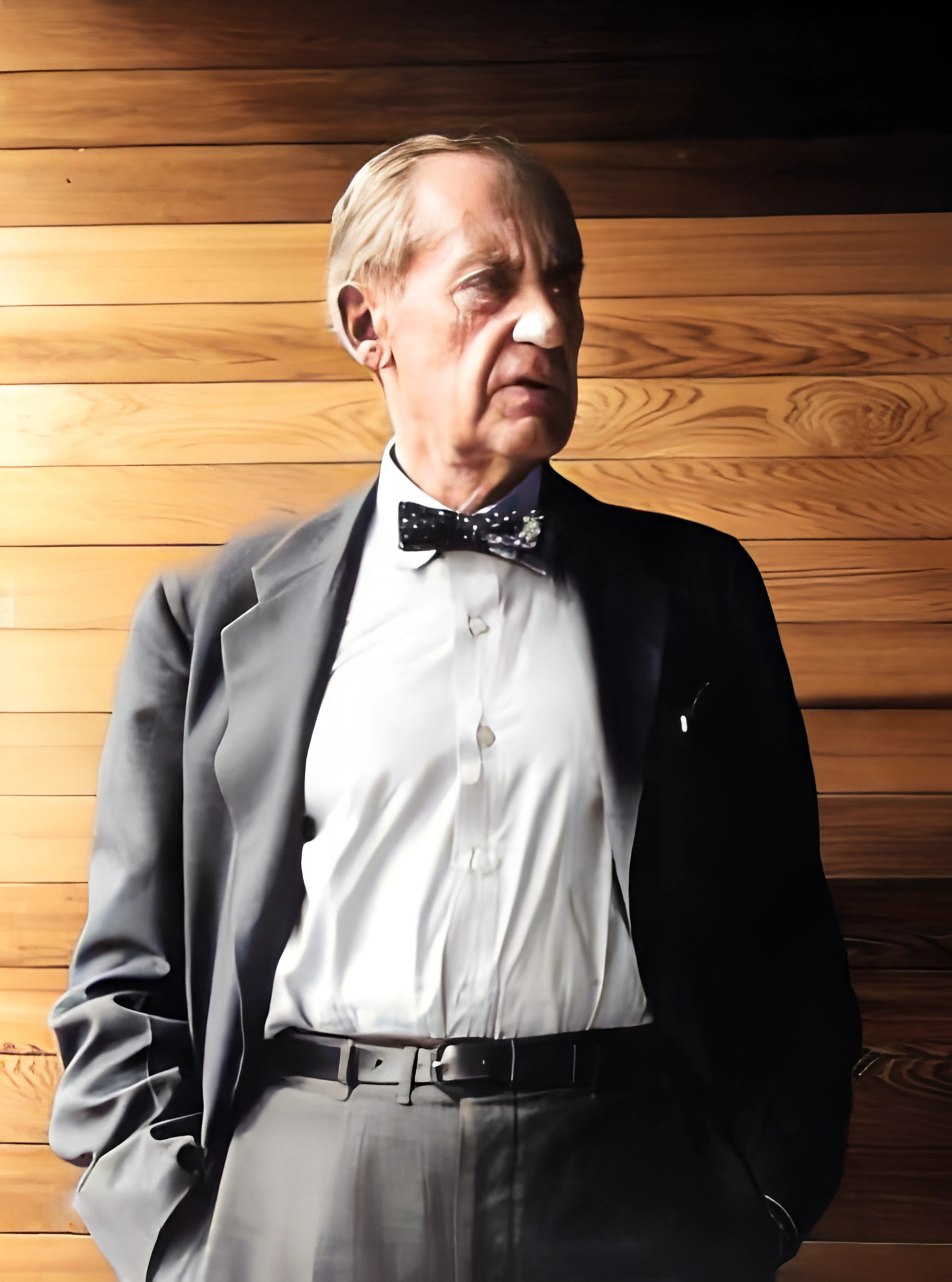
Attr: Max Dupain
| 15 Quotes | |
| Occup. | Architect |
| From | Austria |
| Born | June 25, 1923 Vienna, Austria |
| Died | March 9, 2006 Sydney, Australia |
| Cause | Cancer |
| Aged | 82 years |
| Cite | |
Citation Formats
APA Style (7th ed.)
Harry seidler biography, facts and quotes. (2026, February 11). FixQuotes. https://fixquotes.com/authors/harry-seidler/
Chicago Style
"Harry Seidler biography, facts and quotes." FixQuotes. February 11, 2026. https://fixquotes.com/authors/harry-seidler/.
MLA Style (9th ed.)
"Harry Seidler biography, facts and quotes." FixQuotes, 11 Feb. 2026, https://fixquotes.com/authors/harry-seidler/. Accessed 18 Feb. 2026.
Early Life and Background
Harry Seidler was born on 25 June 1923 in Vienna, Austria, into a cultivated Jewish family whose cosmopolitan confidence was shattered by the Anschluss. As Nazism tightened, his childhood became a lesson in how quickly civic order can collapse into persecution. In 1938 he was sent to England as a teenager, an abrupt severing from language, family rhythms, and a city whose layered streetscapes would remain a private reference point even as he later championed an international modernism.When war came, Britain classed many German- and Austrian-born refugees as "enemy aliens". Seidler was interned and transported to Canada, spending formative years in camps where boredom, humiliation, and enforced self-reliance sharpened his temperament. The experience left him with a lifelong impatience for sentimentality and a preference for systems that could be explained, argued, and built - a psychology that helps explain his later readiness for public controversy and his insistence that architecture be defended as method rather than mood.
Education and Formative Influences
Released from internment, Seidler pursued architecture with unusual intensity, studying first in Canada and then in the United States, including at Harvard's Graduate School of Design during the Gropius era, where he absorbed Bauhaus disciplines of clarity, standardization, and social purpose. He worked briefly in New York with Marcel Breuer and encountered the wider modernist constellation - structural rationalism, art as a partner to building, and the promise that new forms could civilize modern life. When he arrived in Australia in 1948 to design a house for his parents, he brought not only a style but an ethical program: architecture as a coherent, teachable craft answerable to modern conditions.Career, Major Works, and Turning Points
Seidler stayed, marrying Penelope Evatt and building a practice that would reshape postwar Australian architecture. The Rose Seidler House at Wahroonga (1948-50) declared a new domestic language - open planning, pilotis, ribbon glazing, and integrated interiors - and made him a lightning rod in a society still attached to bungalow conservatism. From there he pursued a long argument with Sydney itself: medium- and high-rise living as an urban alternative to sprawl, executed through rigorously planned towers and complexes such as Blues Point Tower (1961-62), Australia Square (1961-67), and later works including the MLC Centre (1972-77), the Horizon Apartments (1990), and the shell-like podium and soaring office forms of Grosvenor Place (1982-88). Over decades he collaborated with artists like Alexander Calder, Frank Stella, and Sol LeWitt, treating public art not as decoration but as part of the city-making project, while repeatedly returning to the same turning point - proving, through built fact, that modern density could be both elegant and humane.Philosophy, Style, and Themes
Seidler insisted that architecture was not a mystic calling but a discipline of decisions, and he spoke with the bluntness of someone who had learned early that rhetoric can be dangerous. “Architecture is not an inspirational business, it's a rational procedure to do sensible and hopefully beautiful things; that's all”. The sentence captures both his inner life and his public stance: an emotional reserve forged by displacement, translated into a belief that beauty should be earned through logic - structure, proportion, circulation, and climate - rather than nostalgia. Even when he admired historical epochs, he approached them analytically, searching for principles of form and construction rather than picturesque effect.This rationalism did not mean coldness. It became, instead, a moral ambition for longevity and civic usefulness - a refusal to treat buildings as disposable fashion. “Good design doesn't date”. In practice that meant a persistent formal vocabulary: crisp geometries, expressive but legible structure, carefully framed views, and apartments planned as real living environments rather than speculative boxes. His thick skin in the face of public attacks was part temperament, part method: “It doesn't worry me that people have criticised the building”. Behind that toughness sat a deeper need for architectural arguments to stand on evidence - the building in the city, the detail in the hand, the plan in daily use - more durable than opinion.
Legacy and Influence
By the time he died on 9 March 2006, Seidler had become the most consequential modernist advocate Australia produced: a builder of landmarks, an educator-by-example, and a polemicist who forced the public to debate density, taste, and the meaning of progress. His houses and towers helped normalize modern living and set a benchmark for integrating architecture with engineering and art, while his insistence on reasoned design left a professional legacy of discipline and ambition. For admirers, he proved that an immigrant could reimagine a young nation; for critics, he remained a provocateur. Either way, the city skylines and domestic ideals he helped form continue to shape how Australia argues about the future.Our collection contains 15 quotes written by Harry, under the main topics: Art - Science - Knowledge - Change - Confidence.
Source / external links