
Harry Stack Sullivan Biography Quotes 9 Report mistakes
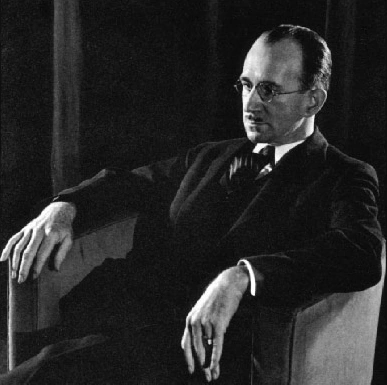
| 9 Quotes | |
| Occup. | Psychologist |
| From | USA |
| Born | February 21, 1892 Norwich, New York, U.S. |
| Died | January 14, 1949 Paris, France |
| Aged | 56 years |
| Cite | |
Citation Formats
APA Style (7th ed.)
Harry stack sullivan biography, facts and quotes. (2026, February 11). FixQuotes. https://fixquotes.com/authors/harry-stack-sullivan/
Chicago Style
"Harry Stack Sullivan biography, facts and quotes." FixQuotes. February 11, 2026. https://fixquotes.com/authors/harry-stack-sullivan/.
MLA Style (9th ed.)
"Harry Stack Sullivan biography, facts and quotes." FixQuotes, 11 Feb. 2026, https://fixquotes.com/authors/harry-stack-sullivan/. Accessed 15 Mar. 2026.
Early Life and Background
Harry Stack Sullivan was born on February 21, 1892, in Norwich, New York, in a rural, Protestant, Irish-American milieu whose tight social boundaries and small-town scrutiny left a lasting impression on his sense of how personality is shaped by belonging and exclusion. He later wrote and taught as if the self were never a sealed container but a living, vulnerable formation, continually negotiated in the presence of other people. That emphasis was not abstract: it grew from an early life in which reputations traveled faster than truth and where isolation could feel like a verdict.He came of age as the United States industrialized and as medicine professionalized, when nervous disorders and "shell shock" were pushing psychiatry toward new models of mind and treatment. Sullivan's temperament seems to have been both observant and combative - drawn to human complexity, impatient with cant - and he carried into adulthood a suspicion that what passes for "character" is often an accumulation of interpersonal victories and defeats. Before his name was associated with any school, he was already oriented toward the social texture of experience: embarrassment, anxiety, status, and the daily bargaining people perform to feel safe.
Education and Formative Influences
Sullivan studied medicine, receiving his M.D. from the Chicago College of Medicine and Surgery (then affiliated with Valparaiso University) in 1917, entering the field when psychoanalysis was gaining prestige but American psychiatry was still strongly institutional and descriptive. Clinical work with severely disturbed patients, along with wide reading in Freud and contemporaries, pushed him toward a practical question that became his trademark: not "What is the hidden instinct?" but "What is happening between people right now that sustains suffering or allows change?" The emerging social sciences, especially the attention to culture and communication that would later crystallize in the Washington-Baltimore intellectual corridor, reinforced his conviction that the mind is an event in relationship, not a thing in isolation.Career, Major Works, and Turning Points
After World War I, Sullivan built his reputation through institutional psychiatry and then through an increasingly influential teaching and supervision network. His work at St. Elizabeths Hospital in Washington, D.C. and his association with the William Alanson White Institute in New York placed him near clinicians who were rethinking psychoanalysis in social terms. In the 1920s and 1930s he became known for intensive work with schizophrenia and for a method of interviewing that treated conversation as data and treatment at once. He founded and edited Psychiatry: Journal of Interpersonal Relations (from 1938), creating a platform for an approach that linked clinical observation with anthropology and sociology. Much of his major writing was assembled from lectures and posthumous publications, including The Interpersonal Theory of Psychiatry (1953) and The Psychiatric Interview (1954), which distilled his central turning point: to make the interpersonal field, not intrapsychic myth, the primary unit of analysis.Philosophy, Style, and Themes
Sullivan's psychology begins with anxiety as a social signal. For him, the infant does not discover a self and then enter society; the self is carved out inside repeated interactions, especially those charged with approval, fear, shame, and relief. He described "security operations" - habitual maneuvers that reduce anxiety but constrict living - and he tracked how people become experts at avoiding certain feelings by organizing their relationships to prevent them. Development, in his view, was not a single decisive childhood event but a sequence of interpersonal reorganizations across stages, including the critical preadolescent need for intimate friendship and the adolescent pressure of sexuality and status. His clinical ethic was bracingly hopeful without being sentimental: “Your emotional life is not written in cement during childhood. You write each chapter as you go along”. The sentence reveals his core psychology - that change is possible because the self is continually rewritten in new relational contexts, especially when anxiety can be borne rather than evaded.His style as a clinician was direct, sometimes abrasive, and deliberately anti-omniscient. He treated the interview as a disciplined encounter in which the therapist's questions, timing, and emotional steadiness create conditions for the patient to notice patterns previously lived as fate. That pragmatism shows in his behavior-first sensibility: “It is easier to act yourself into a new way of feeling than to feel yourself into a new way of acting”. The line captures his refusal to wait for insight to magically purify emotion; instead, he aimed to alter the interpersonal choreography - what is said, withheld, demanded, or avoided - so that different feelings can finally emerge. Beneath the technique was a moral vision of attachment stripped of romance and tested by mutual regard: “When the satisfaction or the security of another person becomes as significant to one as one's own satisfaction or security, then the state of love exists. Under no other circumstances is a state of love present, regardless of the popular usage of the term”. In Sullivan's hands, "love" becomes a clinical and ethical benchmark, a measure of whether relating is exploitative, anxious, or genuinely reciprocal.
Legacy and Influence
Sullivan died on January 14, 1949, in Paris, leaving a body of ideas that expanded after his death through students, edited lectures, and a growing postwar appetite for socially grounded psychotherapies. His interpersonal theory reshaped American psychiatry and psychoanalysis by legitimizing the here-and-now relationship as both microscope and medicine, influencing object relations, self psychology, attachment-informed clinical work, and the broader humanistic turn that treated patients less as diagnoses than as persons in context. He also helped normalize serious attention to culture, communication, and institutions in understanding distress - a legacy that persists whenever clinicians listen for how a symptom protects security, how anxiety is co-managed between people, and how a new kind of relationship can become the engine of change.Our collection contains 9 quotes written by Harry, under the main topics: Witty One-Liners - Wisdom - Love - Mental Health - Work.
Other people related to Harry: Karen Horney (Psychologist)
Source / external links