
Hector Berlioz Biography Quotes 5 Report mistakes
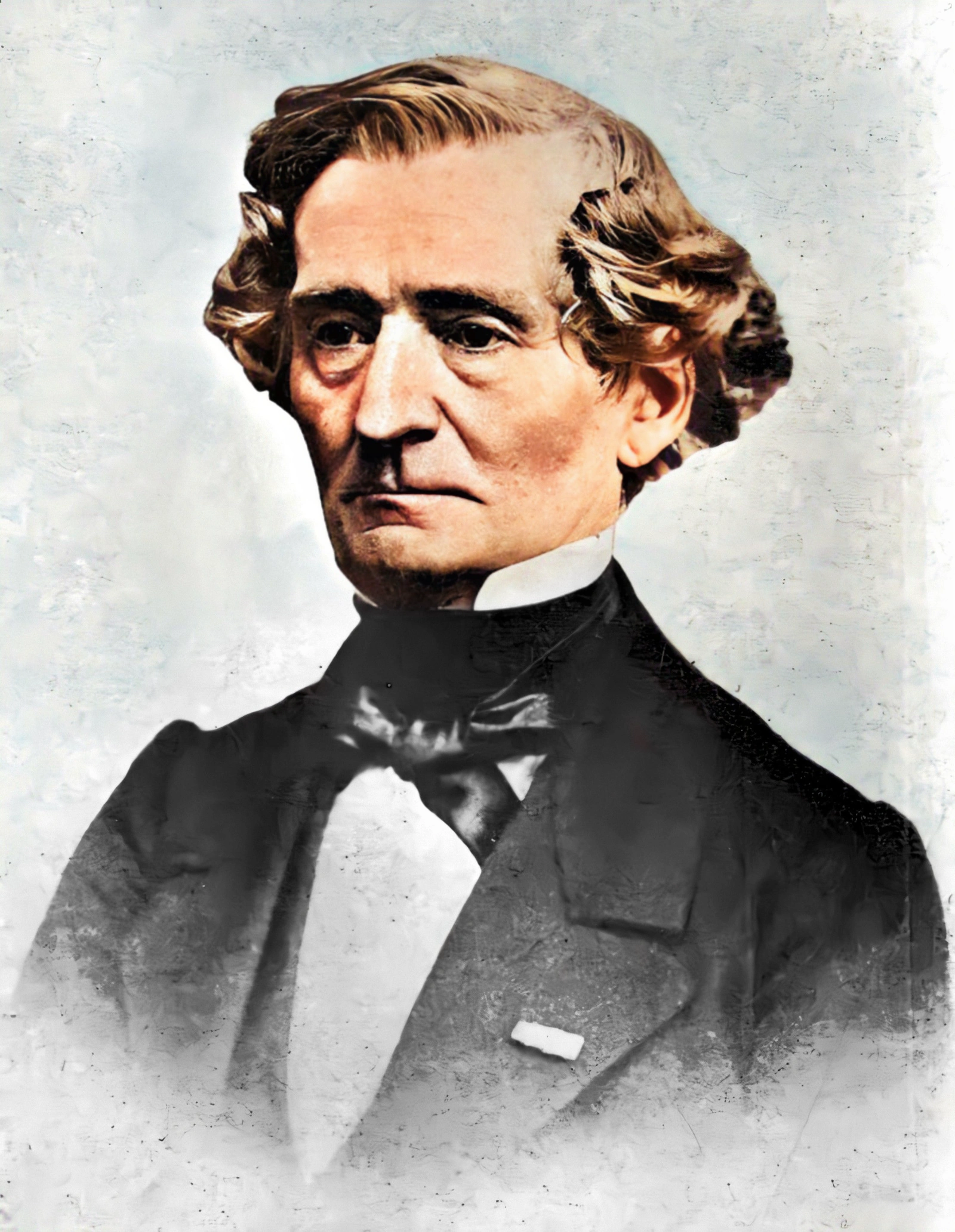
| 5 Quotes | |
| Born as | Louis Hector Berlioz |
| Occup. | Composer |
| From | France |
| Born | December 11, 1803 La Côte-Saint-André, France |
| Died | March 8, 1869 Paris, France |
| Aged | 65 years |
| Cite | |
Citation Formats
APA Style (7th ed.)
Hector berlioz biography, facts and quotes. (2026, February 11). FixQuotes. https://fixquotes.com/authors/hector-berlioz/
Chicago Style
"Hector Berlioz biography, facts and quotes." FixQuotes. February 11, 2026. https://fixquotes.com/authors/hector-berlioz/.
MLA Style (9th ed.)
"Hector Berlioz biography, facts and quotes." FixQuotes, 11 Feb. 2026, https://fixquotes.com/authors/hector-berlioz/. Accessed 6 Mar. 2026.
Early Life and Background
Louis Hector Berlioz was born on December 11, 1803, in La Cote-Saint-Andre, Isere, in a France still rearranging itself after revolution and empire. His father, Louis-Joseph Berlioz, a physician with Enlightenment habits of mind, expected his son to join the professions; his mother, Marie-Antoinette Marmion, was devoutly Catholic, and the household held a lifelong tension between rational inquiry and religious feeling. That tension would later reappear in Berlioz's music as a search for transcendence expressed through distinctly modern nerves.Unlike many nineteenth-century composers, Berlioz did not grow up as a child prodigy at the keyboard. He learned guitar and flute, read harmony from books, and developed an imagination fed by literature as much as by sound. In provincial isolation he began composing early, but just as important was the inward drama: a temperament prone to exaltation, shame, and self-argument - ideal for the Romantic era's cult of the suffering artist, and perilous for a man who would have to fight institutions that distrusted novelty.
Education and Formative Influences
In 1821 he was sent to Paris to study medicine, but the dissecting room repelled him and the opera house claimed him; he soon abandoned medicine for the Paris Conservatoire, studying with Jean-Francois Le Sueur and later Anton Reicha while haunting the Opera and the Concert Spirituel. Gluck gave him a model of tragic architecture, Beethoven a model of symphonic argument, and Shakespeare - encountered in 1827 through an English troupe - a model of psychological intensity; his obsessive love for the actress Harriet Smithson was less a private episode than a formative aesthetic engine, teaching him to translate desire, jealousy, and hallucination into orchestral narrative.Career, Major Works, and Turning Points
After repeated failures, Berlioz won the Prix de Rome in 1830 with "La mort de Sardanapale", and in the same year detonated Parisian expectations with "Symphonie fantastique", a programmatic symphony in five movements built around an idee fixe and a lovers-delirium that ends in execution and a witches' sabbath. He married Smithson in 1833, a union that began in rescue fantasies and ended in exhaustion, while he supported himself largely through criticism for the Journal des Debats and relentless conducting. Major works followed in daring sequence: the hybrid symphony-cantata "Harold en Italie" (1834), the monumental "Grande messe des morts" (Requiem, 1837), "Benvenuto Cellini" (1838) with its notorious reception, "Romeo et Juliette" (1839), the song cycle "Les nuits d'ete", and, at the summit of his ambition, "La damnation de Faust" (1846) and "Les Troyens" (composed 1856-58), the latter largely unperformed in full during his lifetime. He found wider acceptance abroad - especially in Germany, Russia, and England - where his flamboyant podium manner and visionary orchestration could be heard on their own terms, even as Paris remained divided between fascination and mistrust.Philosophy, Style, and Themes
Berlioz's inner life was defined by speed - of feeling, of imagination, of catastrophe. He distrusted academic routine and prized the instant when an idea flashes and must be seized before it evaporates; his journals and letters read like a mind sprinting ahead of practical means. That anxiety sits behind his remark, “Every composer knows the anguish and despair occasioned by forgetting ideas which one had no time to write down”. The confession is not merely technical; it reveals a psychology of urgency in which inspiration is both gift and torment, and the artist's task is to build durable form quickly enough to keep pace with the soul.His style made the orchestra a theater of consciousness. Unprecedented combinations of timbre, spatial effects, and sharply characterized motifs were not decoration but narrative tools - the Requiem's multiple brass choirs, the fever-dream transformations of the idee fixe, the nocturnal melancholy of "Les nuits d'ete". Underneath the spectacle lies an ethic of expressive truth: love, for Berlioz, was not sentimental warmth but a force that fractures identity and invents new sound to speak what words cannot. “Love cannot express the idea of music, while music may give an idea of love”. Even his self-mockery points to a Romantic self-awareness that never fully cures vanity or loneliness: “At least I have the modesty to admit that lack of modesty is one of my failings”. The voice is proud, wounded, lucid - a man who knew he was building a future audience while surviving a present one.
Legacy and Influence
Berlioz died in Paris on March 8, 1869, after years marked by illness, grief, and the slow recognition that his grandest scores would outlive his circumstances. His "Treatise on Instrumentation" became a foundational text for modern orchestration, shaping composers from Liszt and Wagner to Rimsky-Korsakov, Mahler, and beyond; his example legitimized program music as a symphonic method rather than a mere stunt. Today his enduring influence lies in the conviction that form can be autobiographical without becoming formless, and that the orchestra can speak as a nervous system - capable of ecstasy, terror, irony, and prayer - in the same breath.Our collection contains 5 quotes written by Hector, under the main topics: Witty One-Liners - Wisdom - Music - Mortality.
Other people related to Hector: Frederic Chopin (Composer), Charles Munch (Musician), Carl Maria von Weber (Composer)
Source / external links