
Heinrich Heine Biography Quotes 35 Report mistakes
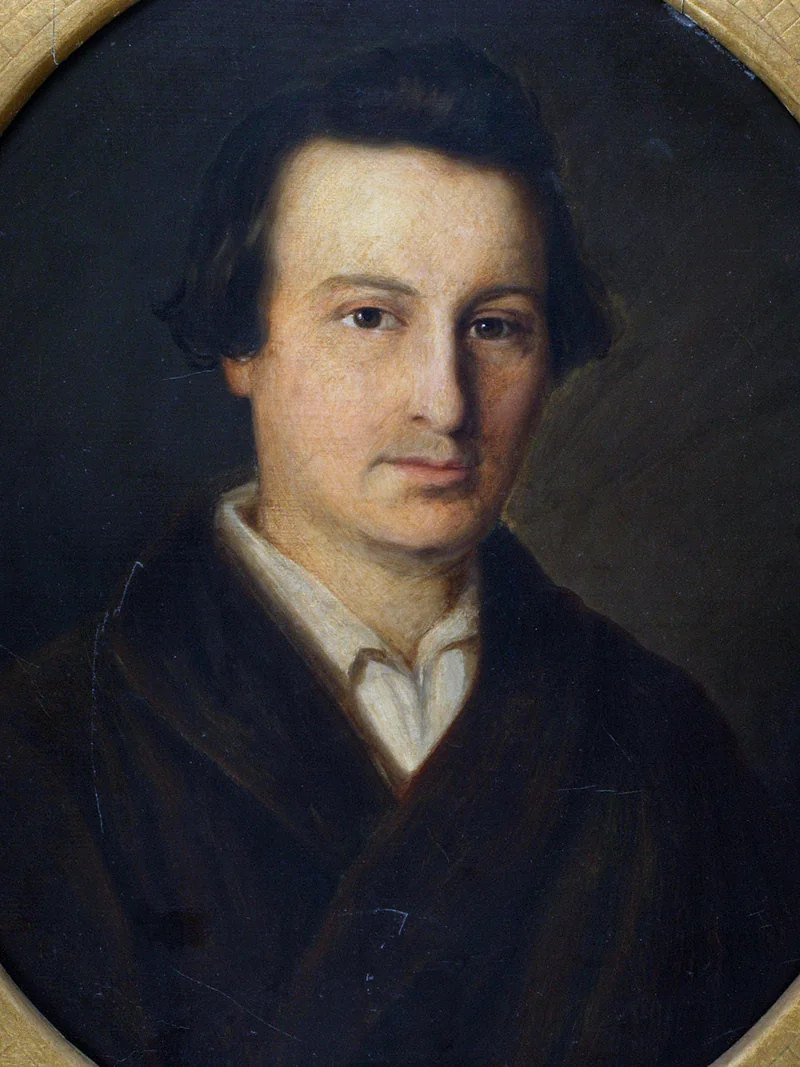
| 35 Quotes | |
| Occup. | Poet |
| From | Germany |
| Born | December 13, 1797 Dusseldorf, Germany |
| Died | February 17, 1856 Paris, France |
| Aged | 58 years |
| Cite | |
Citation Formats
APA Style (7th ed.)
Heinrich heine biography, facts and quotes. (2026, February 11). FixQuotes. https://fixquotes.com/authors/heinrich-heine/
Chicago Style
"Heinrich Heine biography, facts and quotes." FixQuotes. February 11, 2026. https://fixquotes.com/authors/heinrich-heine/.
MLA Style (9th ed.)
"Heinrich Heine biography, facts and quotes." FixQuotes, 11 Feb. 2026, https://fixquotes.com/authors/heinrich-heine/. Accessed 25 Mar. 2026.
Early Life and Background
Christian Johann Heinrich Heine was born on December 13, 1797, in Dusseldorf, then shaped by the aftershocks of the French Revolution and the Napoleonic reordering of the Rhineland. He grew up in a Jewish merchant household: his father, Samson Heine, struggled in business, while his mother, Betty van Geldern, prized education and modern ideas. The city around him changed flags and laws, and with them the horizon of possibility for Jews - brief civic openings under French rule followed by tightening restrictions as German states reasserted control.That early oscillation between emancipation and exclusion left Heine with a lifelong double vision: attachment to German language and culture paired with a sharpened sense of outsiderhood. Family expectations pulled him toward commerce, yet his temperament ran toward letters, satire, and the theater of politics. The young Heine learned early how public loyalties could be demanded and withdrawn, a lesson that would later make him both a brilliant diagnostician of power and a wary participant in every ideology that asked for unconditional faith.
Education and Formative Influences
After an unhappy apprenticeship in banking and a failed commercial venture in Hamburg under the patronage of his wealthy uncle Salomon Heine, he turned decisively toward study. He read law at Bonn, Gottingen, and Berlin between 1819 and 1825, but his real education came from literature and philosophy: the Romantic tradition (especially Goethe and the lyric legacy of folk song), the skeptical wit of the Enlightenment, and the heady systems of German idealism circulating in Berlin salons. Social pressure and professional barriers for Jews pushed him to convert to Protestantism in 1825, a step he called his "ticket of admission" to European culture - an act less of spiritual arrival than of bitter pragmatism that deepened his sense of divided self.Career, Major Works, and Turning Points
Heine emerged first as a lyric poet and then as one of Europe's most incisive political writers. His early collections culminated in the poems later gathered as "Buch der Lieder" (1827), whose seemingly simple songs of love and loss conceal modern irony and self-mockery; many became famous through later musical settings by Schubert and Schumann. Travel writings such as "Reisebilder" (1826-1831) blended reportage, autobiography, and satire, and his essayistic works from Paris - where he settled in 1831, escaping censorship and the reactionary climate after the Congress of Vienna - made him a mediator between France and Germany. In exile he wrote "Deutschland. Ein Wintermarchen" (1844), a comic-epic attack on German philistinism and repression, and the long poem "Atta Troll" (1843/1847), which skewers both authoritarianism and revolutionary posturing. His final years, immobilized by a devastating illness in what he called his "mattress grave", produced late poetry and prose of startling candor, including "Romanzero" (1851), where wit and metaphysical dread coexist without reconciliation.Philosophy, Style, and Themes
Heine's inner life was governed by contradiction turned into method. He prized the lyric's intimacy yet distrusted lyrical sincerity; he longed for belonging yet made exile into a vantage point; he could praise revolution's promise and, in the next breath, anatomize its cruelty. His skepticism had a theological edge rather than a purely secular chill, and he carried the memory of religious need even when mocking religious authority. “Human misery is too great for men to do without faith”. In Heine, that sentence reads less like doctrine than like an admission: he understood why people cling to metaphysical shelter, because he felt the storm himself.Stylistically he fused Romantic music with journalistic speed, turning the German lyric into a modern instrument of irony. Heine's ear for cadence and song made him a poet composers could not resist, yet he also knew where language fails and another art begins: “When words leave off, music begins”. The remark is aesthetic, but also psychological - a confession of pressures that cannot be reasoned away, only sounded. His satire, famously merciless, was aimed not just at enemies but at his own temptations: to posture, to sermonize, to become a mascot for any camp. Even in blasphemy he performed an intimacy with the divine that looked like rebellion and longing at once: “God will forgive me. It's his job”. That stance - insolent, vulnerable, theatrical - is Heine in miniature: a man for whom comedy was a survival technique and also a scalpel.
Legacy and Influence
Heine's influence radiates through modern European literature as a template for the poet as public intellectual: lyrical but politically awake, cosmopolitan yet rooted in language, committed yet never captive. In Germany he helped end the naive certainties of high Romanticism, opening the way for later realism and modernism; abroad he shaped the idea of Paris as a capital of exile and critique. His poems live both on the page and in song, while his prose remains a model of agile, skeptical journalism. Condemned by censors in his lifetime and later targeted by nationalists who feared his unpatriotic clarity, Heine endures because he refused to let art become a lullaby for power - and because he turned the wounds of his era, and his own divided identity, into a voice still recognizable as modern.Our collection contains 35 quotes written by Heinrich, under the main topics: Witty One-Liners - Wisdom - Music - Love - Sarcastic.
Other people related to Heinrich: Ludwig Borne (Writer), Frank Wedekind (Playwright), Delphine de Girardin (Novelist), Robert Schumann (Composer)
Heinrich Heine Famous Works
- 1851 Romanzero (Collection)
- 1847 Atta Troll. Ein Sommernachtstraum (Poetry)
- 1844 Deutschland. Ein Wintermärchen (Poetry)
- 1844 Neue Gedichte (Collection)
- 1827 Buch der Lieder (Collection)
- 1826 Reisebilder (Collection)
- 1826 Die Harzreise (Essay)
- 1822 Gedichte (Collection)
- 1821 Almansor (Play)