
Heinz R. Pagels Biography Quotes 5 Report mistakes
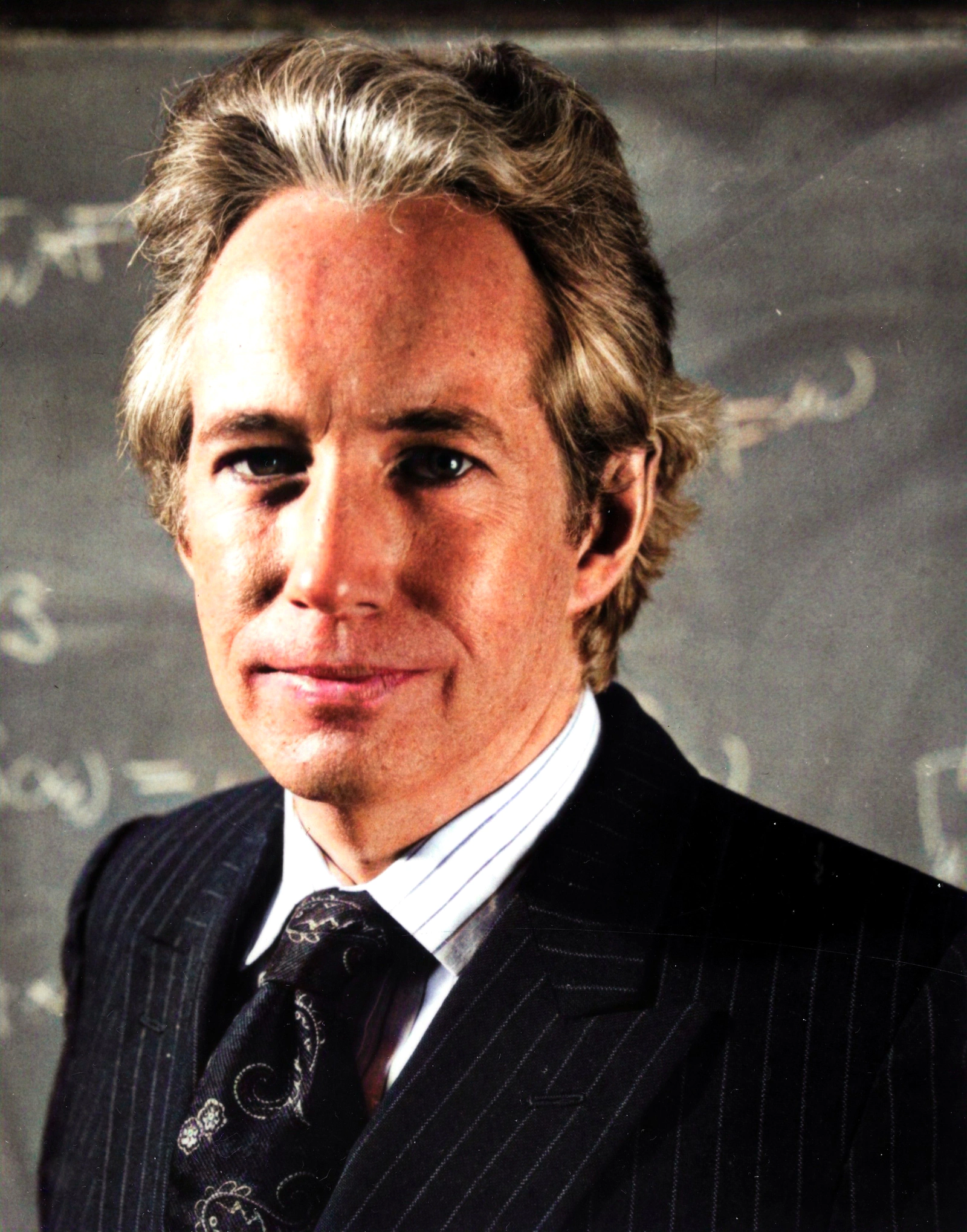
| 5 Quotes | |
| Born as | Heinz Rudolf Pagels |
| Occup. | Physicist |
| From | USA |
| Spouse | Elaine Pagels (1969) |
| Born | February 19, 1939 New York City, New York, United States |
| Died | July 23, 1988 Pyramid Peak, Colorado, USA |
| Cause | Mountain climbing accident |
| Aged | 49 years |
| Cite | |
Citation Formats
APA Style (7th ed.)
Heinz r. pagels biography, facts and quotes. (2026, February 11). FixQuotes. https://fixquotes.com/authors/heinz-r-pagels/
Chicago Style
"Heinz R. Pagels biography, facts and quotes." FixQuotes. February 11, 2026. https://fixquotes.com/authors/heinz-r-pagels/.
MLA Style (9th ed.)
"Heinz R. Pagels biography, facts and quotes." FixQuotes, 11 Feb. 2026, https://fixquotes.com/authors/heinz-r-pagels/. Accessed 25 Mar. 2026.
Early Life and Background
Heinz Rudolf Pagels was born on February 19, 1939, and came of age in the long American aftershock of World War II and the early Cold War, when physics was both an intellectual frontier and a national project. He later became known not only as a theoretical physicist but as a public interpreter of science, a role shaped by the era's mixture of nuclear anxiety, space-age optimism, and the cultural turbulence of the 1960s and 1970s.His inner life, as it emerges through his later writing, carried a double loyalty: to hard-won scientific rigor and to the human meanings people tried to extract from it. That tension - between the precision of equations and the imprecision of living - would become his signature preoccupation, giving him a distinctive voice among scientist-authors who were willing to admit uncertainty without surrendering standards.
Education and Formative Influences
Pagels trained as a physicist in the postwar American university system when particle physics and quantum field theory were redefining fundamental knowledge, and when the prestige of science brought both opportunity and scrutiny. He gravitated toward the theoretical side of the discipline, absorbing the habits of mind demanded by modern physics: abstraction, probabilistic thinking, and a skepticism toward metaphysical consolation. At the same time, he learned that scientific authority carried civic consequences - a lesson sharpened by debates over nuclear weapons, environmental limits, and the public's growing distrust of expert institutions after Vietnam and Watergate.Career, Major Works, and Turning Points
He built his career as a theoretical physicist and later became a prominent science advocate and administrator, serving as executive director of the New York Academy of Sciences, where he pushed for science communication and for a wider public role for scientific institutions. His major books - The Cosmic Code: Quantum Physics as the Language of Nature (1982), The Dreams of Reason: The Computer and the Rise of the Sciences of Complexity (1988), and his posthumously gathered essays Perfect Symmetry (1985) - marked turning points: he stepped beyond specialist work to address how quantum theory, computation, and complexity were changing the very idea of explanation. He died on July 23, 1988, cutting short a period in which he was increasingly central as a translator between frontier science and a general audience hungry for meaning but wary of hype.Philosophy, Style, and Themes
Pagels wrote with a physicist's intolerance for vagueness and a humanist's concern for consequence. A recurring theme was the end of mechanical certainty: modern physics, in his telling, did not merely add new facts but altered the cultural grammar of causality and prediction. “The world changed from having the determinism of a clock to having the contingency of a pinball machine”. Psychologically, that line captures his constructive unease - an insistence that contingency is not a defect to be explained away, but a reality to be faced without panic or mysticism.His prose also reveals a moral discipline about what science can and cannot provide. He resisted the impulse to turn physics into a substitute religion, even as he acknowledged why people kept trying. “I like to browse in occult bookshops if for no other reason than to refresh my commitment to science”. The confession is strategic: he understood the seductions of the irrational from the inside, then used that awareness to draw a firmer boundary around evidence. Yet he was not a crude scientistic triumphalist. He argued for a chastened authority - science as a tool for clarity, not command. “Science cannot resolve moral conflicts, but it can help to more accurately frame the debates about those conflicts”. That framing ambition links his interests in quantum theory and complexity to civic life: better models do not yield automatic wisdom, but they can reduce self-deception.
Legacy and Influence
Pagels left an enduring influence as one of the late 20th century's clearest expositors of quantum ideas and emerging complexity thinking, helping normalize the view that uncertainty, information, and computation are central concepts rather than technical footnotes. His institutional work strengthened the public-facing mission of scientific organizations, while his books modeled an approach still influential on science writers: respect the mathematics, admit the limits, and confront the existential implications without drifting into mysticism. His early death in 1988 froze a trajectory that was moving toward even broader synthesis, but his best pages continue to teach a rare posture - intellectual toughness paired with moral modesty.Our collection contains 5 quotes written by Heinz, under the main topics: Ethics & Morality - Science - Free Will & Fate.
Heinz R. Pagels Famous Works
- 1988 The Dreams of Reason: The Computer and the Rise of the Sciences of Complexity (Book)
- 1985 Perfect Symmetry: The Search for the Beginning of Time (Book)
- 1982 The Cosmic Code: Quantum Physics as the Language of Nature (Book)
Source / external links