
Helen Thomas Biography Quotes 19 Report mistakes
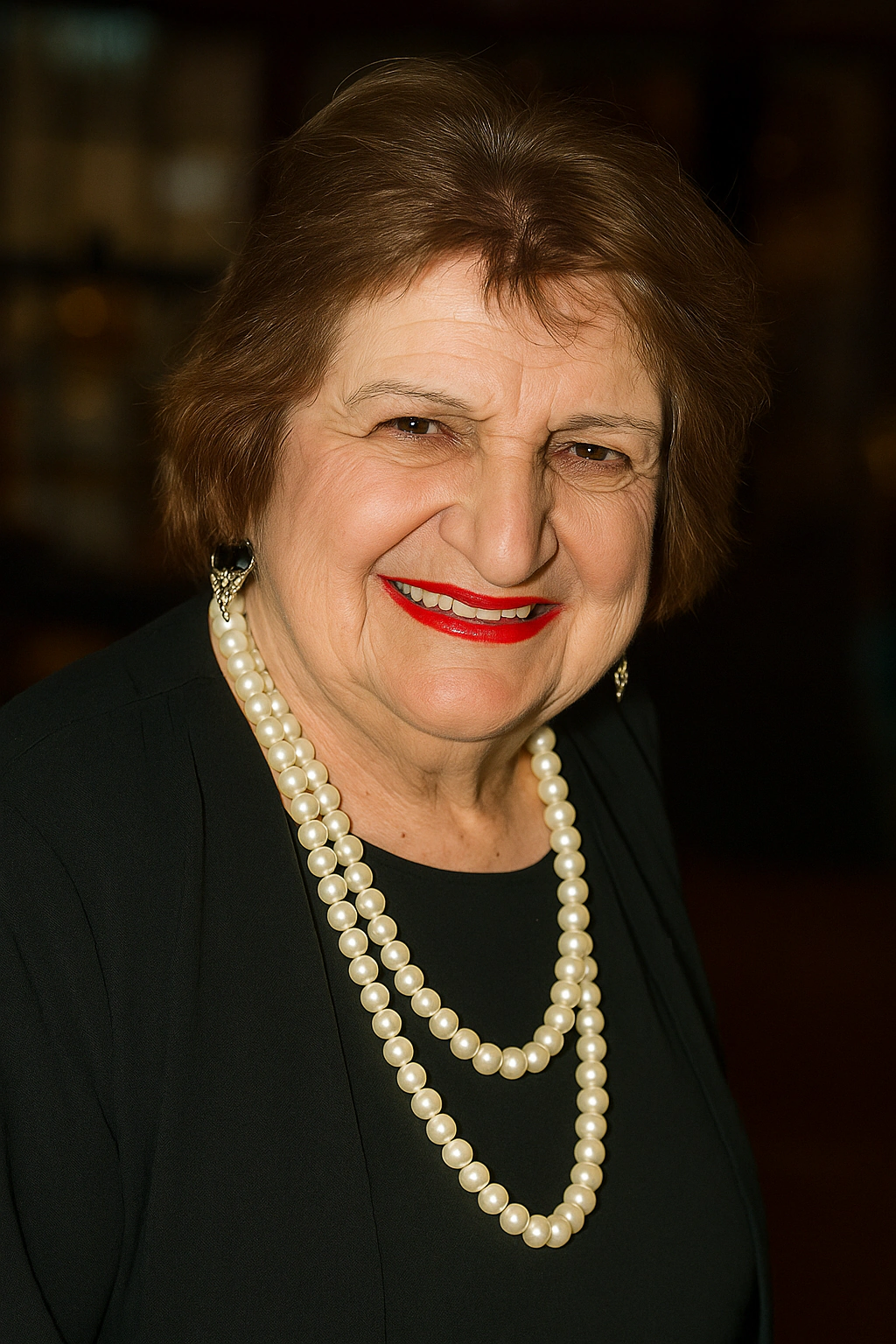
| 19 Quotes | |
| Born as | Helen Amelia Thomas |
| Occup. | Journalist |
| From | USA |
| Born | August 4, 1920 Winchester, Kentucky |
| Died | July 20, 2013 Washington, D.C. |
| Cause | Natural causes |
| Aged | 92 years |
| Cite | |
Citation Formats
APA Style (7th ed.)
Helen thomas biography, facts and quotes. (2026, February 21). FixQuotes. https://fixquotes.com/authors/helen-thomas/
Chicago Style
"Helen Thomas biography, facts and quotes." FixQuotes. February 21, 2026. https://fixquotes.com/authors/helen-thomas/.
MLA Style (9th ed.)
"Helen Thomas biography, facts and quotes." FixQuotes, 21 Feb. 2026, https://fixquotes.com/authors/helen-thomas/. Accessed 31 Mar. 2026.
Early Life and Background
Helen Amelia Thomas was born on August 4, 1920, in Winchester, Kentucky, to Lebanese immigrant parents who had come to the United States seeking work and stability. She grew up in Detroit, Michigan, in a tightly knit Arab American household shaped by the pressures of the Great Depression and by the practical discipline of shopkeeping, church life, and communal reputation. That blend of immigrant aspiration and working-class skepticism gave her a lifelong intolerance for pretension and a sharp eye for how power talks when it assumes no one is listening.
Detroit also placed her near the furnace of American industrial politics: unions, war production, and the daily argument over who gets heard. Thomas absorbed the lesson that public life was not an abstraction but a contest of access, and that the language of patriotism could be used both to protect the vulnerable and to silence dissent. The future White House correspondent was formed as much by city sidewalks and factory rhythms as by any newsroom - with an early sense that the country belonged, in principle, to ordinary citizens, and that journalism was one way to enforce that promise.
Education and Formative Influences
Thomas attended Wayne State University in Detroit and graduated in the early 1940s, when newsrooms were still overwhelmingly male and women were often routed into society pages. The wartime and postwar years gave her two formative influences: the rapid expansion of federal power in Washington and the rise of professional, wire-service journalism that valued speed, accuracy, and institutional memory. She learned to write clean copy, cultivate sources without being owned by them, and treat politics as a beat demanding both curiosity and stamina.
Career, Major Works, and Turning Points
In 1943 she joined United Press, later United Press International (UPI), and became a Washington correspondent and then a fixture of the White House press corps. Thomas covered every president from John F. Kennedy through Barack Obama, built a reputation for concise, often combative questioning, and eventually served as UPI White House bureau chief and chief White House correspondent. A major turning point came when televised press briefings and modern spin operations collided with her old-school insistence on direct answers; she became a symbol of adversarial accountability even as access journalism grew more cautious. In later years she wrote and spoke widely - including the memoir Front Row at the White House - and her career ended abruptly after a 2010 controversy over remarks about Israel and Palestine led to her resignation from Hearst Newspapers, complicating an otherwise singular public legacy.
Philosophy, Style, and Themes
Thomas viewed the presidency as the most dangerous concentration of power in American life precisely because it can wrap itself in ceremony and secrecy. Her guiding belief was civic, not partisan: the public had a right to know what was being done in its name, and the press had a duty to keep asking when officials preferred closure. “We in the press have a special role since there is no other institution in our society that can hold the President accountable. I do believe that our democracy can endure and prevail only if the American people are informed”. Psychologically, this was less a slogan than a self-justification for decades of discomfort - the loneliness of being the persistent questioner in a room designed to move on.
Her style - brisk, impatient with euphemism, allergic to sentimental nationalism - was forged in the Cold War and tested in Vietnam, Watergate, and the post-9/11 wars. She distrusted military solutions offered as moral inevitabilities, and her questions often tried to puncture the ritual language that turns war into abstraction. “You don't spread democracy through the barrel of a gun”. Beneath the toughness was a protective moral imagination aimed at the young people sent to fight: “If we care about the children, the grandchildren, the future generations, we need to make sure that they do not become the cannon fodder of the future”. These themes reveal a temperament that equated seriousness with cost-counting - a reporter who measured policy not by rhetoric but by bodies, budgets, and the erosion of democratic consent.
Legacy and Influence
Thomas left an enduring model of the White House correspondent as institutional memory with a spine: someone who remembers what leaders promised, what they denied, and how language changes when credibility breaks. For many journalists, especially women who saw in her a path into the front row, she represented persistence against a culture that rewarded deference. Her late-career downfall remains inseparable from her story, a caution about how moral certainty can harden into damaging generalization - yet it also underscores how public life now judges journalists not only by their questions but by their off-the-cuff judgments. Even so, the imprint of her best work remains clear: she helped normalize the expectation that presidents must be pressed, repeatedly, in public, and that a democratic citizenry deserves more than rehearsed answers.
Our collection contains 19 quotes written by Helen, under the main topics: Witty One-Liners - Justice - Sarcastic - Leadership - Freedom.
Frequently Asked Questions
- Helen Thomas Obama: Veteran White House reporter who often challenged his administration.
- Helen Thomas Blonde Money: Founder of BlondeMoney, a macro research firm.
- Helen Thomas FT: Business columnist at the Financial Times (UK journalist).
- Helen Thomas young: Early-career UPI White House reporter in the 1960s.
- Helen Thomas Radio 2: Head of BBC Radio 2 (UK media executive).
- How old was Helen Thomas? She became 92 years old
Source / external links