
Helena Christensen Biography Quotes 40 Report mistakes
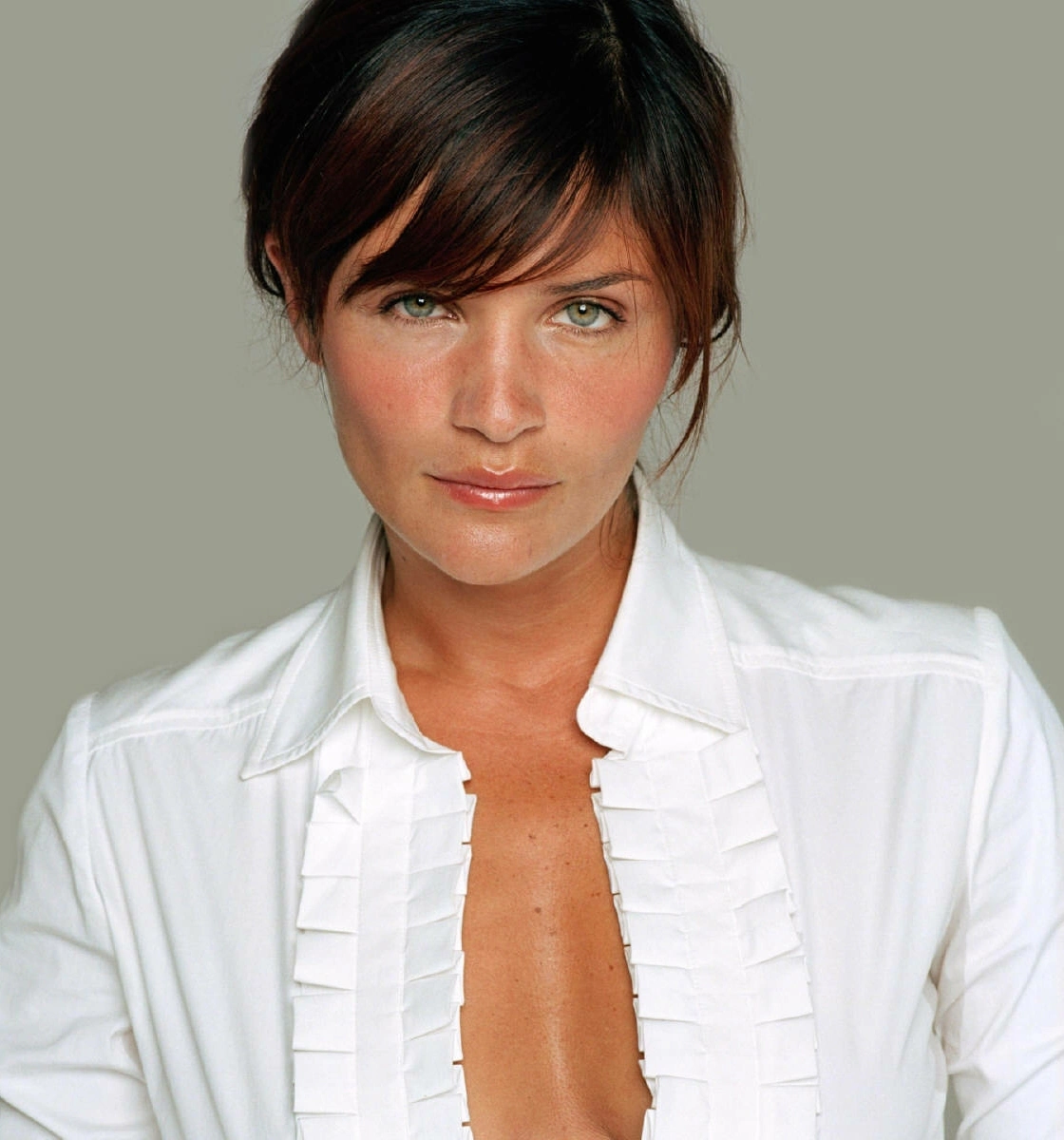
| 40 Quotes | |
| Occup. | Model |
| From | Denmark |
| Born | December 25, 1968 Copenhagen, Denmark |
| Age | 57 years |
| Cite | |
Citation Formats
APA Style (7th ed.)
Helena christensen biography, facts and quotes. (2026, February 11). FixQuotes. https://fixquotes.com/authors/helena-christensen/
Chicago Style
"Helena Christensen biography, facts and quotes." FixQuotes. February 11, 2026. https://fixquotes.com/authors/helena-christensen/.
MLA Style (9th ed.)
"Helena Christensen biography, facts and quotes." FixQuotes, 11 Feb. 2026, https://fixquotes.com/authors/helena-christensen/. Accessed 21 Mar. 2026.
Early Life and Background
Helena Christensen was born on December 25, 1968, in Copenhagen, Denmark, into a household shaped by cross-currents of Northern Europe. Her father was Danish and her mother Peruvian, a mix that gave her both a cosmopolitan gaze and a physical presence that the late-1980s fashion world would quickly read as strikingly modern. Copenhagen in the 1970s and early 1980s offered a pragmatic, design-literate culture rather than a celebrity machine - a place where clothes were worn for weather and work, and where understatement could be its own aesthetic discipline.Before she became a global face, she moved through ordinary Danish adolescence with the quiet pressure familiar to many young women: being seen, being evaluated, and learning to manage attention without letting it define the self. That tension - between visibility and privacy - would remain a private engine in her later career, especially as fashion photography demanded a kind of controlled intimacy while the tabloid era increasingly demanded confession.
Education and Formative Influences
Christensen did not emerge from a formal arts academy so much as from the informal schooling of travel, casting rooms, and the camera itself. Her earliest formative influences were practical: learning posture, rhythm, and how to communicate emotion with micro-adjustments, while absorbing the visual languages of European magazines and runway culture as it shifted toward the "supermodel" phenomenon. She also developed an enduring interest in photography - a parallel craft that trained her to see modeling not just as being looked at, but as collaborating in the construction of an image.Career, Major Works, and Turning Points
Her public breakthrough came after winning Miss Denmark in 1986 and representing the country at Miss Universe in 1987, a route that opened doors to editorial and runway work beyond Scandinavia. By the early 1990s she was established among the era's defining supermodels, working with major fashion houses and appearing on influential magazine covers, while becoming widely recognizable through the decade's most culturally saturated fashion imagery. A key turning point was her expansion beyond the role of muse: she pursued photography seriously, exhibited work, and later co-founded the vintage and concept boutique Butik in New York, signaling a desire to participate in fashion as culture, commerce, and storytelling rather than as a single job title.Philosophy, Style, and Themes
Christensen's inner life, as it emerges through interviews and her long-running creative choices, is marked by a wry resistance to being reduced to surface. She has described a perceptual difference that is less about taste than about orientation: “I don't look at fashion the way other people do”. Read psychologically, that line suggests a model who learned early that the industry rewards compliance, yet survived by cultivating a private interpretive frame - treating fashion as an image system to be edited, questioned, and sometimes gently mocked. Her emphasis on photography, and especially on older processes, aligns with a desire to slow time and reclaim authorship: “I still love taking pictures with Polaroid film. For me, it offers the most beautiful way of capturing reality and transferring it onto a flat piece of paper”. In a career built on being captured, she sought to become the capturer, turning the lens into a form of agency.Her themes are also bodily honesty and humor as coping strategy. In an industry that punishes fluctuation and rewards perfection, she has insisted on the ordinary anxieties beneath the mythology: “Like any woman, I worry about my body”. That admission is not a branding gesture so much as a pressure valve - a way of naming what the profession tries to make unspeakable, and of refusing the supermodel as an untouchable archetype. Across her public persona, the combination of elegance and mischief functions as self-protection: a refusal to become solemn about a business that can feel, from inside, like elaborate ritual. Her best moments, on set and off, suggest a woman intent on keeping her private self intact even while selling images of herself to the world.
Legacy and Influence
Christensen endures as more than a 1990s icon because she embodies a transitional model of fame: the last generation to become globally famous through print and runway, and among the first to reassert control by diversifying into creative authorship and entrepreneurship. Her influence is visible in the modern expectation that models be multi-hyphenates - collaborators, tastemakers, photographers, and curators of their own visual narratives. By insisting on craft, humor, and a candid relationship to the body, she helped humanize an era that often tried to turn women into immaculate symbols, leaving a legacy of beauty that is inseparable from intelligence and self-direction.Our collection contains 40 quotes written by Helena, under the main topics: Witty One-Liners - Funny - Art - Sarcastic - Writing.
Source / external links