
Helmut Kohl Biography Quotes 9 Report mistakes
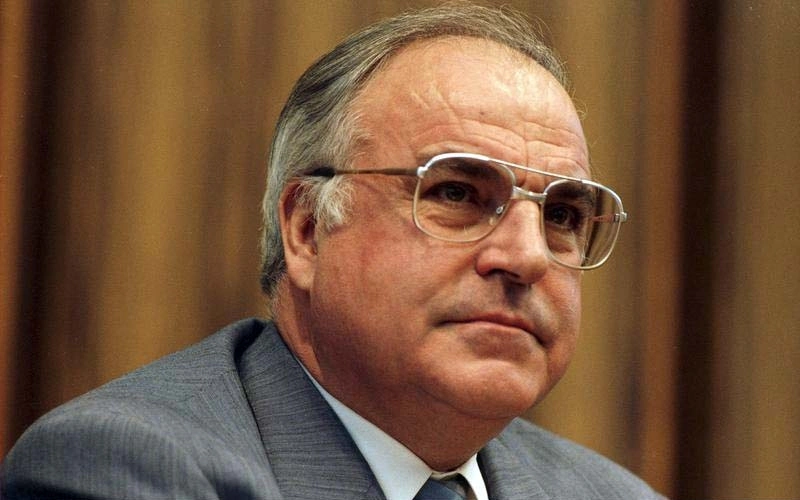
| 9 Quotes | |
| Born as | Helmut Josef Michael Kohl |
| Occup. | Politician |
| From | Germany |
| Born | April 3, 1930 Ludwigshafen, Germany |
| Age | 95 years |
| Cite | |
Citation Formats
APA Style (7th ed.)
Helmut kohl biography, facts and quotes. (2026, February 11). FixQuotes. https://fixquotes.com/authors/helmut-kohl/
Chicago Style
"Helmut Kohl biography, facts and quotes." FixQuotes. February 11, 2026. https://fixquotes.com/authors/helmut-kohl/.
MLA Style (9th ed.)
"Helmut Kohl biography, facts and quotes." FixQuotes, 11 Feb. 2026, https://fixquotes.com/authors/helmut-kohl/. Accessed 26 Mar. 2026.
Early Life and Background
Helmut Josef Michael Kohl was born on April 3, 1930, in Ludwigshafen am Rhein, an industrial city on the Rhine whose soot, shipyards, and chemical plants framed his earliest sense of German modernity. He grew up Catholic in the Palatinate, in a family shaped by modest security and by the habits of small-town association life that later fed his instinct for party organization and loyal networks.His boyhood was lived under the long shadow of collapse and restart. As the Third Reich gave way to defeat, the teenage Kohl watched authority disintegrate, cities break, and adults recalibrate their moral language in real time. The postwar occupation and the hard work of rebuilding in the West German "economic miracle" taught him that stability was constructed, not inherited - and that order depended on institutions that could outlast any single leader.
Education and Formative Influences
Kohl studied history, political science, and law at Frankfurt am Main and Heidelberg, completing a doctorate in 1958 at Heidelberg with a dissertation on the political reconstruction of the Palatinate after 1945. The scholarship mattered less for originality than for method: he trained himself to read politics as layered time, where regional identities, church milieus, and administrative continuity could persist beneath revolutionary rhetoric. Konrad Adenauer's Westbindung, Christian Democratic social teaching, and the early Federal Republic's bet on Europe became his formative compass points.Career, Major Works, and Turning Points
A rapid party climber in the CDU, Kohl entered the Rhineland-Palatinate Landtag in 1959, became minister-president of the state in 1969, and rose to federal CDU chairman in 1973. In 1982 he became chancellor through a constructive vote of no confidence, then won national elections in 1983, 1987, 1990, and 1994, serving until 1998 - the longest tenure in modern German history. His defining turning point was 1989-1990: exploiting the opening created by the fall of the Berlin Wall, he pushed a fast track to unity via the 10-point plan, monetary union, and the Two Plus Four process, balancing Soviet anxieties, European fears of a larger Germany, and the lived urgency of East German protest. A second turning point was European integration: he championed the Maastricht Treaty and the euro as a political binding mechanism, even at the cost of domestic controversy. His final act became his most corrosive: the CDU donations scandal (late 1990s) and his refusal to name donors damaged the moral authority he had cultivated as a steward of the republic.Philosophy, Style, and Themes
Kohl's political psychology was that of a patient aggregator: he trusted accumulation - of alliances, committees, treaties, personal obligations - more than theatrical innovation. He cultivated the image of being misread, even enjoyed it: “I have been underestimated for decades. I have done very well that way”. Behind the folksy exterior was a strategist who understood that in the Federal Republic, legitimacy grew from continuity, and that decisive moments arrive only when years of quiet preparation have made them possible.His themes were reconciliation, embedded sovereignty, and a moralized concept of peace. He framed security not as mere deterrence but as an ethical project compatible with Atlantic alliance and European union: “Peace must be more than the absence of war”. Unity, in his telling, was not a nationalist restoration but a European outcome anchored by trust with allies - especially Washington: “George Bush was for me the most important ally on the road to German unity”. These sentences illuminate his inner balance: ambition disciplined by dependence, pride tempered by an insistence that Germany's future had to be made acceptable to others.
Legacy and Influence
Kohl remains the chancellor of reunification and a principal architect of the EU's late-20th-century deepening, a leader who welded German national aspiration to European structures to make it durable. His record is inseparable from the costs of unity - deindustrialization in the East, social dislocation, and long fiscal aftershocks - and from the later ethical wound of party financing secrecy. Yet his enduring influence lies in the template he set: German power expressed through alliance management, treaty-making, and institutional patience, with unity and Europe treated not as competing projects but as mutually reinforcing destinies.Our collection contains 9 quotes written by Helmut, under the main topics: Friendship - Leadership - Equality - War - Success.
Other people related to Helmut: Francois Mitterrand (Statesman), Timothy Garton Ash (Author), Brent Scowcroft (Public Servant), Eduard Shevardnadze (Politician), Gerhard Schroder (Statesman)
Source / external links