
Henri Barbusse Biography Quotes 3 Report mistakes
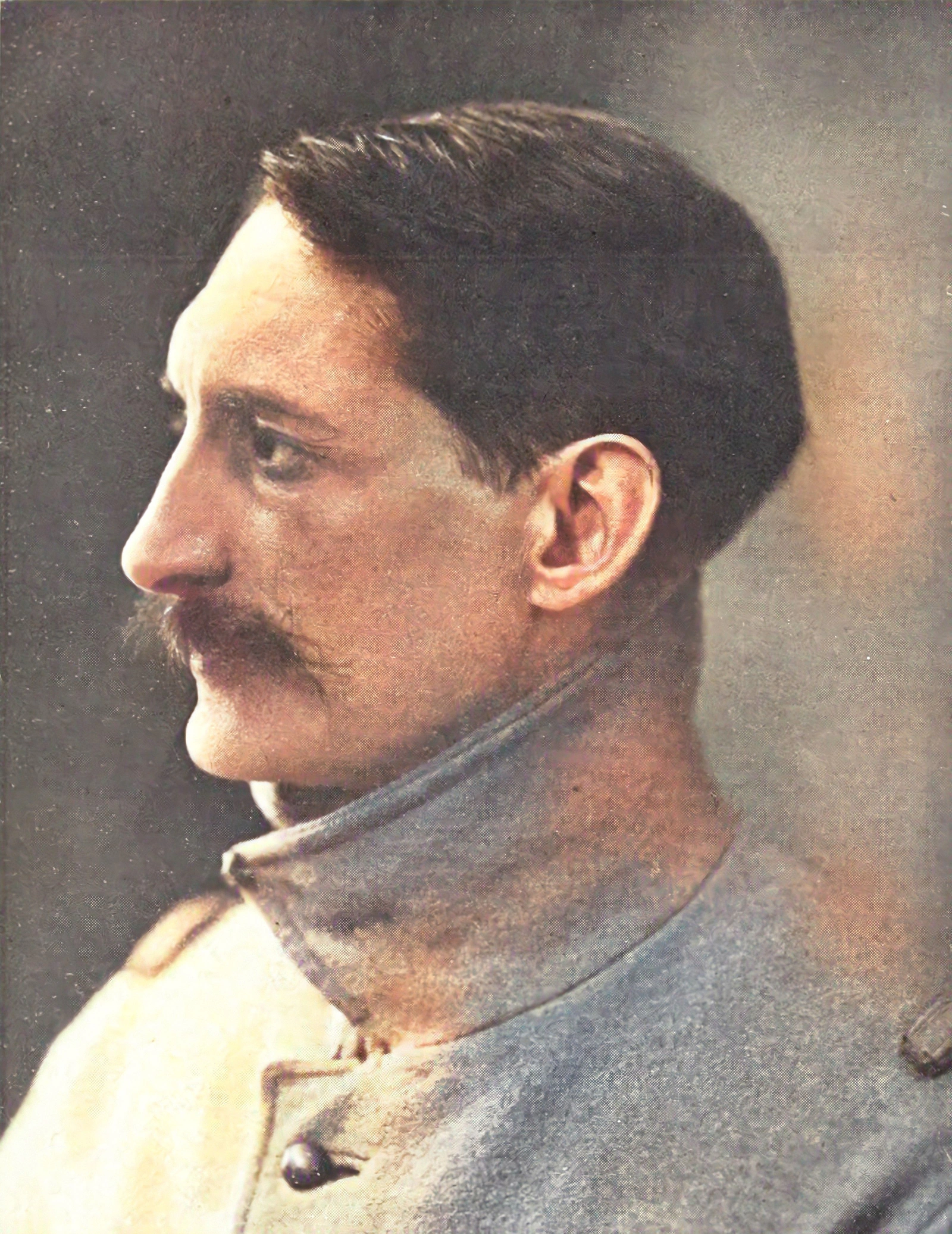
| 3 Quotes | |
| Occup. | Novelist |
| From | France |
| Born | May 17, 1873 Paris, France |
| Died | August 30, 1935 Moscow, Russia |
| Cause | Heart Attack |
| Aged | 62 years |
| Cite | |
Citation Formats
APA Style (7th ed.)
Henri barbusse biography, facts and quotes. (2026, February 11). FixQuotes. https://fixquotes.com/authors/henri-barbusse/
Chicago Style
"Henri Barbusse biography, facts and quotes." FixQuotes. February 11, 2026. https://fixquotes.com/authors/henri-barbusse/.
MLA Style (9th ed.)
"Henri Barbusse biography, facts and quotes." FixQuotes, 11 Feb. 2026, https://fixquotes.com/authors/henri-barbusse/. Accessed 31 Mar. 2026.
Early Life and Background
Henri Barbusse was born on May 17, 1873, in Asnieres-sur-Seine, on the northern edge of Paris as the capital swelled with new rail lines, factories, and working-class suburbs. His father, a French civil servant, and his mother, of English origin, gave him a bilingual horizon and an early sense that identity could be layered rather than fixed. The Third Republic was still defining itself after the trauma of 1870-71, and the Paris region carried a memory of siege, Commune, and political fracture that would later make Barbusse unusually alert to the ways states speak in the language of sacrifice.He came of age in a literary culture that still revered Hugo and Zola while absorbing the sharper introspections of Symbolism and Decadence. The fin-de-siecle atmosphere offered both aesthetic refuge and moral unease: art promised transcendence, yet the age also normalized militarism, colonial expansion, and a casual cruelty toward the anonymous poor. Barbusse was sensitive to this contradiction from the start, and his early writing shows a young man trying to reconcile private intensity with public violence, searching for an ethics that could survive the noise of politics and the seductions of art.
Education and Formative Influences
Educated in Paris and drawn early to letters, Barbusse published poetry while still young, moving through the citys journals and salons at a moment when writers argued over whether art should serve beauty, social truth, or revolution. He read the naturalists, absorbed the psychological novel, and followed the Dreyfus-era battles over justice and the role of intellectuals - conflicts that trained him to see literature as testimony as much as ornament. The result was a temperament both aesthetic and prosecutorial: he wanted lyric heat, but also a language capable of naming organized hypocrisy.Career, Major Works, and Turning Points
Barbusse established himself before 1914 with novels including L'Enfer (1908), a claustrophobic study of desire and voyeurism that already treated modern life as a moral laboratory. The decisive turning point came with World War I: although in his forties, he enlisted, served at the front, and translated trench experience into Le Feu (Under Fire, 1916), first serialized and then published as a book that won the Prix Goncourt and became one of the eras defining antiwar texts. After the armistice he radicalized further, helping to found the internationalist review Clarte, aligning himself with communism in the early 1920s, and writing polemical and biographical works that fused literature with political commitment, including a widely read Life of Jesus (1927) and a sympathetic Stalin biography (1935). He died on August 30, 1935, in Moscow, where he had traveled amid the Soviet Unions cultural diplomacy, his end inseparable from the century-long contest between disillusionment and belief.Philosophy, Style, and Themes
Barbusses core subject was the collision between individual consciousness and collective machinery - war, class, ideology, and erotic obsession. His style, especially after 1916, favored the documentary shock: short scenes, overheard speech, the physical minutiae of cold, mud, fatigue, and fear, all arranged to make readers feel how institutions metabolize bodies. The trench, for him, was not a heroic stage but a factory of unmaking, and his moral logic was bluntly systemic: “Two armies that fight each other is like one large army that commits suicide”. That sentence captures his refusal to romanticize conflict and his instinct to treat nations as mutually complicit in self-destruction, a psychology formed by watching ordinary men reduced to interchangeable parts.Yet Barbusse was not only a public moralist; he was also a writer of compulsions, someone who distrusted the neat boundary between lofty ideals and private appetites. His early fascination with the hidden life of desire and shame never fully disappeared, even when the political stakes rose. He could sound both burdened and intoxicated by perception - “I see too deep and too much”. - an admission that reads less like vanity than like fatigue, the sense of being unable to look away once the veil is lifted. Even the more provocative erotic hunger attributed to him - “It is not a woman I want - it is all women”. - points to a mind that generalized experience into absolutes, turning longing into a totalizing metaphor for possession, fraternity, or the impossible wish to dissolve solitude.
Legacy and Influence
Barbusse endures as a key witness of World War I and as a case study in the 20th-centurys entanglement of art and ideology: Le Feu helped set the template for later trench literature by insisting on the anonymity of suffering and the banality of slaughter, while his postwar activism showed how quickly antiwar humanism could harden into party faith. He influenced pacifist and left intellectual networks across Europe, contributed to the myth and debate of the engaged writer, and remains read both for the granular power of his war prose and for the moral contradictions of his later political commitments, which continue to provoke argument about whether testimony can stay pure once it seeks power to prevent the next catastrophe.Our collection contains 3 quotes written by Henri, under the main topics: Love - Deep - War.
Henri Barbusse Famous Works
- 1925 The Knife (Novel)
- 1919 Clarté (Novel)
- 1916 Under Fire (Novel)
- 1908 Hell (Novel)