
Henri Coanda Biography Quotes 3 Report mistakes
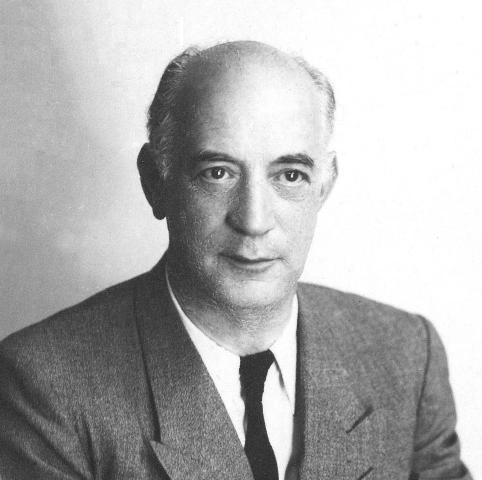
| 3 Quotes | |
| Born as | Henri Marie Coandă |
| Native name | Henri Coandă |
| Occup. | Inventor |
| From | Romania |
| Born | June 7, 1886 Bucharest, Romania |
| Died | November 25, 1972 |
| Aged | 86 years |
| Cite | |
Citation Formats
APA Style (7th ed.)
Henri coanda biography, facts and quotes. (2026, February 11). FixQuotes. https://fixquotes.com/authors/henri-coanda/
Chicago Style
"Henri Coanda biography, facts and quotes." FixQuotes. February 11, 2026. https://fixquotes.com/authors/henri-coanda/.
MLA Style (9th ed.)
"Henri Coanda biography, facts and quotes." FixQuotes, 11 Feb. 2026, https://fixquotes.com/authors/henri-coanda/. Accessed 26 Mar. 2026.
Early Life and Background
Henri Marie Coanda was born on June 7, 1886, in Bucharest, in the Kingdom of Romania, a young state eager to modernize and measure itself against Western Europe. His father, General Constantin Coanda, moved in the world of railways, public administration, and national politics, and the household carried the discipline and expectations of an officer class. That proximity to institutions mattered: Coanda grew up during an era when engineering was becoming a language of national prestige, and he absorbed the idea that technical invention could be a form of service - and of personal distinction.As a boy he was drawn less to textbook certainty than to phenomena: wind, flame, and the way moving fluids seemed to obey rules while still surprising the eye. Later reminiscences and the trajectory of his work suggest an early psychological pattern - impatience with incremental improvement and an attraction to new principles. Romania offered ambition but limited industrial infrastructure, so his inner horizon expanded outward; his life would become a long shuttle between Bucharest and the laboratories, schools, and exhibitions of France, Germany, and Britain, where aviation was turning from spectacle into system.
Education and Formative Influences
Coanda studied at the Military School in Iasi and then at the School of Artillery, Military Engineering and Naval Engineering in Bucharest, but his temperament leaned toward experiment rather than hierarchy. He pursued engineering in Germany and then France, attending institutions associated with the new professional identity of the engineer in the early 20th century. In Paris he moved in the atmosphere that produced Santos-Dumont, Blériot, and the first aeronautical salons - a culture that rewarded audacious prototypes and theoretical argument in equal measure. The result was a hybrid formation: military rigor, continental mathematics, and the showman urgency of early aviation.Career, Major Works, and Turning Points
His defining early gamble was the Coanda-1910 aircraft, presented in Paris, which used a piston engine to drive a ducted fan-like compressor, producing a jet-like exhaust - a concept often cited as an early jet-propulsion experiment, though its exact performance and the circumstances of its brief trials remain debated. A runway accident ended that phase, but it sharpened his preoccupation with how fast-moving gases adhere to and are guided by surfaces. Over subsequent decades, largely based in France, he patented and demonstrated devices exploiting what became widely known as the Coanda effect - the tendency of a fluid jet to be attracted to a nearby surface - with applications ranging from aerodynamics and high-lift concepts to ventilation and industrial flow control. He also worked in related areas of fluid dynamics, mixing, and propulsion concepts, and in his later years he returned to Romania, where he was celebrated as a national scientific figure, advising and promoting research until his death on November 25, 1972.Philosophy, Style, and Themes
Coanda thought in ruptures. He looked at the airplane not as a finished archetype but as a provisional compromise, shaped by the limitations of materials and the inertia of convention. “In my opinion, we should search for a completely different flying machine, based on other flying principles”. The sentence is revealing less as a prediction than as self-portrait: he was constitutionally dissatisfied with refinement and continually sought a new governing mechanism - a different way for air to be persuaded.That attitude could sound dismissive, yet it came from an engineer's intimacy with failure. “These airplanes we have today are no more than a perfection of a child's toy made of paper”. What reads as provocation is also a diagnosis of psychological distance: he treated existing aircraft as models, not as destiny, and he reserved his reverence for unseen forces - vortices, jets, boundary layers - that could be recruited to do work. His style as an inventor was to watch a fluid's behavior until it suggested a device; hence the repeated return to cyclone-like motion, attachment, and entrainment, themes that linked his early propulsion experiments to later patents and demonstrations. In that continuity lies his inner life: a faith that nature's patterns were not merely to be measured, but imitated and redirected.
Legacy and Influence
Coanda endures less as the builder of a single canonical machine than as a shaper of aerodynamic imagination. The Coanda effect became part of the practical vocabulary of fluid mechanics and found uses in aircraft high-lift systems, STOL research, thrust vectoring and flow-control studies, and everyday engineering from ventilation diffusers to industrial mixing. His life also exemplified a 20th-century arc - the inventor moving across borders, competing with rapidly professionalizing laboratories, then returning home as symbol and mentor. In Romanian scientific memory he stands as proof that a peripheral country could produce a thinker conversant with the century's hardest problems, and in the wider history of aviation he represents the restless temperament that keeps asking not how to perfect the wing, but what might replace it.Our collection contains 3 quotes written by Henri, under the main topics: Science - Technology.
Source / external links