
Henri Frederic Amiel Biography Quotes 55 Report mistakes
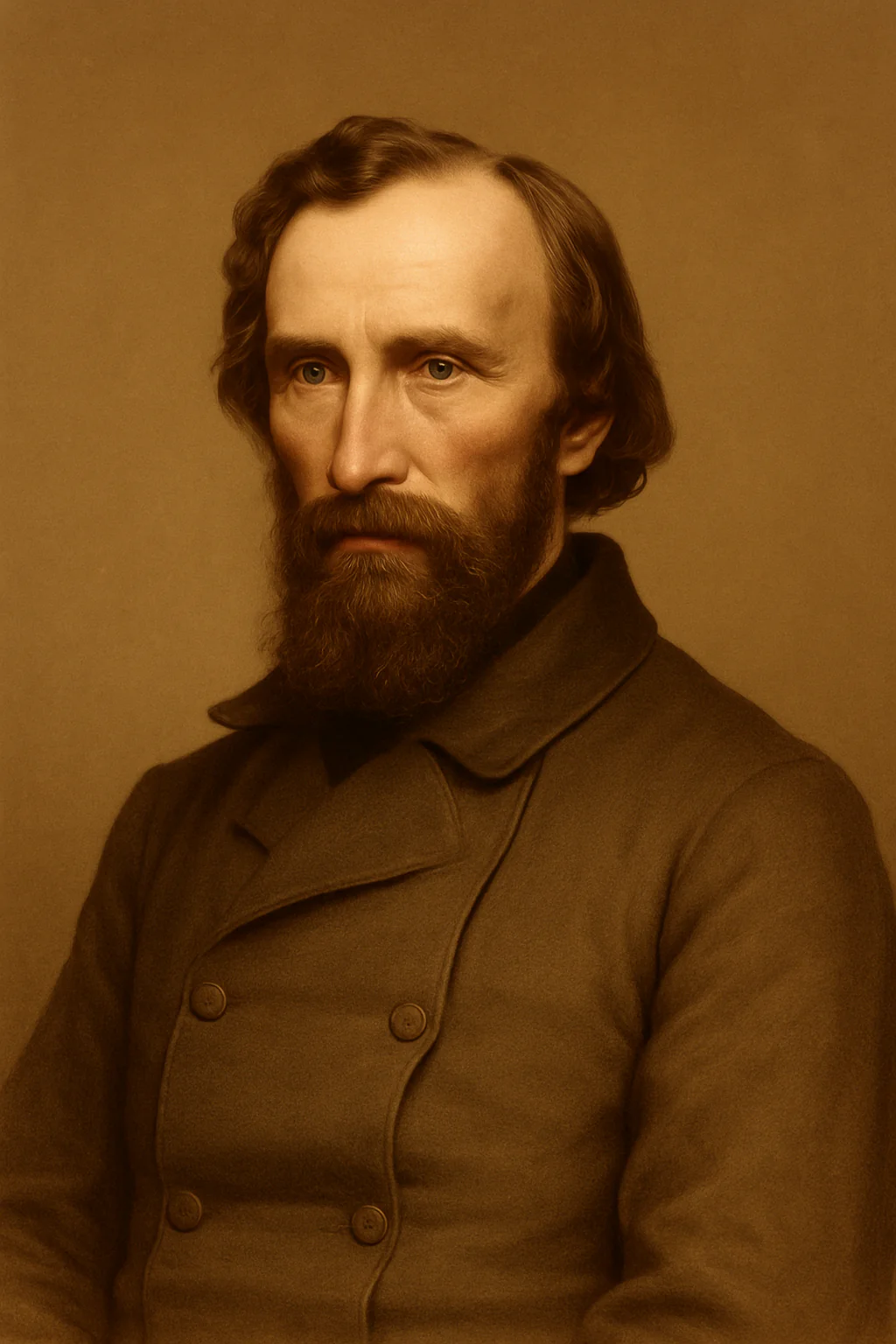
Attr: Jean-François Artus
| 55 Quotes | |
| Native name | Henri-Frédéric Amiel |
| Occup. | Philosopher |
| From | Switzerland |
| Born | September 27, 1821 Switzerland |
| Died | January 1, 1881 Switzerland |
| Aged | 59 years |
| Cite | |
Citation Formats
APA Style (7th ed.)
Henri frederic amiel biography, facts and quotes. (2026, February 2). FixQuotes. https://fixquotes.com/authors/henri-frederic-amiel/
Chicago Style
"Henri Frederic Amiel biography, facts and quotes." FixQuotes. February 2, 2026. https://fixquotes.com/authors/henri-frederic-amiel/.
MLA Style (9th ed.)
"Henri Frederic Amiel biography, facts and quotes." FixQuotes, 2 Feb. 2026, https://fixquotes.com/authors/henri-frederic-amiel/. Accessed 22 Mar. 2026.
Early Life and Background
Henri Frederic Amiel was born on 27 September 1821 in Geneva, a small republic-turned-canton whose Protestant discipline and civic humanism still shaped private conscience. His father, a respected magistrate, died when Amiel was young; his mother died soon after. The early rupture left him with money enough for study but without the domestic anchorage that steadies temperament. In later self-scrutiny he would often return to the sensation of living as a guest in his own life, intensely receptive yet wary of commitment.Geneva in the 1820s-1840s was both austere and cosmopolitan - a city of academies, pastors, and printers with a porous border to French Romanticism and German idealism. Amiel absorbed the Genevan tradition of moral exactness and inward accounting, but he also felt its limits: the fear of error, the suspicion of excess, the pressure to appear useful. That tension between a public culture of measure and a private craving for the absolute became his lifelong weather.
Education and Formative Influences
He studied at the Academy of Geneva and then traveled widely for advanced work, notably in Germany, where he encountered the systems of Kant, Fichte, Schelling, and Hegel as living intellectual forces rather than distant texts. The German university model - rigorous, historical, and philosophical at once - attracted him, as did the Romantic conviction that the self is a laboratory of meaning; yet the same encounter deepened his tendency to turn thought into an endless rehearsal. By the mid-1840s he was forming the habit that would define him: keeping a journal as both spiritual exercise and philosophical instrument.Career, Major Works, and Turning Points
In 1849 Amiel became professor of aesthetics and later professor of moral philosophy at the University of Geneva, positions that placed him at the center of a city that expected intellectual leadership but rewarded moderation. He published criticism, lectures, and essays, including studies of literary and ethical questions, yet his most consequential work remained private: the immense Journal intime, begun in 1847 and continued almost daily. His public career, marked by conscientious teaching and intermittent publication, contrasted with a private life of solitude, fragile health, and the gnawing sense that his best powers were being spent on self-observation rather than creation; only after his death on 1 January 1881 did friends edit and publish the Journal, revealing the scale of his inner drama.Philosophy, Style, and Themes
Amiel was a philosopher of conscience more than of system. He distrusted mere intellectual agility, insisting that thought without inward discipline becomes a sterile performance: “Cleverness is serviceable for everything, sufficient for nothing”. The line is not anti-intellectual so much as diagnostic - a warning to himself that brilliance could become a substitute for vocation. In the Journal, analysis often functions like a moral microscope: it clarifies, but it also paralyzes, turning decisions into problems and problems into identities.His style is aphoristic and meteorological, moving from landscape to soul and back again, as if outer weather could name inner states more honestly than arguments. “Any landscape is a condition of the spirit”. That sensitivity made him an acute reader of art, religion, and character, but it also fed his chronic hesitation - the fear that action will falsify the ideal by making it finite. Hence his hard-earned counsel against perfectionism: “The man who insists upon seeing with perfect clearness before he decides, never decides. Accept life, and you must accept regret”. The psychology behind the sentence is confessional: he knew that the demand for total certainty can be a refined form of cowardice, and that regret is not an exception to living but its price.
Legacy and Influence
Amiel did not found a school, yet his posthumous reputation has been durable because he articulated a modern condition with uncommon honesty: the educated self caught between spiritual longing and skeptical self-knowledge. The Journal intime became a classic of introspective literature in French, influencing later diarists and essayists who treated inner life as a serious arena of truth rather than mere sentiment. In an age that increasingly rewarded productivity and public identity, Amiel offered a different authority - the authority of conscience examining itself - and his best pages still speak to readers who recognize both the dignity and the danger of living too much in reflection.Our collection contains 55 quotes written by Henri, under the main topics: Witty One-Liners - Motivational - Ethics & Morality - Truth - Wisdom.
Frequently Asked Questions
- Amiel meaning: Hebrew origin: "God of my people" (or "People of God").
- Amiel pronunciation: English: ah-mee-EL; French: ah-myell.
- Amiel name: A Hebrew given name/surname; borne by Swiss philosopher Henri-Frédéric Amiel.
- Uncertainty is the refuge of hope Henri Frederic Amiel: Uncertainty is the refuge of hope.
- Henri Frederic Amiel goodreads: See his Goodreads author page for quotes and reviews of Amiel’s Journal.
- henri-frédéric amiel books: Best known for Journal intime (Amiel’s Journal); also poems like Grains de mil.
- Henri Frederic Amiel life is short: Life is short; be swift to love, make haste to be kind.
- How old was Henri Frederic Amiel? He became 59 years old
Henri Frederic Amiel Famous Works
- 1883 Amiel's Journal (Book)
Source / external links