
Henri Matisse Biography Quotes 32 Report mistakes
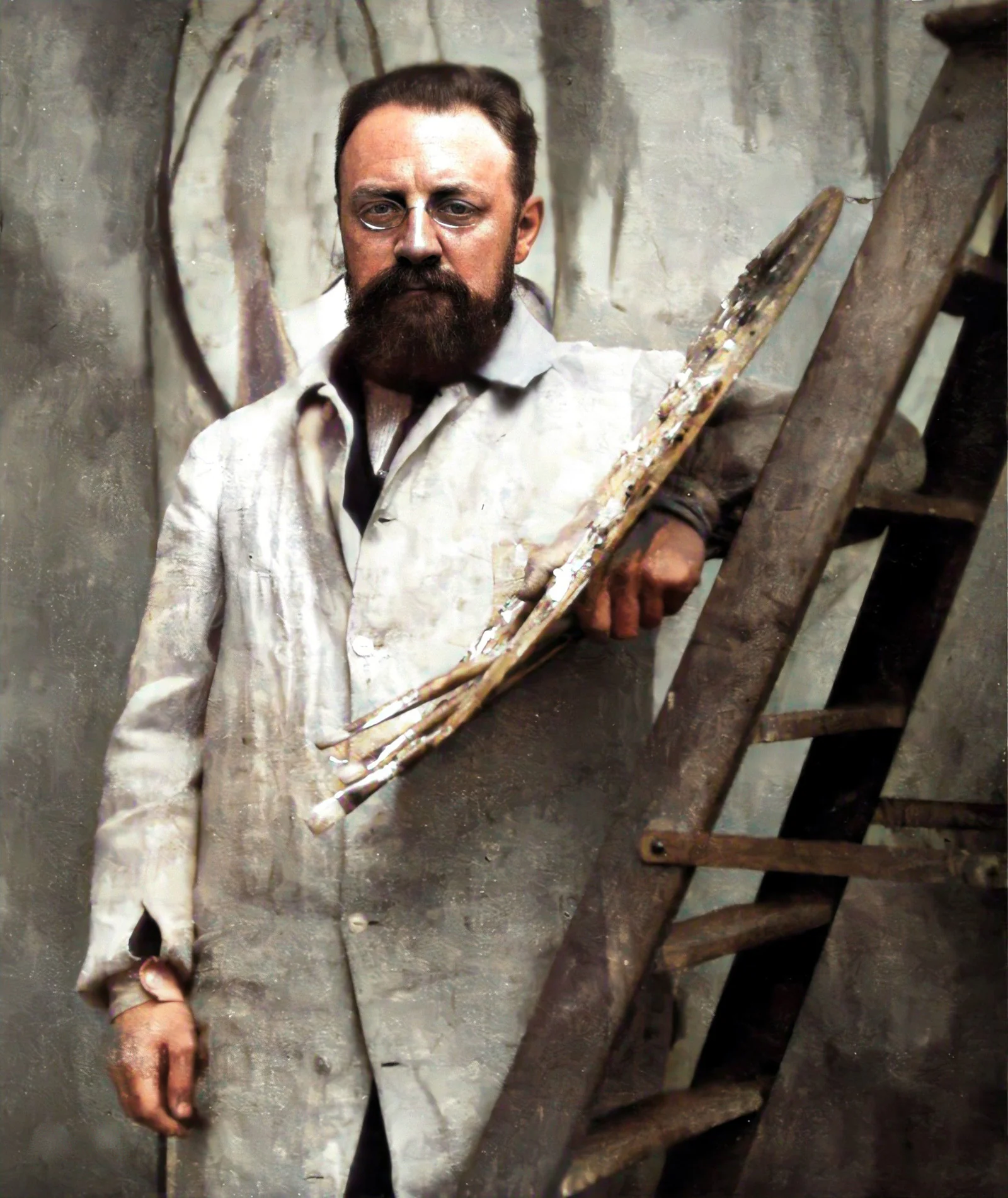
Attr: Alvin Langdon Coburn
| 32 Quotes | |
| Occup. | Artist |
| From | France |
| Born | December 31, 1869 |
| Died | November 3, 1954 |
| Aged | 84 years |
| Cite | |
Citation Formats
APA Style (7th ed.)
Henri matisse biography, facts and quotes. (2026, February 2). FixQuotes. https://fixquotes.com/authors/henri-matisse/
Chicago Style
"Henri Matisse biography, facts and quotes." FixQuotes. February 2, 2026. https://fixquotes.com/authors/henri-matisse/.
MLA Style (9th ed.)
"Henri Matisse biography, facts and quotes." FixQuotes, 2 Feb. 2026, https://fixquotes.com/authors/henri-matisse/. Accessed 27 Mar. 2026.
Early Life and Background
Henri-Emile-Benoit Matisse was born on December 31, 1869, in Le Cateau-Cambresis in northern France and grew up largely in nearby Bohain-en-Vermandois, a textile town whose patterned fabrics and domestic color likely stayed in his eye long before he had a vocabulary for painting. His family expected practicality: his father was a grain merchant, and the household belonged to the sturdy, provincial Third Republic world that prized order, work, and social respectability more than artistic experiment.A bout of appendicitis in 1889, during convalescence, became the hinge of his inner life. Given paints to pass the time, Matisse later described the experience as discovering a kind of paradise - not escape from reality but a new way to metabolize it. This origin story matters psychologically: his art would repeatedly seek calm, clarity, and pleasure, yet it was forged from interruption, pain, and the startling sense that discipline could transmute contingency into purpose.
Education and Formative Influences
Matisse studied law in Paris and qualified in 1891, briefly working as a legal clerk before choosing art in earnest. He entered the academies and then the studio of Gustave Moreau at the Ecole des Beaux-Arts, where he met artists who would shape the avant-garde conversation. Copying in the Louvre grounded him in Chardin and Poussin, while modern currents - Impressionism, Post-Impressionism, and especially Cezanne - pushed him toward structure built from color. Friendships and rivalries with Andre Derain and later Pablo Picasso sharpened his sense that painting could be both sensuous and analytical, an arena where joy and severity were not opposites but partners.Career, Major Works, and Turning Points
After early struggles, Matisse emerged as a leader of Fauvism at the 1905 Salon d'Automne, where the incandescent color of works like "Woman with a Hat" scandalized critics and announced a new pictorial freedom. Collectors such as the Steins helped stabilize his career, enabling landmarks including "Le Bonheur de Vivre" (1905-06) and "Blue Nude" (1907). Travel and looking were catalysts: North Africa (1912-13) deepened his sense of light and decorative space; the 1910s and 1920s brought a controlled classicism and the odalisque series in Nice; and illness after 1941 transformed his method, leading to the cut-outs - "Jazz" (1947) and late paper compositions - and to the culminating architectural-artistic synthesis of the Chapelle du Rosaire in Vence (completed 1951), designed with stained glass, murals, and vestments. He died on November 3, 1954, in Nice, having continually reinvented the means while keeping the ends steady.Philosophy, Style, and Themes
Matisse pursued an art of equilibrium: color as structure, line as distilled sensation, space as a stage for the viewer's breath. He wanted painting to be a respite without being evasive - a hard-won clarity that masked labor. His best interiors, nudes, and still lifes hold a paradoxical tension: the forms look effortless, yet every contour is negotiated, pruned, and returned to. In old age and illness, the drive did not diminish; it intensified into a belief that sustained work is a moral and psychological technology, a way to keep fear at bay and attention alive.His aphorisms reveal the self he guarded: buoyant, exacting, wary of chaos. “I don't paint things. I only paint the difference between things”. is less a slogan than a method of perception - he trained himself to see relationally, turning objects into intervals of hue, temperature, and weight. Against the charge that his line was arbitrary, he insisted, “My curves are not crazy”. , implying a hidden logic: the curve is a decision that holds the body together and holds emotion in check. And beneath the decorative brilliance sits a chosen attitude toward the world: “There are always flowers for those who want to see them”. That sentence reads like a defense mechanism and a discipline - the will to notice beauty not as denial, but as a daily practice of freedom.
Legacy and Influence
Matisse stands as a co-architect of modern art, proving that radicality could arrive through pleasure, pattern, and serenity as much as through fracture. His Fauvist color released painting from local description; his later cut-outs anticipated graphic design, collage, and installation by making color a physical, cut, and movable substance; and the Vence chapel set a benchmark for the modern sacred environment. Generations from Mark Rothko to Ellsworth Kelly, from Henri Cartier-Bresson (in compositional clarity) to contemporary designers, have drawn from his conviction that simplicity can be the final refinement - and that joy, when earned, can be as experimental as any revolt.Our collection contains 32 quotes written by Henri, under the main topics: Truth - Art - Music - Love - Sarcastic.
Other people related to Henri: Pierre Bonnard (Artist), Maurice de Vlaminck (Artist), Milton Avery (Artist), Janet Flanner (Journalist), Gustave Moreau (Artist)
Source / external links