
Henri Poincare Biography Quotes 34 Report mistakes
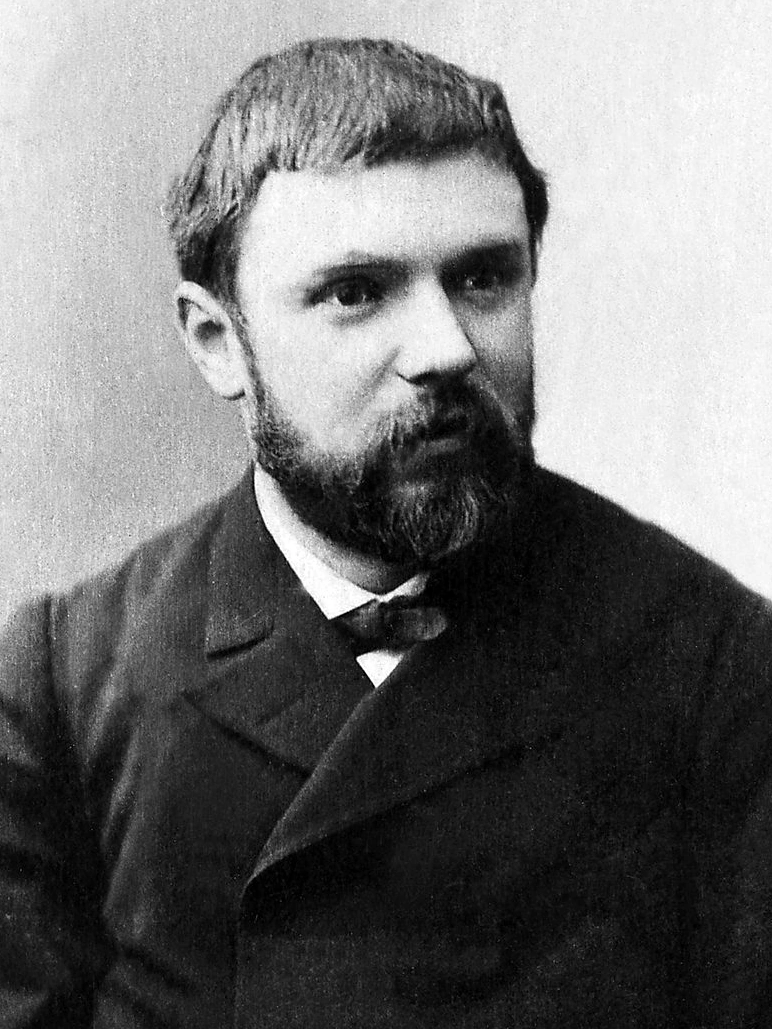
Attr: meisterdrucke.ie
| 34 Quotes | |
| Occup. | Mathematician |
| From | France |
| Born | April 29, 1854 Nancy, France |
| Died | July 17, 1912 Paris, France |
| Aged | 58 years |
| Cite | |
Citation Formats
APA Style (7th ed.)
Henri poincare biography, facts and quotes. (2026, February 11). FixQuotes. https://fixquotes.com/authors/henri-poincare/
Chicago Style
"Henri Poincare biography, facts and quotes." FixQuotes. February 11, 2026. https://fixquotes.com/authors/henri-poincare/.
MLA Style (9th ed.)
"Henri Poincare biography, facts and quotes." FixQuotes, 11 Feb. 2026, https://fixquotes.com/authors/henri-poincare/. Accessed 6 Mar. 2026.
Early Life and Background
Jules Henri Poincare was born on April 29, 1854, in Nancy, in the French region of Lorraine, into a cultivated, professionally secure household shaped by the rational confidence of the Second Empire. His father, Leon Poincare, was a physician and professor; the family moved in circles where medicine, law, and public service were ordinary callings, and conversation favored clarity, method, and proof. Henri grew up in a France that would soon be jolted by the Franco-Prussian War (1870-1871) and the loss of Alsace-Lorraine - a national wound that sharpened French commitment to education, science, and institutional renewal.As a child he was often described as withdrawn, quick, and internally absorbed - a mind that seemed to operate ahead of speech. Episodes of illness in youth were followed by bursts of concentrated reading and private problem-solving, reinforcing a pattern that would define him: long silent gestation punctuated by sudden synthesis. This inward rhythm coexisted with civic steadiness; Poincare was not a bohemian prodigy but a bourgeois savant whose imagination matured inside the frameworks of the lycee, the academy, and later the Sorbonne.
Education and Formative Influences
He studied at the Lycee in Nancy and entered the Ecole Polytechnique in 1873, where his extraordinary mathematical gifts were widely recognized, then trained as an engineer at the Ecole des Mines. The Polytechnique culture of analysis, mechanics, and state service, combined with the French tradition of mathematical physics (Laplace, Fourier, Cauchy), formed his baseline. Yet his temperament pushed beyond rote technique toward structural understanding - a preference strengthened by reading in celestial mechanics and by the era's electrifying questions about stability, determinism, and the limits of calculation.Career, Major Works, and Turning Points
After early work as a mining engineer, Poincare moved decisively into academic life, teaching in Caen and then Paris, becoming a central figure at the Sorbonne and a member of the Academie des Sciences. His 1880s papers on Fuchsian functions and automorphic forms reshaped complex analysis and linked it to geometry and group theory. A major turning point came with the King Oscar II prize competition on the three-body problem: in the course of revising his 1890 memoir, he recognized the profound instability of certain dynamical systems, anticipating what later became chaos theory. His multi-volume Les Methodes Nouvelles de la Mecanique Celeste (1892-1899) systematized these insights. In topology he launched new methods and invariants, culminating in the 1904 formulation of what became the Poincare Conjecture, while in mathematical physics he contributed to potential theory, electrodynamics, and early relativity-era discussions, including the 1905-1906 Lorentz transformations and the principle of relativity as a guiding symmetry.Philosophy, Style, and Themes
Poincare wrote mathematics like an explorer mapping a coastline: rigorous when landing, conjectural when at sea, always attentive to what connects one region to another. His style favored qualitative geometry, invariants, and global reasoning over brute-force computation - a reflection of how his mind worked, by sudden internal consolidation after periods of apparent inactivity. He distrusted purely accumulative science and emphasized architecture over inventory: “Science is built up of facts, as a house is with stones. But a collection of facts is no more a science than a heap of stones is a house”. The line is not rhetoric but self-portrait - the psychological need to see the hidden plan that makes details cohere, whether in differential equations, topology, or the empirical order of physics.His philosophical essays - especially Science and Hypothesis (1902), The Value of Science (1905), and Science and Method (1908) - develop a disciplined fallibilism joined to creative intuition. He argued that discovery often arrives before justification: “It is through science that we prove, but through intuition that we discover”. That view matches his working habits and explains his fascination with near-invisible causes and sensitive dependence in dynamics: “A very small cause which escapes our notice determines a considerable effect that we cannot fail to see, and then we say that the effect is due to chance”. For Poincare, chance was frequently a name for ignorance, and determinism was less a metaphysical slogan than a practical warning about prediction, measurement, and the structure of models.
Legacy and Influence
Poincare died in Paris on July 17, 1912, leaving a body of work that sits at the foundations of modern mathematics and theoretical physics: qualitative dynamics, topology, group-theoretic methods in analysis, and a philosophical account of science that anticipated later debates about convention, theory choice, and the limits of reduction. Generations of mathematicians built on his inventions - from dynamical systems and ergodic theory to manifold topology and geometric group theory - while physicists found in his symmetry-first thinking a bridge from classical mechanics to relativity and beyond. His enduring influence is not only theorems bearing his name but a model of intellect: patient, structural, and humane, insisting that understanding is made, not gathered, by the mind's power to organize relations into form.Our collection contains 34 quotes written by Henri, under the main topics: Witty One-Liners - Wisdom - Truth - Nature - Deep.
Other people related to Henri: Felix Klein (Mathematician), Gabriel Lippmann (Scientist)
Henri Poincare Famous Works
- 1908 La Science et la Méthode (Science and Method) (Book)
- 1905 On the Dynamics of the Electron (Essay)
- 1905 La Valeur de la Science (The Value of Science) (Book)
- 1902 La Science et l'Hypothèse (Science and Hypothesis) (Book)
- 1895 Analysis Situs (Essay)
- 1892 New Methods of Celestial Mechanics (Book)
- 1890 On the Three-Body Problem and the Equations of Dynamics (Essay)
- 1881 Memoir on Fuchsian Functions (Essay)