
Henrik Ibsen Biography Quotes 31 Report mistakes
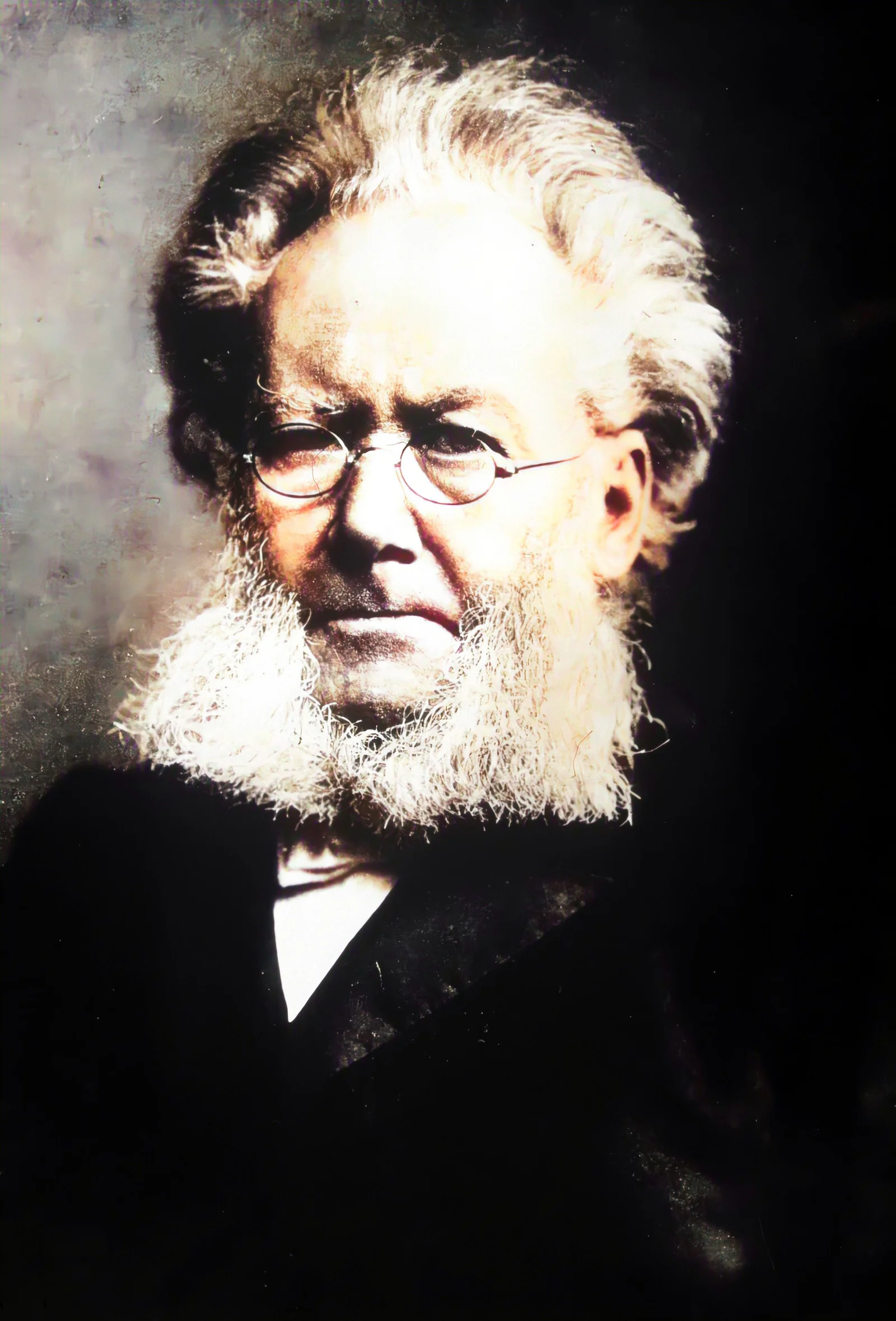
| 31 Quotes | |
| Born as | Henrik Johan Ibsen |
| Occup. | Poet |
| From | Norway |
| Born | March 20, 1828 Skien, Norway |
| Died | May 23, 1906 Christiania (Oslo), Norway |
| Aged | 78 years |
| Cite | |
Citation Formats
APA Style (7th ed.)
Henrik ibsen biography, facts and quotes. (2026, February 11). FixQuotes. https://fixquotes.com/authors/henrik-ibsen/
Chicago Style
"Henrik Ibsen biography, facts and quotes." FixQuotes. February 11, 2026. https://fixquotes.com/authors/henrik-ibsen/.
MLA Style (9th ed.)
"Henrik Ibsen biography, facts and quotes." FixQuotes, 11 Feb. 2026, https://fixquotes.com/authors/henrik-ibsen/. Accessed 26 Mar. 2026.
Early Life and Background
Henrik Johan Ibsen was born on 1828-03-20 in Skien, Telemark, in a Norway still shaping its modern identity after the Napoleonic era and the 1814 constitution. His father, Knud Ibsen, had been a prosperous merchant; his mother, Marichen Altenburg, came from a comparatively cultivated family with a taste for books and theater. When the family fortunes collapsed in the 1830s, the Ibsens moved to a smaller property outside town, and the boy absorbed the humiliations of status lost - a private schooling in how communities remember, judge, and exclude.The emotional weather of that downturn left a lasting stamp: Ibsen learned early to read the room, to fear the crowd, and to distrust the comfort of belonging. He developed a solitary intensity and a habit of watching rather than joining, a posture that later became both his method as a dramatist and his moral stance. Even in youth he drafted verse and sketches, using language as a way to rehearse control over a life that had become precarious.
Education and Formative Influences
In 1844 he left for Grimstad as an apprentice to an apothecary, a job that supplied discipline but little affection, and he studied privately while writing poems and an early play. The period also carried a social wound: he fathered an illegitimate child in 1846 and was forced into financial support, an episode that sharpened his awareness of sexual double standards and civic hypocrisy. In 1850 he went to Christiania (Oslo), failed the university entrance exam, and drifted into radical circles amid the aftershocks of the 1848 revolutions; the theater, rather than academia, became his real university.Career, Major Works, and Turning Points
Ibsen found his vocation through work at the Norwegian Theater in Bergen (from 1851) and later as artistic director at the Norwegian Theater in Christiania, where he learned stagecraft, rewriting, and the hard mathematics of audience attention. Early historical dramas such as "The Vikings at Helgeland" (1857) and "The Pretenders" (1863) tested national themes, but his decisive turn came after disappointment at home and self-imposed exile to Italy in 1864. There he wrote the verse dramas "Brand" (1866) and "Peer Gynt" (1867), which made his name across Scandinavia, and then he reinvented modern drama with social and psychological plays: "Pillars of Society" (1877), "A Doll's House" (1879), "Ghosts" (1881), and "An Enemy of the People" (1882). Later works - "The Wild Duck" (1884), "Hedda Gabler" (1890), "The Master Builder" (1892), "John Gabriel Borkman" (1896), and "When We Dead Awaken" (1899) - darkened into studies of aging, guilt, and the costs of ambition. He returned to Norway in 1891 as a European celebrity, suffered strokes in the early 1900s, and died in Christiania on 1906-05-23.Philosophy, Style, and Themes
Ibsen's inner life was a contest between moral absolutism and an anatomist's skepticism. He distrusted easy consensus because he had seen how respectability can be purchased by silence, and he wrote characters who discover that their most intimate rooms are furnished by public opinion. His famous refusal to flatter majorities is not a slogan so much as a psychological memory of being watched and ranked: “The strongest man in the world is he who stands most alone”. Again and again, he stages the moment when a person must choose isolation over accommodation, not out of vanity, but because compromise would mean living a lie.Formally, he fused poetic pressure with forensic realism. The "well-made play" becomes, in his hands, an ethical trap: past actions return as documents, letters, debts, diseases, and inherited scripts, until a character is forced to speak the truth that the household has been built to avoid. His dramas argue that civic health depends on moral candor - “The spirit of truth and the spirit of freedom - these are the pillars of society”. - but he also insists that truth has a price and that liberation is rarely gentle. Hence the hard edge of his anti-sentimentality: “The devil is compromise”. In Ibsen, freedom is not a poster but a renovation - stripping a life down to its load-bearing beams, then living with whatever remains.
Legacy and Influence
Ibsen transformed the stage into a modern arena for social critique and interior conflict, shaping realism, symbolism, and psychological drama from Chekhov and Strindberg to Shaw, O'Neill, and beyond. His plays changed not only theater technique - subtext, retrospective plotting, everyday speech sharpened into moral argument - but public vocabulary about marriage, inheritance, gender roles, and civic courage. In Norway he became a national monument he had once fled, yet his enduring power lies in his refusal to offer monuments at all: he leaves audiences with choices, not consolations, and with the unnerving sense that the real drama begins after the curtain falls.Our collection contains 31 quotes written by Henrik, under the main topics: Ethics & Morality - Truth - Wisdom - Dark Humor - Sarcastic.
Other people related to Henrik: Otto Rank (Psychologist), Minnie Maddern Fiske (Actress)
Henrik Ibsen Famous Works
- 1890 Hedda Gabler (Play)
- 1882 An Enemy of the People (Play)
- 1881 Ghosts (Play)
- 1879 A Doll's House (Play)
- 1867 Peer Gynt (Play)
Source / external links