
Henry A. Kissinger Biography Quotes 43 Report mistakes
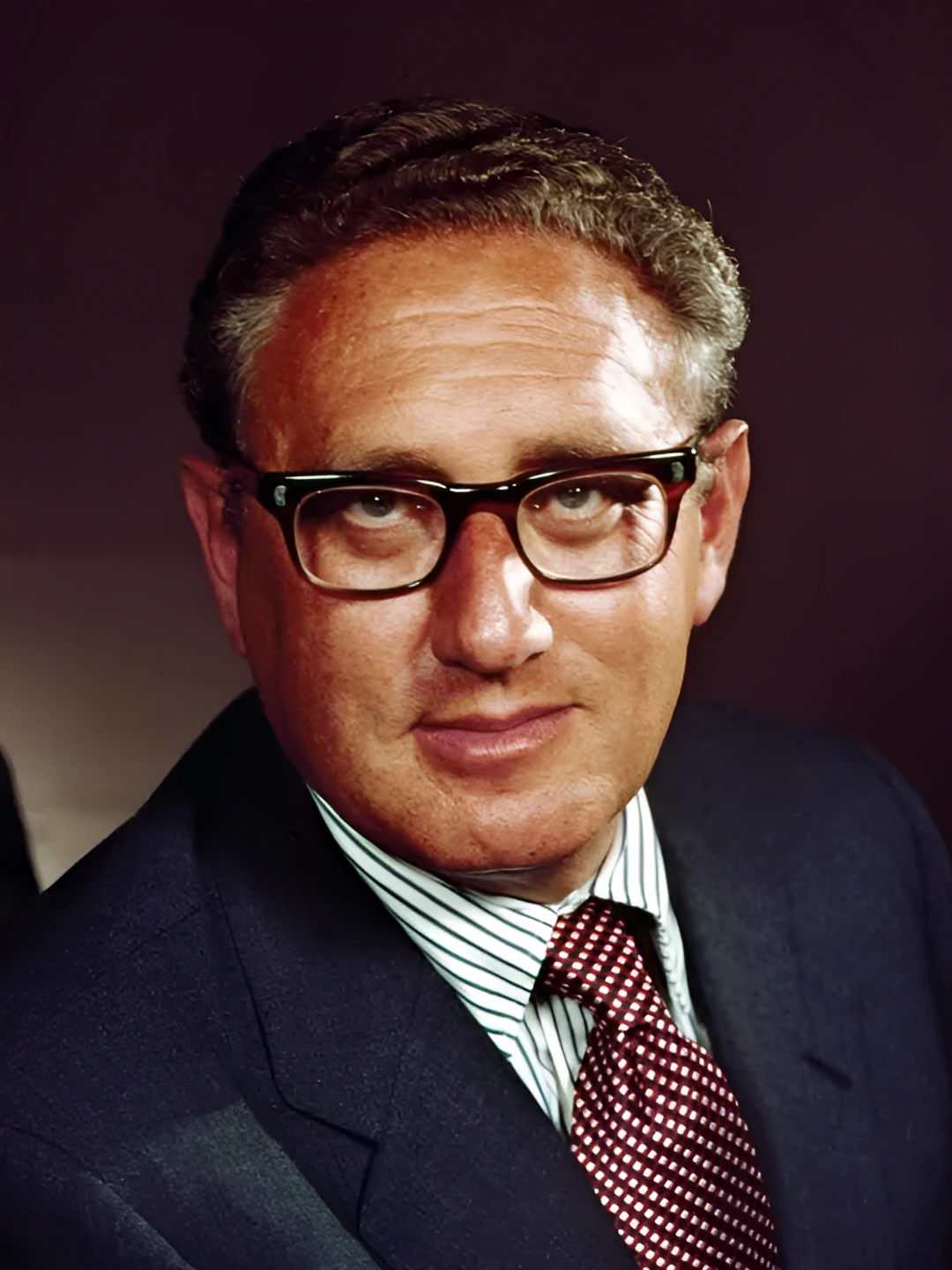
Attr: The New Yorker
| 43 Quotes | |
| Born as | Heinz Alfred Kissinger |
| Occup. | Statesman |
| From | Germany |
| Born | May 27, 1923 Furth, Germany |
| Died | November 29, 2023 Kent, Connecticut, USA |
| Aged | 100 years |
| Cite | |
Citation Formats
APA Style (7th ed.)
Henry a. kissinger biography, facts and quotes. (2026, February 11). FixQuotes. https://fixquotes.com/authors/henry-a-kissinger/
Chicago Style
"Henry A. Kissinger biography, facts and quotes." FixQuotes. February 11, 2026. https://fixquotes.com/authors/henry-a-kissinger/.
MLA Style (9th ed.)
"Henry A. Kissinger biography, facts and quotes." FixQuotes, 11 Feb. 2026, https://fixquotes.com/authors/henry-a-kissinger/. Accessed 26 Mar. 2026.
Early Life and Background
Henry Alfred Kissinger was born Heinz Alfred Kissinger on May 27, 1923, in Fuerth, Bavaria, to a German Jewish family navigating the tightening vise of Weimar collapse and Nazi ascent. His father, Louis, was a schoolteacher; his mother, Paula, kept the household steady as public life narrowed around them. The humiliations of antisemitic exclusion were not abstract lessons but daily facts, and the adolescent Kissinger absorbed early the idea that politics was not moral theater but a force that could reorder private lives overnight.In 1938 the family fled Germany, arriving in New York City as refugees, settling in Washington Heights among other German Jews. He worked in a shaving-brush factory by day and attended night school, learning the pragmatics of American survival without relinquishing a European memory of fragility. That dual consciousness - gratitude to a new republic and suspicion of historical innocence - became the emotional engine of his later statecraft.
Education and Formative Influences
Drafted into the US Army in 1943, Kissinger became a US citizen and served in counterintelligence in Europe, returning to a defeated Germany as an American uniformed interpreter of power. After the war he entered Harvard, earning his BA (1950), MA (1952), and PhD (1954) and remaining as a faculty member. His long dissertation, later published as "A World Restored" (1957), used Metternich and Castlereagh to argue that stability required legitimacy and restraint, not only victory; it also revealed his formative belief that order is an achievement, not a default setting. At Harvard and in policy circles he cultivated patrons such as Nelson Rockefeller and built a reputation as a strategic intellectual, publishing on nuclear strategy and limited war in the tense early Cold War.Career, Major Works, and Turning Points
Kissinger entered government at the peak of Vietnam-era turmoil, serving President Richard Nixon as national security adviser (1969-1975) and then as secretary of state (1973-1977), an unusual accumulation of authority that made him a central architect of US foreign policy. He helped engineer the opening to the People's Republic of China (secret 1971 trip; Nixon visit 1972), pursued detente with the Soviet Union culminating in SALT I and the Anti-Ballistic Missile Treaty (1972), and managed crisis diplomacy in the Middle East after the 1973 Yom Kippur War through "shuttle diplomacy", helping shape disengagement agreements between Israel, Egypt, and Syria. His record remains inseparable from moral controversy: the expansion of the Vietnam War into Cambodia and Laos, the 1973 Chilean coup and US covert actions, and support for anti-communist partners amid mass violence in places like East Timor. Awarded the 1973 Nobel Peace Prize for the Vietnam ceasefire negotiations, he also became a symbol of the era's contradictions - a peacemaker in formal terms and a hard realist in practice. After leaving office he founded Kissinger Associates, advised presidents of both parties, wrote influential syntheses such as "Diplomacy" (1994) and "On China" (2011), and remained an active global counselor into his centenarian years, dying on November 29, 2023.Philosophy, Style, and Themes
Kissinger's worldview fused refugee memory with balance-of-power classicism: history as tragedy constrained by necessity, states as jealous guardians of security, and diplomacy as the art of preventing worst outcomes rather than delivering perfect ones. He distrusted crusades that promised final redemption, preferring incremental bargains that kept adversaries talking and allies aligned. His own aphorism that “Each success only buys an admission ticket to a more difficult problem”. reads like self-diagnosis: he treated policymaking as an escalator of dilemmas, where triumph merely enlarges responsibility and narrows the margin for error.His style was theatrical but methodical - secrecy, backchannels, and carefully staged summits - and he understood personal access as a tool of state. In the cynical shimmer of Washington, he could summarize the seductions of proximity to decision with “Power is the great aphrodisiac”. Yet behind the wit was an immigrant's seriousness about fragility: order could collapse faster than institutions could explain, and therefore policy had to prioritize equilibrium. That conviction also exposed his ethical blind spots, allowing him to treat smaller nations as pieces on a board; the psychological logic of his discipline was control, the fear of uncontrolled cascades, and the belief that legitimacy often mattered less than predictable outcomes.
Legacy and Influence
Kissinger's legacy is double-edged and enduring: a master practitioner of Cold War diplomacy who helped reshape the strategic triangle among Washington, Moscow, and Beijing, and a lightning rod for debates about American power and moral accountability. His concepts - linkage, detente, triangular diplomacy, the primacy of negotiation among rivals - remain staples in statecraft, and his writing continues to frame how elites discuss order, legitimacy, and balance. At the same time, the controversies attached to his tenure have become case studies in the costs of realism when it discounts human rights and democratic self-determination. Few American statesmen so completely embodied their era's ambitions and anxieties, or left a record so argued over, so studied, and so difficult to reduce to a single verdict.Our collection contains 43 quotes written by Henry, under the main topics: Witty One-Liners - Ethics & Morality - Truth - Wisdom - Art.
Other people related to Henry: William P. Bundy (Historian)