
Henry B. Adams Biography Quotes 38 Report mistakes
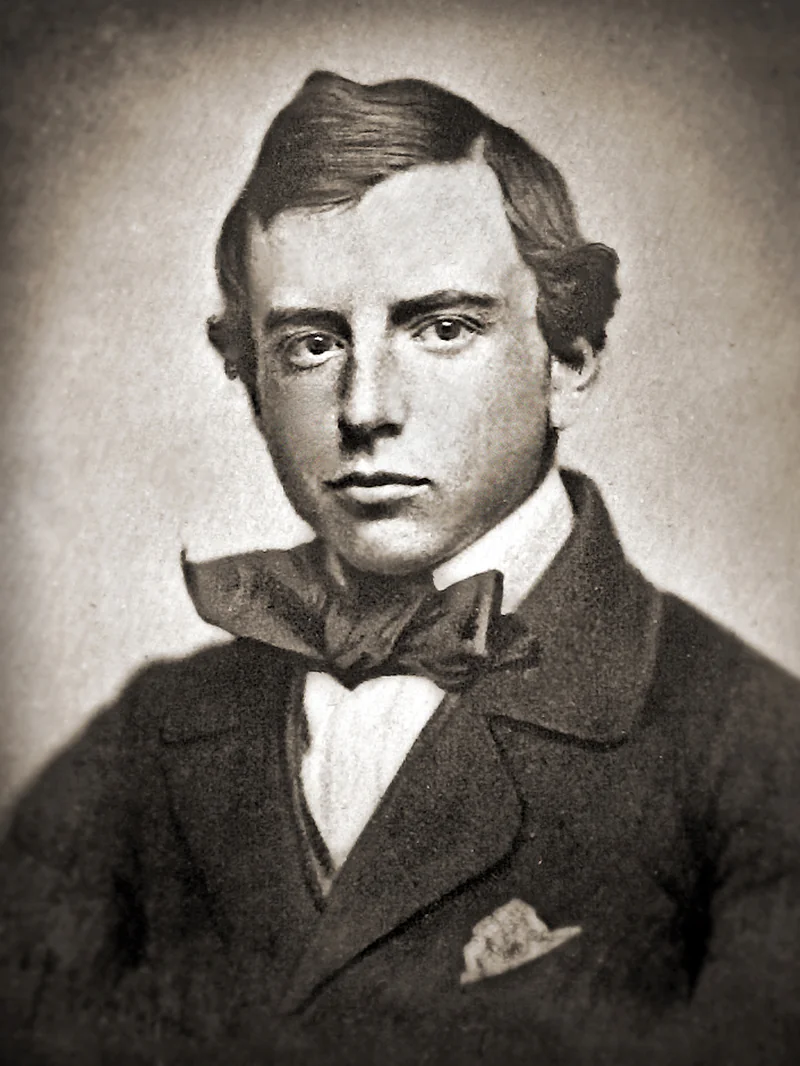
| 38 Quotes | |
| Born as | Henry Brooks Adams |
| Occup. | Historian |
| From | USA |
| Born | February 16, 1838 Boston, Massachusetts, USA |
| Died | March 27, 1918 Washington, D.C., USA |
| Aged | 80 years |
| Cite | |
Citation Formats
APA Style (7th ed.)
Henry b. adams biography, facts and quotes. (2026, February 11). FixQuotes. https://fixquotes.com/authors/henry-b-adams/
Chicago Style
"Henry B. Adams biography, facts and quotes." FixQuotes. February 11, 2026. https://fixquotes.com/authors/henry-b-adams/.
MLA Style (9th ed.)
"Henry B. Adams biography, facts and quotes." FixQuotes, 11 Feb. 2026, https://fixquotes.com/authors/henry-b-adams/. Accessed 25 Mar. 2026.
Early Life and Background
Henry Brooks Adams was born in Boston, Massachusetts, on February 16, 1838, into the most politically saturated family in the United States. He was the grandson of President John Quincy Adams and the great-grandson of President John Adams, with a father, Charles Francis Adams Sr., who would become Abraham Lincoln's minister to Great Britain during the Civil War. In the Adams household, public duty was less a career than an inherited weather system - constant, moralizing, and inescapable. That inheritance gave Henry both his subject matter and his wound: he grew up with the sense that history was a tribunal before which the Adams name would always be called.The decisive private tragedy of his life arrived later but cast its shadow backward. In 1885 he married Marian "Clover" Hooper Adams, a brilliant Bostonian with a mordant intelligence that matched his own. Their marriage moved between Washington's social glare and an inward, skeptical companionship. Clover's suicide in 1885 - by potassium cyanide, after a period of depression and amid Adams's emotional distance and relentless self-absorption - became the central silence of his biography. Adams would never mention it directly in his most famous book, but nearly everything he wrote afterward bears the pressure of that absence.
Education and Formative Influences
Adams graduated from Harvard College in 1858, then studied in Berlin (1859-1861), absorbing German historical method and the prestige of "scientific" scholarship just as Europe slid toward modernity's mechanized politics. The Berlin years sharpened his suspicion of New England moral certainty; he admired rigor but distrusted systems. Returning to the United States on the eve of civil war, he moved between inherited idealism and an emerging realism about power, money, and institutions - a tension that would later define his stance toward politics and even toward knowledge itself.Career, Major Works, and Turning Points
During the Civil War he served as private secretary to his father in London, watching diplomacy at close range as Britain weighed recognition of the Confederacy. Afterward he became a journalist and political critic, writing for the North American Review and anonymously publishing the political novel Democracy (1880), a corrosive portrait of Washington's bargains. From 1870 to 1877 he taught medieval history at Harvard, helping to professionalize historical study even as he doubted academia's moral and intellectual payoffs. His scholarly monument was the nine-volume History of the United States of America During the Administrations of Jefferson and Madison (1889-1891), a narrative of early republican statecraft written with ironic detachment rather than patriotic piety. In old age he turned inward and experimental: The Education of Henry Adams (privately printed 1907; published 1918) remade autobiography into a study of a mind outpaced by the accelerating energies of the twentieth century, while Mont-Saint-Michel and Chartres (1904) contrasted medieval unity with modern fragmentation. He died in Washington, D.C., on March 27, 1918.Philosophy, Style, and Themes
Adams wrote as a patrician skeptic who had seen too much of government to believe in its rhetoric and too much of scholarship to believe in its neutrality. His aphorism “Practical politics consists in ignoring facts”. is not mere cynicism; it is a confession of injury from proximity. Raised to think ideas governed events, he discovered that parties, patronage, newspapers, and finance often made a mockery of information. That disillusionment did not drive him to activism; it drove him to analysis. He developed a style of historical narration that treated leaders as intelligent actors trapped inside larger forces - sectional interest, institutional inertia, international pressure - and treated himself as a specimen shaped by the same currents.His later work turns epistemology into autobiography. “Nothing in education is so astonishing as the amount of ignorance it accumulates in the form of inert facts”. reads, in context, as a verdict on his own Harvard confidence: he could accumulate knowledge and still be unprepared for the new century's scale, speed, and technological dynamism. In The Education he frames the self as an outdated instrument - a man trained for a world of letters forced to interpret a world of engines and systems. Even his social insights carry metaphysical weight. “Friends are born, not made”. captures his view that intimacy, like historical change, often arrives as fate rather than choice; after Clover's death, friendships and salons could not substitute for the lost center of his private life. Across his work the dominant mood is not despair but lucid estrangement: a refusal to lie to himself about progress, and a refusal to accept that intelligence guarantees control.
Legacy and Influence
Adams became a touchstone for modern historical sensibility - ironic, psychologically alert, and wary of tidy explanations. His Jefferson-Madison history remains a major achievement in narrative scholarship, while The Education stands as one of the most influential American autobiographies, shaping writers and historians who treat the self as both witness and problem. He helped legitimize a more professional, archival approach to history in the United States even as he exposed the limits of professional certainty. In an era that celebrated expansion and optimism, Adams left a colder, more durable inheritance: a way to describe modernity as acceleration, to treat power as a system, and to admit that the inner life is often the most revealing archive of all.Our collection contains 38 quotes written by Henry, under the main topics: Witty One-Liners - Ethics & Morality - Truth - Wisdom - Friendship.