
Henry Clay Biography Quotes 10 Report mistakes
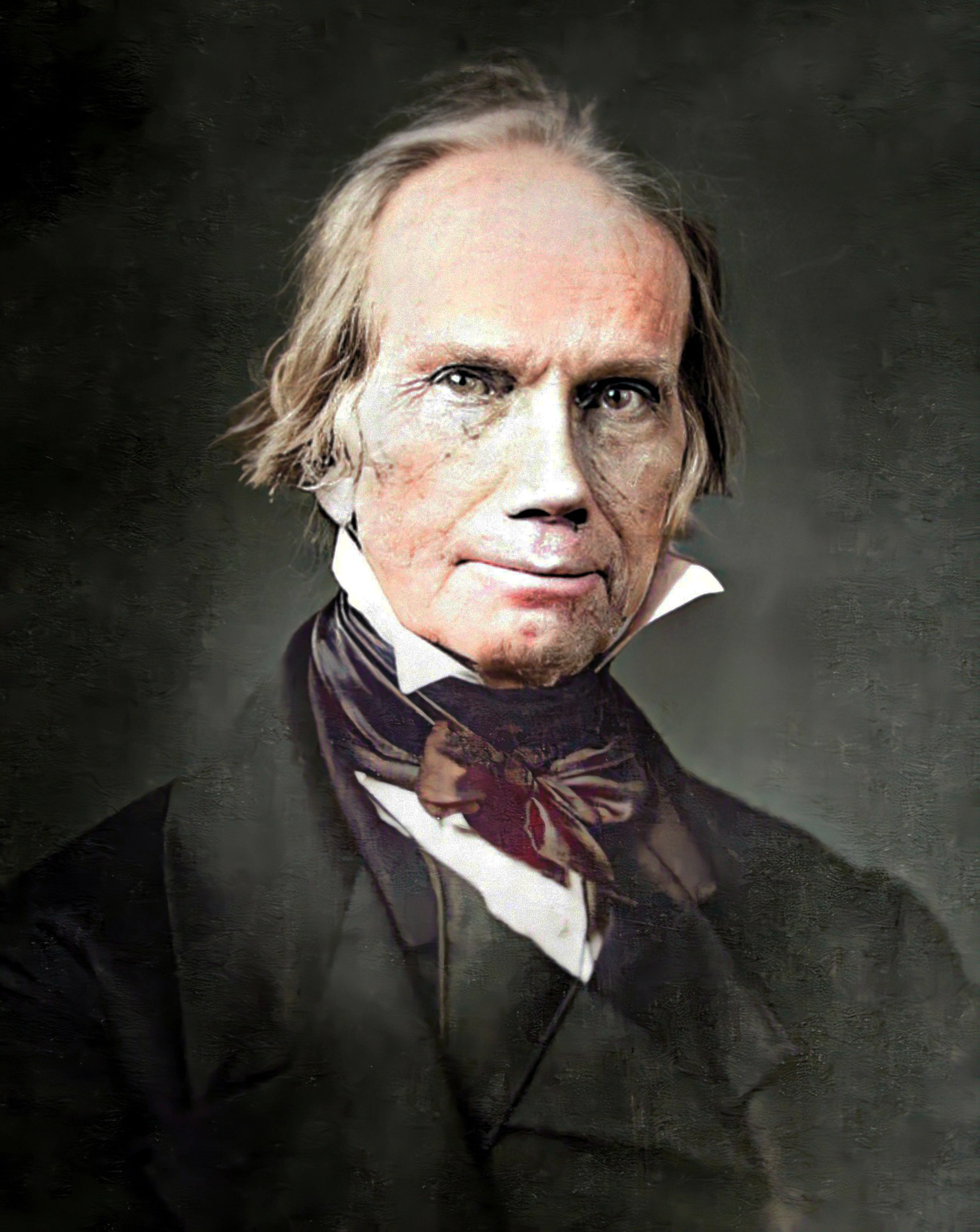
| 10 Quotes | |
| Occup. | Statesman |
| From | USA |
| Born | April 12, 1777 Hanover County, Virginia, USA |
| Died | June 29, 1852 Washington, D.C., USA |
| Cause | Stroke |
| Aged | 75 years |
| Cite | |
Citation Formats
APA Style (7th ed.)
Henry clay biography, facts and quotes. (2026, February 11). FixQuotes. https://fixquotes.com/authors/henry-clay/
Chicago Style
"Henry Clay biography, facts and quotes." FixQuotes. February 11, 2026. https://fixquotes.com/authors/henry-clay/.
MLA Style (9th ed.)
"Henry Clay biography, facts and quotes." FixQuotes, 11 Feb. 2026, https://fixquotes.com/authors/henry-clay/. Accessed 27 Mar. 2026.
Early Life and Background
Henry Clay was born April 12, 1777, in Hanover County, Virginia, into a tobacco-country world still marked by the Revolution and by slavery as an economic fact and moral puzzle. His father, the Reverend John Clay, died when Henry was a child, leaving the family with reduced means and forcing early responsibility on a boy whose later public persona would combine genial charm with a fierce sensitivity to respect. Clay grew up amid Virginia gentry ideals of honor and independence, but without the cushion of wealth that made politics a pastime for some of his contemporaries.In 1797 he left Virginia for Lexington, Kentucky, a booming Bluegrass town where land, law, and politics moved at frontier speed. The move mattered: Kentucky sat on the hinge between East and West and between free labor and slave labor, and Clay learned to speak for a society that saw itself as fully American yet perpetually negotiating its place in the Union. He married Lucretia Hart in 1799, tying him to one of Kentucky's leading families and giving him a stable domestic center that contrasted with his restless, often bruising public life.
Education and Formative Influences
Clay had little formal schooling, but he educated himself in law through apprenticeship: first as a clerk in Virginia's High Court of Chancery and then in Richmond under the formidable jurist George Wythe, while absorbing the political theater of the capital and hearing the oratory of figures like Patrick Henry. That blend - Wythe's legal rationalism and Richmond's performative politics - helped form a statesman who believed argument could discipline passion, yet who never underestimated the persuasive force of personality, timing, and spectacle in a democracy.Career, Major Works, and Turning Points
Admitted to the bar in 1797, Clay rose quickly in Kentucky, entered the state legislature, and began a national career that made him the era's great broker of coalition and compromise. He served briefly in the U.S. Senate (1806-07, 1810-11) and then shaped the House of Representatives as Speaker (1811-14, 1815-20, 1823-25), transforming the office into a command post for party strategy. A leading "War Hawk", he pressed the War of 1812 and then helped negotiate peace as a commissioner at Ghent in 1814. In the 1820s he championed the "American System" - protective tariffs, a national bank, and federal support for internal improvements - arguing that a continental republic needed roads, credit, and industry to bind regions together. His greatest turning points were the great bargains: the Missouri Compromise of 1820, the Compromise Tariff of 1833 that defused South Carolina's Nullification Crisis, and the Compromise of 1850, his last exhausting effort to postpone sectional rupture. He ran for president repeatedly and never won, yet his influence over Whig politics, national economic policy, and the Senate's culture of negotiation was unrivaled.Philosophy, Style, and Themes
Clay's inner life revolved around honor and the fear of national disintegration. He was convivial, theatrical, and intensely competitive, yet he wanted to be remembered as a guardian of the republic rather than a mere tactician. That tension - ambition yoked to self-justification - explains his readiness to risk popularity for positions he believed stabilized the Union. He could be pugnacious (even dueling in 1809) and also disarmingly warm, a combination that made enemies distrust him and allies forgive him. Clay thought the Union was not simply a contract among states but an intergenerational project. “The Constitution of the United States was made not merely for the generation that then existed, but for posterity- unlimited, undefined, endless, perpetual posterity”. The sentence is less abstraction than self-therapy: by imagining posterity, he made present quarrels feel governable, and he framed compromise as duty to the unborn rather than surrender to opponents.His statesmanship was rooted in a fiduciary view of power and a moralized view of reputation. “Government is a trust, and the officers of the government are trustees. And both the trust and the trustees are created for the benefit of the people”. Clay used that premise to justify energetic federal action - tariffs, banks, canals - while also demanding that leaders restrain sectional appetites. At the same time, he insisted that personal integrity could outlast electoral defeat: “I would rather be right than President”. In practice he often defined "right" as what preserved the Union through accommodation, even as his own relationship to slavery exposed the era's contradictions. He owned enslaved people, supported colonization schemes, and opposed the most radical abolitionist demands, yet he also warned that slavery was a profound danger to republican harmony - a moral unease that coexisted with political caution.
Legacy and Influence
Clay died June 29, 1852, in Washington, D.C., mourned as the "Great Compromiser" and as a model of congressional leadership. His immediate legacy was paradoxical: his compromises bought time for growth and nation-building, but they also postponed a reckoning that finally arrived in civil war. Still, his influence endured in the practical arts of politics - coalition-making, institutional leadership, and the belief that national purpose can be constructed through policy - and in the careers he shaped, including that of Abraham Lincoln, who studied Clay's speeches and made Clay's devotion to Union and economic development central to a later, more tragic chapter of American statecraft.Our collection contains 10 quotes written by Henry, under the main topics: Wisdom - Justice - Freedom - Honesty & Integrity - Kindness.
Other people related to Henry: John Randolph (Leader), John Tyler (President), George Dennison Prentice (Editor), Duff Green (Politician), Philip Hone (Politician), John McKinley (Politician), William Wirt (Statesman), Robert Toombs (Politician), John P. Kennedy (Soldier), Henry Charles Carey (Economist)
Source / external links