
Henry Hazlitt Biography Quotes 5 Report mistakes
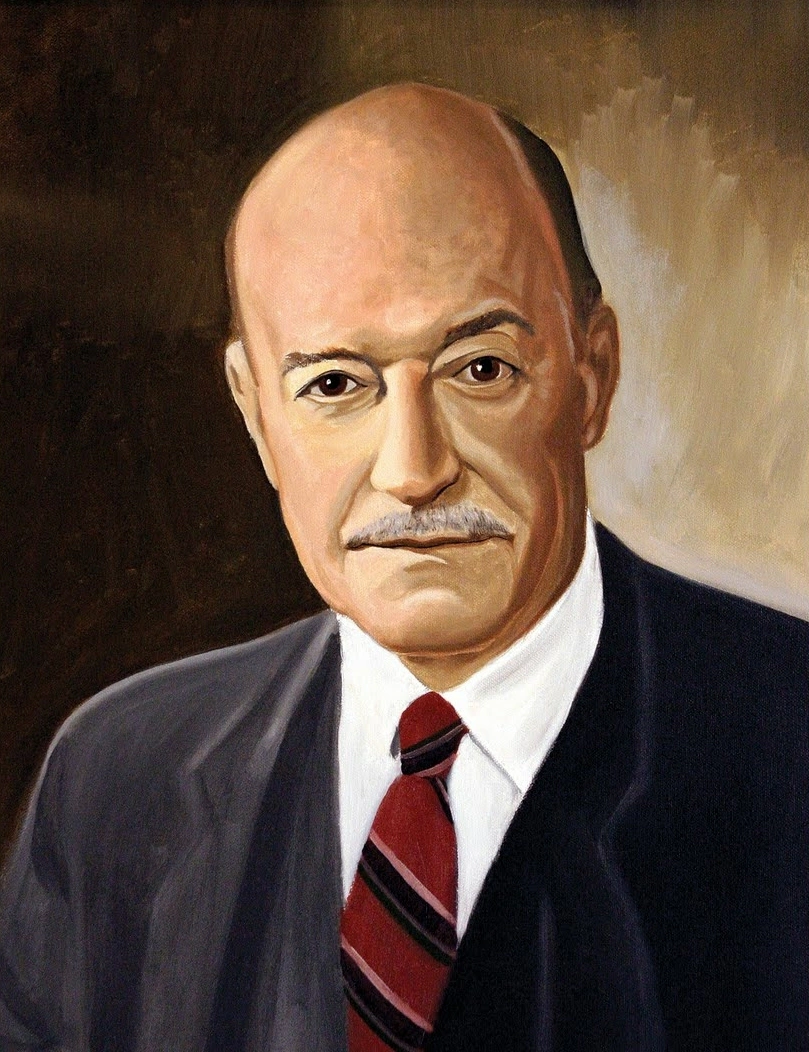
| 5 Quotes | |
| Born as | Henry Stuart Hazlitt |
| Occup. | Philosopher |
| From | USA |
| Born | November 28, 1894 Philadelphia, Pennsylvania, U.S. |
| Died | July 8, 1993 |
| Aged | 98 years |
| Cite | |
Citation Formats
APA Style (7th ed.)
Henry hazlitt biography, facts and quotes. (2026, February 11). FixQuotes. https://fixquotes.com/authors/henry-hazlitt/
Chicago Style
"Henry Hazlitt biography, facts and quotes." FixQuotes. February 11, 2026. https://fixquotes.com/authors/henry-hazlitt/.
MLA Style (9th ed.)
"Henry Hazlitt biography, facts and quotes." FixQuotes, 11 Feb. 2026, https://fixquotes.com/authors/henry-hazlitt/. Accessed 25 Mar. 2026.
Early Life and Background
Henry Stuart Hazlitt was born on November 28, 1894, in Philadelphia, Pennsylvania, into a late-Gilded Age America confident in industry and increasingly anxious about booms, busts, and the moral meaning of wealth. His father died when Henry was still young, and the family relocated to Brooklyn, New York - a shift from provincial roots to the din of a metropolis where newspapers, finance, and immigrant enterprise made arguments about money unavoidable. The early loss and the move mattered: Hazlitt grew up with an instinct for self-reliance and a suspicion of promises made by authority without clear accounting.New York also offered him an education in the street-level reality behind abstractions. He watched how wages, prices, and rent were not mere numbers but levers that could reorder family life. Before he became famous as a philosopher of liberty and a popularizer of economic reasoning, he was already temperamentally a moralist: impatient with cant, drawn to clarity, and persuaded that ideas have consequences not just in lecture halls but in grocery lines and unemployment offices.
Education and Formative Influences
Hazlitt attended City College of New York but left early, pulled by both necessity and the stronger schooling of the newsroom. He read widely and taught himself political economy, absorbing the classical liberal tradition and, later, the arguments of the Austrian School - especially Ludwig von Mises, whose rigor and anti-inflationary warnings sharpened Hazlitt's own. The era formed him as much as any syllabus: World War I, the 1920s boom, the crash of 1929, and the Great Depression all turned economics into a public battlefield, rewarding writers who could translate technical disputes into moral and political choices.Career, Major Works, and Turning Points
Hazlitt built his authority in journalism, writing for major New York papers and becoming one of the most influential editorial voices explaining policy to lay readers; he also became a crucial conduit between economists and the public. His turning point was deciding that the popular confusion around the New Deal and wartime controls was not merely a technical problem but a civic danger. That conviction drove his best-known book, "Economics in One Lesson" (1946), a compact guide to reasoning about trade-offs that became a staple of postwar classical liberalism. He expanded his role as an intellectual organizer through affiliations with free-market institutions and through books that defended capitalism and criticized interventionism, including "The Failure of the "New Economics"" (1959), a sustained assault on Keynesian claims, and later "Man vs. The Welfare State" (1969). Across decades, he served as editor, reviewer, polemicist, and mentor - a writer whose career was less about office or title than about keeping certain arguments alive in public memory.Philosophy, Style, and Themes
Hazlitt's philosophy fused moral realism with economic literacy. He treated liberty not as a slogan but as a discipline of thought: to act ethically in society, one must first see clearly. In his most quoted formulation, “The art of economics consists in looking not merely at the immediate but at the longer effects of any act or policy; it consists in tracing the consequences of that policy not merely for one group but for all groups”. That sentence is psychology as much as pedagogy: it reveals a mind wary of sentimental politics, trained to distrust the intoxicating certainty of quick fixes. Hazlitt wrote as if impatience were a vice and accounting a form of compassion - because unseen victims count, even when they cannot march or lobby.His style was journalistically plain, but the themes were philosophical: coercion versus consent, knowledge versus hubris, and the tragic irony of good intentions producing harm. He drew a bright line between choice and force, insisting that “The 'private sector' of the economy is, in fact, the voluntary sector; and the 'public sector' is, in fact, the coercive sector”. The aphorism captures his inner preoccupation: that political language launders compulsion into benevolence, dulling citizens' moral senses. He also feared the monetary temptations of the modern state, arguing that “The first requisite of a sound monetary system is that it put the least possible power over the quantity or quality of money in the hands of the politicians”. Inflation, to Hazlitt, was not simply a miscalculation but a character test of institutions - a way governments could evade responsibility while redistributing quietly.
Legacy and Influence
Hazlitt died on July 8, 1993, in the United States after nearly a century that moved from gold standards to fiat regimes, from limited government rhetoric to welfare-state normalcy. His enduring influence lies in method as much as conclusion: he armed generations of readers with a way to interrogate policy by following incentives and second-order effects, and he helped keep Misesian arguments visible in English-language debate when they were unfashionable. For a quotes-and-biography culture that often prizes wit over rigor, Hazlitt remains unusual - a philosopher-journalist whose best lines are inseparable from his moral project: to make clear thinking a civic duty and to insist that compassion without consequences is not compassion at all.Our collection contains 5 quotes written by Henry, under the main topics: Motivational - Freedom - Reason & Logic - Learning from Mistakes - Money.
Other people related to Henry: George Reisman (Economist), Frank Chodorov (Writer)
Henry Hazlitt Famous Works
- 1969 Man vs. the Welfare State (Book)
- 1964 The Foundations of Morality (Book)
- 1959 The Failure of the New Economics (Book)
- 1946 Economics in One Lesson (Book)
- 1922 The Way to Willpower (Book)
Source / external links