
Henry J. Kaiser Biography Quotes 8 Report mistakes
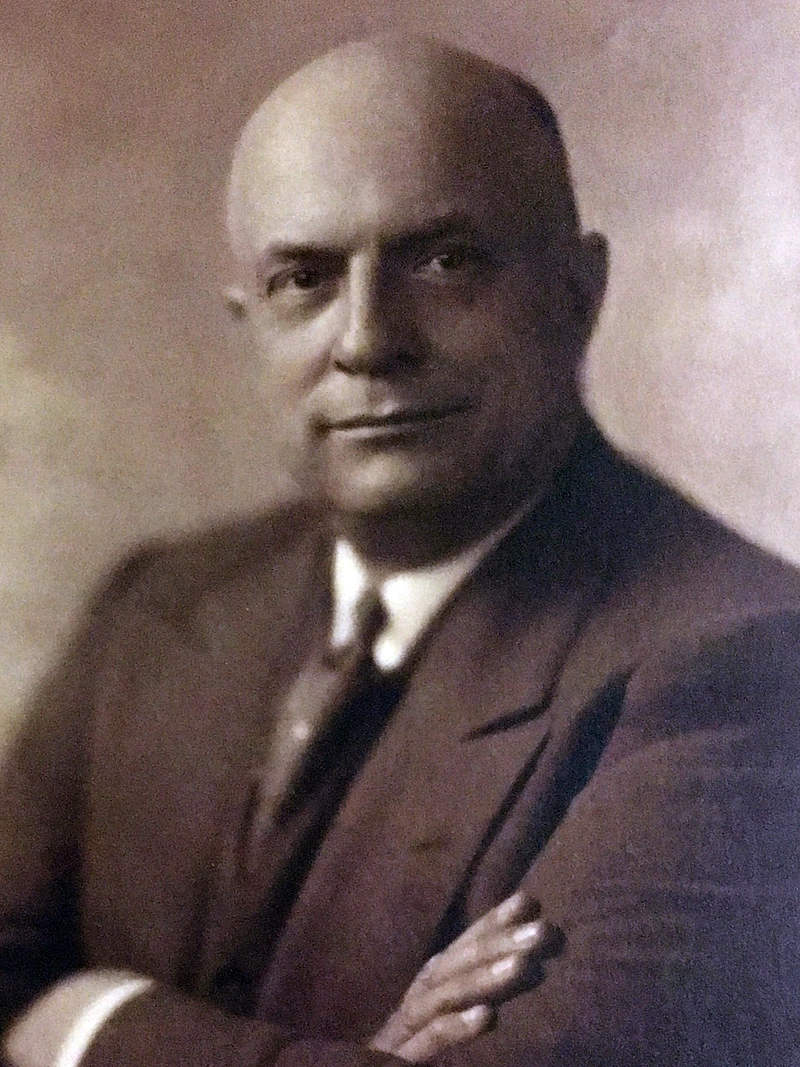
| 8 Quotes | |
| Born as | Henry John Kaiser |
| Occup. | Businessman |
| From | USA |
| Born | May 9, 1882 Sprague, Kansas, United States |
| Died | August 24, 1967 Honolulu, Hawaii, United States |
| Aged | 85 years |
| Cite | |
Citation Formats
APA Style (7th ed.)
Henry j. kaiser biography, facts and quotes. (2026, February 11). FixQuotes. https://fixquotes.com/authors/henry-j-kaiser/
Chicago Style
"Henry J. Kaiser biography, facts and quotes." FixQuotes. February 11, 2026. https://fixquotes.com/authors/henry-j-kaiser/.
MLA Style (9th ed.)
"Henry J. Kaiser biography, facts and quotes." FixQuotes, 11 Feb. 2026, https://fixquotes.com/authors/henry-j-kaiser/. Accessed 26 Mar. 2026.
Early Life and Background
Henry John Kaiser was born on May 9, 1882, in Sprout Brook, New York, into the mobile, work-centered world of a German immigrant family. His father, Franz Kaiser, was a shoemaker and small businessman; the household knew the pressures of debt, distance, and reinvention that marked so many upward-striving American families at the turn of the century. That early exposure to precarious enterprise helped form a man who trusted motion more than security, and who treated risk as a kind of moral habit rather than a last resort.As a teenager Kaiser left school and followed the jobs that followed the rail lines and new towns, learning to read the country through its infrastructure. He worked as a photographer and salesman before finding his way into construction supply and contracting. The American landscape he entered was being remade by roads, dams, and industrial cities, and Kaiser absorbed the era's faith that organization and engineering could convert scale into social progress.
Education and Formative Influences
Kaiser had no formal university education; his real training came from the apprenticeship culture of early 20th-century building and from the managerial revolutions of the Progressive Era, when scientific management, mass production, and public-private megaprojects reshaped what a "businessman" could do. He learned by attaching himself to competent specialists, by studying schedules and costs with the intensity others reserved for ideology, and by watching how politics, labor, and capital negotiated on job sites. The West, especially, taught him that speed and logistics were often more decisive than elegance.Career, Major Works, and Turning Points
Kaiser rose from small contracting into national prominence through a chain of increasingly audacious projects: road building, then large-scale heavy construction, then dams and shipyards. A major turning point came in the 1930s when his firms joined consortium work on Hoover Dam and then led the construction of Grand Coulee Dam in Washington, a New Deal colossus that fused federal power with private execution. World War II made him a household name: the Kaiser shipyards at Richmond, California, and elsewhere applied assembly-line principles to Liberty and Victory ships, compressing build times and proving that industrial tempo could be engineered. After the war he widened the Kaiser brand into aluminum, steel (Kaiser Steel at Fontana), automobiles (Kaiser-Frazer), and a signature social experiment - prepaid medical care for workers that evolved into Kaiser Permanente - extending his belief that modern industry required modern social infrastructure.Philosophy, Style, and Themes
Kaiser's inner life, as glimpsed through his decisions, reads like a sustained argument against fatalism. He cultivated optimism not as mood but as method, a way to keep teams moving when variables multiplied. “Trouble is only an opportunity in work clothes”. In practice this meant reorganizing a setback into a new workflow: redesigning yards, simplifying components, shifting to welded hulls, pushing procurement upstream. The psychology behind it was pragmatic and contagious - a refusal to grant problems the dignity of permanence.His style was less that of a solitary tycoon than of a general contractor of talent, assembling expertise the way he assembled plants and schedules. “I make progress by having people around me who are smarter than I am and listening to them. And I assume that everyone is smarter about something than I am”. That ethos helped him operate across engineering, medicine, and mass manufacturing without pretending to master each discipline personally; it also made him unusually receptive to systems thinking, from production control to occupational health. Beneath the boosterism was a disciplined faith in momentum: “You can't sit on the lid of progress. If you do, you will be blown to pieces”. For Kaiser, progress was not a slogan but a competitive environment - the only stable position was forward.
Legacy and Influence
Kaiser died on August 24, 1967, in Honolulu, Hawaii, leaving a legacy that sits at the intersection of state-led development and private managerial innovation. His ships and dams helped define the American wartime and New Deal state; his postwar ventures showed both the reach and limits of conglomerate ambition; and Kaiser Permanente became his most durable institutional imprint, a model for integrated care born from industrial necessity. In American memory he embodies a particular 20th-century type: the builder-entrepreneur who believed that scale, organization, and audacity could translate into public benefit - and who proved, repeatedly, that management itself could be a form of engineering.Our collection contains 8 quotes written by Henry, under the main topics: Motivational - Leadership - Work Ethic - Overcoming Obstacles - Goal Setting.
Other people related to Henry: Martin Denny (Musician)