
Henry James Biography Quotes 39 Report mistakes
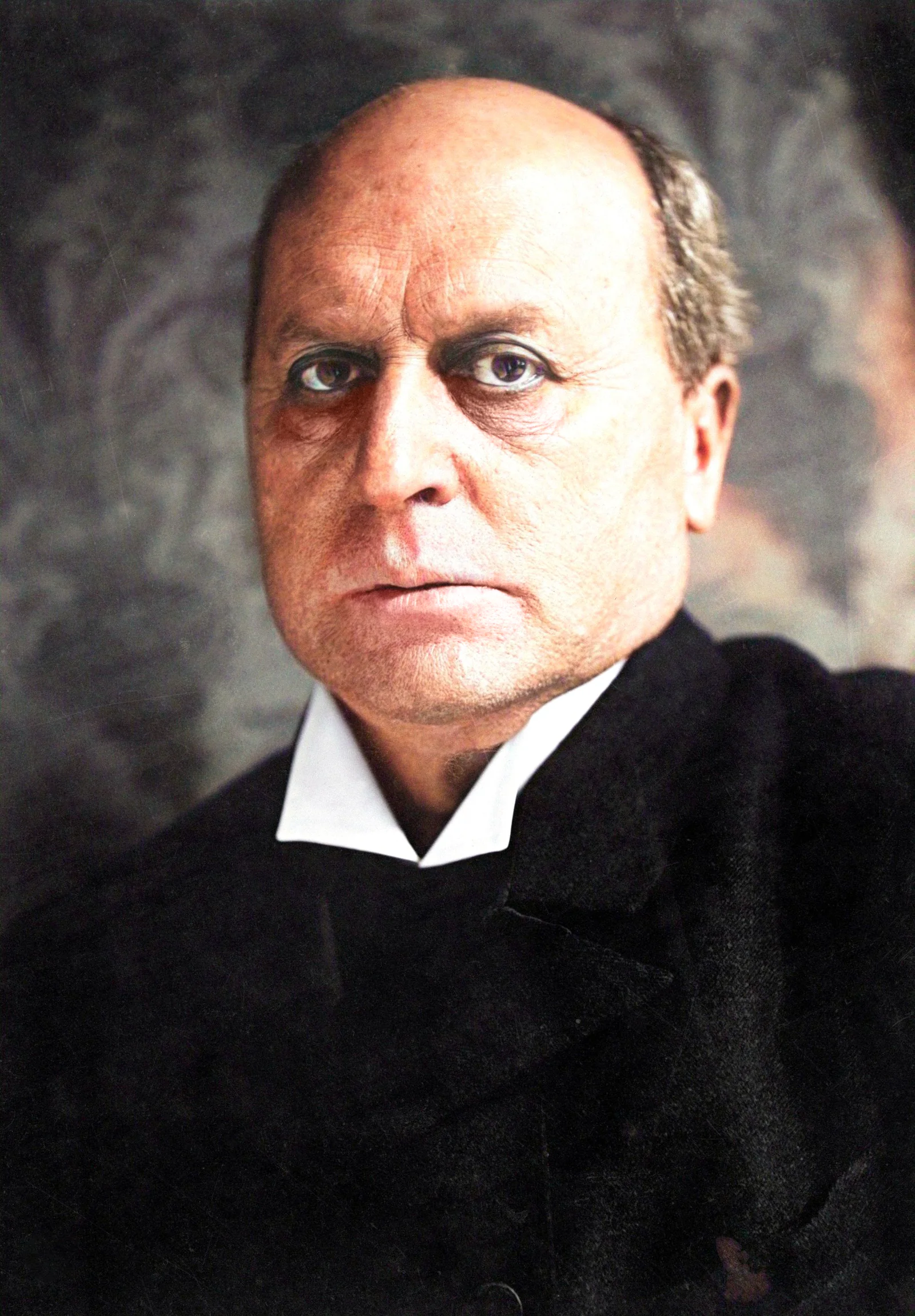
| 39 Quotes | |
| Occup. | Writer |
| From | USA |
| Born | April 15, 1843 New York City, New York, USA |
| Died | February 28, 1916 Chelsea, London, England |
| Cause | Heart failure |
| Aged | 72 years |
| Cite | |
Citation Formats
APA Style (7th ed.)
Henry james biography, facts and quotes. (2026, February 11). FixQuotes. https://fixquotes.com/authors/henry-james/
Chicago Style
"Henry James biography, facts and quotes." FixQuotes. February 11, 2026. https://fixquotes.com/authors/henry-james/.
MLA Style (9th ed.)
"Henry James biography, facts and quotes." FixQuotes, 11 Feb. 2026, https://fixquotes.com/authors/henry-james/. Accessed 5 Mar. 2026.
Early Life and Background
Henry James was born on April 15, 1843, in New York City into a wealthy, restless, intellectually ambitious family whose sense of home was as much an idea as a place. His father, Henry James Sr., was a charismatic religious thinker shaped by Swedenborgian and Transcendental currents; his mother, Mary Robertson Walsh James, provided a steadier domestic gravity amid perpetual movement. Henry grew up alongside siblings who would become consequential in their own right - most famously William James, the philosopher and psychologist - in a household where conversation was both sport and schooling, and where moral and aesthetic questions were treated as daily weather.From early on, James lived the formative drama that would define his art: the American self made portable, then exposed to Europe as to a powerful solvent. Family travels and long stays abroad in the 1850s placed him in Geneva, Paris, and London during a period of accelerating modernity - railways, newspapers, new money, and new forms of social ambition. Those crossings did not simply broaden his experience; they created in him a permanent double consciousness, a talent for seeing manners as destiny, and a private anxiety about belonging that his later novels would translate into exquisite scenes of choice, hesitation, and consequence.
Education and Formative Influences
James was educated irregularly by tutors and schools on both sides of the Atlantic, absorbing languages, art, and the social theater of cities more thoroughly than any formal curriculum. Briefly, and halfheartedly, he enrolled at Harvard Law School (1862-1863), but the law was never more than a respectable decoy; he wanted the imaginative jurisdiction of fiction. The Civil War years formed a complicated backdrop: a minor back injury (often cited as keeping him from service) and a deepening commitment to the life of observation left him close to national crisis yet temperamentally drawn to indirect, interior evidence. In these years he read widely - Balzac, Flaubert, George Eliot, Hawthorne - and trained his sensibility on the fine gradations of motive that the realist novel could render.Career, Major Works, and Turning Points
James began publishing criticism and short fiction in the 1860s, then steadily built a transatlantic career as novelist, reviewer, and travel writer, eventually making England his principal base. Early successes included Roderick Hudson (1875) and The American (1877), followed by the concentrated moral drama of Daisy Miller (1878) and the masterly social trap of The Portrait of a Lady (1881). His middle period sharpened the political and ethical edge of private life in works like The Bostonians (1886) and The Princess Casamassima (1886). A painful turning point came with his attempt to conquer the theater: the 1895 failure of his play Guy Domville stung him into renewed dedication to fiction, culminating in the late, densely wrought masterpieces The Wings of the Dove (1902), The Ambassadors (1903), and The Golden Bowl (1904). In the 1900s he returned to America, then watched Europe fracture into World War I; in 1915 he became a British subject in protest at U.S. neutrality, and he died in London on February 28, 1916.Philosophy, Style, and Themes
James treated fiction as a moral instrument, not by preaching but by staging perception under pressure. His famous definition of experience as a nearly infinite medium - “Experience is never limited, and it is never complete; it is an immense sensibility, a kind of huge spider-web of the finest silken threads suspended in the chamber of consciousness, and catching every air-borne particle in its tissue”. - is also a self-portrait of method. Characters like Isabel Archer, Lambert Strether, and Maggie Verver are not propelled by plot so much as by the accumulating weight of what they notice and what they refuse to notice. James built scenes where the decisive act is often an inward recognition, and where the cost of refinement can be a self-imposed captivity.His style followed the psychology: patient, oblique, saturated with qualification, designed to mimic the mind moving through partial knowledge. He distrusted hearsay and herd judgment, insisting on direct moral seeing - “Do not mind anything that anyone tells you about anyone else. Judge everyone and everything for yourself”. That imperative underlies his recurring drama of Americans abroad: innocence confronted by European sophistication, money confronted by lineage, freedom confronted by form. Yet he also warned against simple reverence for the Old World, naming the American fate as a duty of skepticism - “It's a complex fate, being an American, and one of the responsibilities it entails is fighting against a superstitious valuation of Europe”. Beneath the elegance lies a hard proposition: consciousness is the arena of conflict, and deepened knowledge rarely brings peace.
Legacy and Influence
Henry James reshaped the modern novel by proving that the most consequential action could occur in the space between two thoughts, two glances, or two interpretations of the same sentence. His craft of point of view, his "central intelligence", and his devotion to moral nuance fed the development of psychological realism and modernism, influencing writers from Edith Wharton (his friend and fellow anatomist of society) to Virginia Woolf and beyond. He also left a durable vocabulary for the transatlantic imagination - the encounter of New World energy with Old World complexity - and, through his criticism and prefaces, a theory of fiction that still governs how serious readers and writers talk about narrative responsibility. In an era increasingly loud with certainty, James remains the great dramatist of consciousness under strain, insisting that how we see is inseparable from what we do.Our collection contains 39 quotes written by Henry, under the main topics: Witty One-Liners - Wisdom - Truth - Art - Mortality.
Other people related to Henry: James A. Baldwin (Author), Robert Brault (Philosopher), Gustave Flaubert (Novelist), Stendhal (Writer), Anthony Trollope (Author), William Dean Howells (Author), Philip Roth (Novelist), James Huneker (Writer), Carl Clinton Van Doren (Critic), Jane Campion (Director)
Henry James Famous Works
- 1898 The Turn of the Screw (Novella)
- 1881 The Portrait of a Lady (Novel)
- 1878 Daisy Miller (Novella)
Source / external links