
Henry Mayhew Biography Quotes 16 Report mistakes
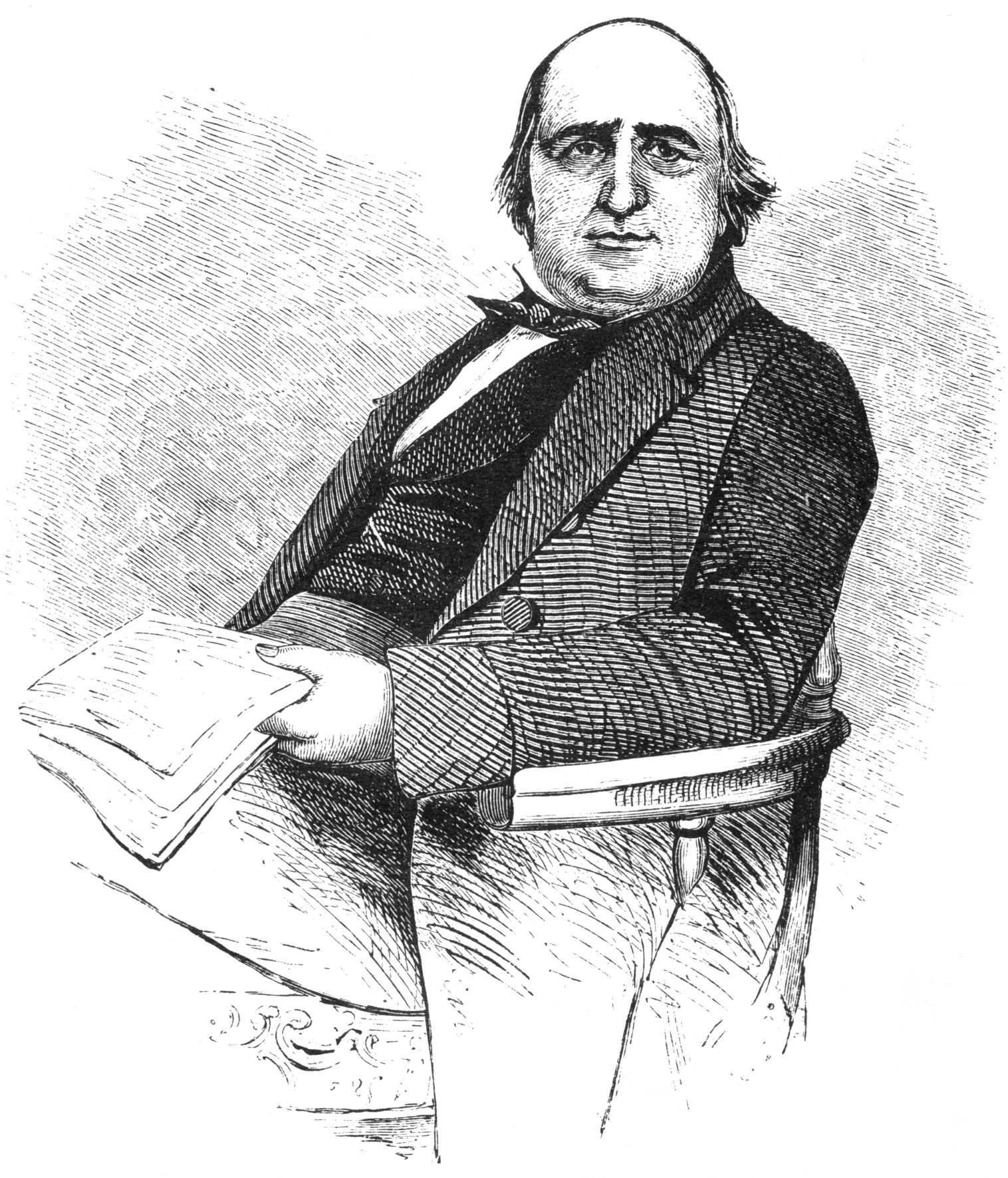
| 16 Quotes | |
| Occup. | Journalist |
| From | England |
| Born | November 25, 1812 London, England, United Kingdom |
| Died | July 25, 1887 |
| Aged | 74 years |
| Cite | |
Citation Formats
APA Style (7th ed.)
Henry mayhew biography, facts and quotes. (2026, February 11). FixQuotes. https://fixquotes.com/authors/henry-mayhew/
Chicago Style
"Henry Mayhew biography, facts and quotes." FixQuotes. February 11, 2026. https://fixquotes.com/authors/henry-mayhew/.
MLA Style (9th ed.)
"Henry Mayhew biography, facts and quotes." FixQuotes, 11 Feb. 2026, https://fixquotes.com/authors/henry-mayhew/. Accessed 25 Mar. 2026.
Early Life and Background
Henry Mayhew was born on November 25, 1812, in London, England, into a large middle-class family whose frequent moves and uneven finances impressed on him, early, the city as both opportunity and precariousness. London in his youth was a place of accelerating print culture and hardening class boundaries - a metropolis where new wealth, old privilege, and mass poverty shared the same streets but not the same lives. That tension, visible in markets, lodging-houses, and the casual labor of the river and roads, became the emotional engine of his later journalism.His temperament seems to have been split between restlessness and curiosity: a man drawn to the spectacle of modern life, yet bothered by the moral anesthetic that let comfortable readers pass the poor at arm's length. Mayhew came of age as industrial capitalism and urban crowding turned poverty into a public fact, and as political agitation - from reform to Chartism - made the streets not merely a background but a forum. He would spend much of his career translating those streets into prose that made the invisible legible, and the stereotyped newly particular.
Education and Formative Influences
Mayhew was educated at Westminster School and was briefly associated with law as a young man, but he gravitated toward the theater, magazines, and the entrepreneurial energy of the press rather than a settled profession. The formative influence was less a single mentor than the metropolitan ecosystem itself: coffeehouses, courts, cheap periodicals, popular entertainments, and the new appetite for social investigation. He absorbed the era's faith in observation and classification, but also its suspicion that statistics without sympathy could become another way of looking away.Career, Major Works, and Turning Points
After early work as a writer and editor, Mayhew co-founded the satirical magazine Punch in 1841, helping to shape a new, urban, quick-witted style of journalism before drifting out of its inner circle. His decisive turn came in the late 1840s and early 1850s when he began systematic reporting on the laboring poor, producing the series and multi-volume books known as London Labour and the London Poor (1851-1861). There he pioneered extended interviews, occupational taxonomy, and immersive description of street trades - costermongers, mudlarks, sweeps, beggars, artisans, and performers - treating them as economic actors and moral agents rather than mere symbols. Later projects on criminal justice and social conditions broadened his range, but the London work remained the keystone: a vast map of informal labor drawn from thousands of encounters and sharpened by a novelist's eye for scene.Philosophy, Style, and Themes
Mayhew wrote as a field naturalist of the city, convinced that modern society could be understood by patient listening and by grouping lives into recognizable patterns without dissolving them into abstraction. Yet his method carried an inner argument: observation was necessary, but not sufficient. “Facts, according to my ideas, are merely the elements of truths, and not the truths themselves; of all matters there are none so utterly useless by themselves as your mere matters of fact”. The sentence reveals both his impatience with complacent empiricism and his fear that the new age of blue books might mistake counting for comprehension. His best pages therefore fuse transcript-like voices with interpretive framing - a rhetoric of proximity meant to unsettle readers who preferred poverty as a distant category.That interpretive drive also exposed the Victorian moral weather inside him: sympathetic, but capable of harsh generalization, especially about sexuality and entertainment. His social psychology tended to locate virtue in stable communities and vice in uprooted crowds, a contrast he made explicit when he argued, “There is a tone of morality throughout the rural districts of England, which is unhappily wanting in the large towns and the centres of particular manufactures”. The line is less a statistic than a longing - for cohesion, for mutual surveillance that becomes mutual care, for a world where poverty is not anonymity. At the same time, he was fascinated by the city as a laboratory of work. “But the branches of industry are so multifarious, the divisions of labour so minutes and manifold, that it seems at first almost impossible to reduce them to any system”. His ambition to systematize the street was a coping mechanism as much as an intellectual project: classification as a way to face the bewildering scale of need without surrendering to despair.
Legacy and Influence
Mayhew died on July 25, 1887, after years marked by financial instability and a reputation that fluctuated between celebrated investigator and eccentric chronicler, but his central achievement endured: he made the urban poor speak in print with an immediacy that later social science, oral history, and literary journalism recognized as foundational. London Labour and the London Poor remains a quarry for historians of work, disease, policing, migration, gender, and popular culture, and an ethical template for reporting that treats marginal lives as complex rather than picturesque. In an age that alternated between sentimental charity and punitive suspicion, Mayhew insisted on the hard middle ground - to look closely, record faithfully, and then ask what kind of city could produce such lives and still call itself civilized.Our collection contains 16 quotes written by Henry, under the main topics: Ethics & Morality - Truth - Nature - Reason & Logic - Honesty & Integrity.
Other people related to Henry: Douglas Jerrold (Playwright), John Leech (Artist)
Henry Mayhew Famous Works
- 1860 Mayhew's Illustrated Horse Doctor (Book)
- 1851 London Labour and the London Poor (Book)
- 1840 Little Pedlington and the Pedlingtonians (Book)
- 1834 The Wandering Minstrel (Play)
Source / external links