
Henry Miller Biography Quotes 79 Report mistakes
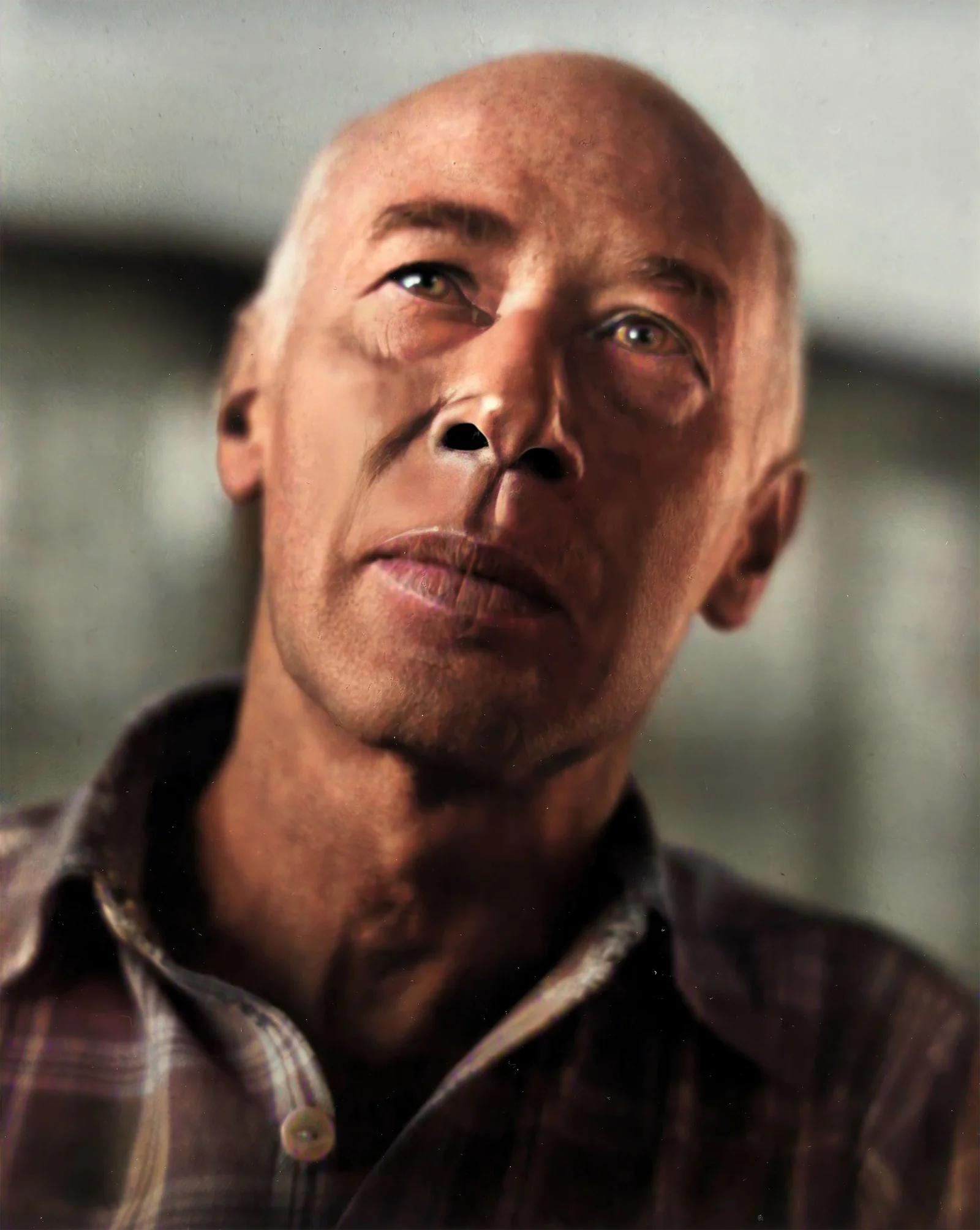
| 79 Quotes | |
| Occup. | Writer |
| From | USA |
| Born | December 26, 1891 New York City, New York, USA |
| Died | June 7, 1980 Pacific Palisades, California, USA |
| Cause | Heart attack |
| Aged | 88 years |
| Cite | |
Citation Formats
APA Style (7th ed.)
Henry miller biography, facts and quotes. (2026, February 1). FixQuotes. https://fixquotes.com/authors/henry-miller/
Chicago Style
"Henry Miller biography, facts and quotes." FixQuotes. February 1, 2026. https://fixquotes.com/authors/henry-miller/.
MLA Style (9th ed.)
"Henry Miller biography, facts and quotes." FixQuotes, 1 Feb. 2026, https://fixquotes.com/authors/henry-miller/. Accessed 27 Mar. 2026.
Early Life and Background
Henry Valentine Miller was born on December 26, 1891, in Yorkville, Manhattan, to German immigrant parents, Heinrich Miller and Louise Marie Neiting. He grew up between New York City and Brooklyn in a working-class household shaped by Old World thrift, ethnic neighborhood codes, and the clang of early 20th-century urban life. The texture of tenements, street talk, and the citys restless anonymity became his first library - not as sociology, but as sensation, a place where desire and dread were learned before they were named.Brooklyn, where he spent much of his youth, gave him both belonging and claustrophobia. He absorbed the moral earnestness of immigrant family life while quietly developing an antagonism toward respectability and the American ladder of advancement. Even before he became a writer, Miller tended to interpret daily existence as a pressure chamber: jobs, money, sex, humiliation, and hunger for some truer intensity. That tension - between ordinary survival and visionary appetite - would later drive his most controversial pages and his most tender ones.
Education and Formative Influences
Miller briefly attended City College of New York in 1909, leaving after only a short time, then drifted through a series of clerical and messenger jobs. The formal curriculum mattered less than the self-education he pursued in borrowed hours: he read widely and unevenly, drawn to writers and thinkers who treated consciousness as an arena rather than a doctrine. New Yorks libraries, cheap rooms, and night streets formed a counter-university, while his early marriages and friendships taught him how quickly intimacy could turn into captivity - a lesson he would later transmute into an art of confession that refused polite boundaries.Career, Major Works, and Turning Points
After years of stalled ambition in New York, Miller reinvented himself in Paris in 1930, arriving broke and determined to write with a directness American publishing would not tolerate. In the bohemian circles of Montparnasse he found both comrades and rivals, and, crucially, an audience for risk - including Anais Nin, whose encouragement and complicated intimacy with him sharpened his sense of the autobiographical as a weapon. There he wrote Tropic of Cancer (published 1934 in Paris), followed by Tropic of Capricorn (1939), works that fused sexual candor, streetwise comedy, metaphysical yearning, and an almost musical rant against deadening convention. Later, in Greece, he produced The Colossus of Maroussi (1941), a lyrical travel book that reframed escape as spiritual recalibration, and he continued with The Rosy Crucifixion trilogy - Sexus (1949), Plexus (1953), Nexus (1960) - revisiting his New York years with a scalpel of memory. His books were long banned for obscenity in the United States; the legal battles that culminated in Grove Press editions and court rulings in the early 1960s made him, late in life, a public symbol of shifting American attitudes toward censorship, sexuality, and literary freedom.Philosophy, Style, and Themes
Miller wrote as if the self were both laboratory and battlefield. His narrators are not consistent heroes but weather systems - craving, cursing, praying, observing - and his method is to let life spill beyond plot until pattern emerges. He insisted that the writers job was not moral uplift but heightened perception, the recovery of astonishment from the debris of habit. “The moment one gives close attention to any thing, even a blade of grass it becomes a mysterious, awesome, indescribably magnificent world in itself”. That sentence is not decorative pastoralism; it is Miller diagnosing his own survival technique: when society feels fraudulent, attention becomes revolt, and wonder becomes proof that existence has not been fully colonized by commerce or shame.His books also argue that freedom is not merely sexual license but the courage to accept ones real trajectory, even when it looks like failure from the outside. “Every man has his own destiny: the only imperative is to follow it, to accept it, no matter where it leads him”. Psychologically, this is Miller trying to convert instability into vocation: to bless the very restlessness that made ordinary careers impossible. The wild juxtapositions in his prose - lyric tenderness beside vulgar laughter, metaphysical assertion beside self-mockery - enact his belief that lived reality is not orderly. “Chaos is the score upon which reality is written”. Style, for him, was therefore ethical: to smooth experience into tasteful narrative would be to lie.
Legacy and Influence
Miller died on June 7, 1980, in Pacific Palisades, California, after decades in which his notoriety slowly hardened into a complicated canonization. He became a hinge figure: part modernist expatriate, part prophetic satirist of American conformity, part patron saint of literary risk. His role in obscenity jurisprudence helped widen the space for frank sexual and psychological writing in the US, while his voice - ecstatic, abrasive, intimate, undisciplined by design - fed later currents in confessional literature and Beat-era intensity, even as critics continued to debate his portrayals of women and his ethics of self-exposure. What endures is the example of a writer who treated consciousness itself as the main event, and who turned the raw materials of failure, hunger, and desire into a literature that insists life is still larger than the rules meant to contain it.Our collection contains 79 quotes written by Henry, under the main topics: Witty One-Liners - Motivational - Ethics & Morality - Truth - Wisdom.
Other people related to Henry: Lawrence Durrell (Writer), Kate Millett (Activist), James Laughlin (Poet)
Henry Miller Famous Works
- 1992 Moloch: or, This Gentile World (Novel)
- 1991 Crazy Cock (Novel)
- 1969 My Life and Times (Autobiography)
- 1960 Nexus (Novel)
- 1957 Big Sur and the Oranges of Hieronymus Bosch (Memoir)
- 1956 Quiet Days in Clichy (Novella)
- 1953 Plexus (Novel)
- 1952 The Books in My Life (Essay)
- 1949 Sexus (Novel)
- 1948 The Smile at the Foot of the Ladder (Novella)
- 1945 The Air-Conditioned Nightmare (Non-fiction)
- 1941 The Colossus of Maroussi (Non-fiction)
- 1939 Tropic of Capricorn (Novel)
- 1936 Black Spring (Collection)
- 1934 Tropic of Cancer (Novel)
Source / external links