
Henry Reed Biography Quotes 28 Report mistakes
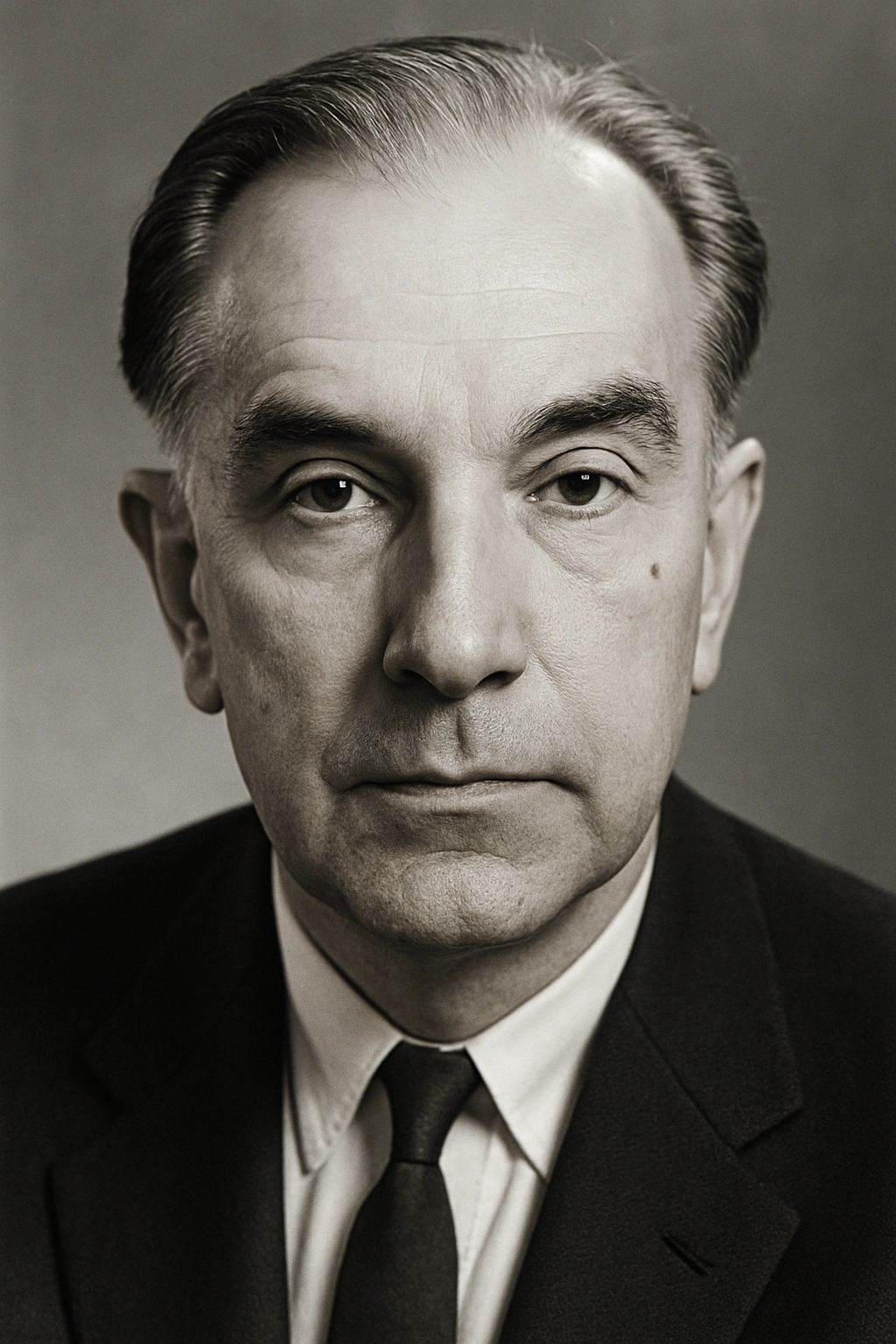
| 28 Quotes | |
| Occup. | Poet |
| From | United Kingdom |
| Born | February 22, 1914 Birmingham, England, United Kingdom |
| Died | December 8, 1986 London, England, United Kingdom |
| Aged | 72 years |
| Cite | |
Citation Formats
APA Style (7th ed.)
Henry reed biography, facts and quotes. (2026, February 11). FixQuotes. https://fixquotes.com/authors/henry-reed/
Chicago Style
"Henry Reed biography, facts and quotes." FixQuotes. February 11, 2026. https://fixquotes.com/authors/henry-reed/.
MLA Style (9th ed.)
"Henry Reed biography, facts and quotes." FixQuotes, 11 Feb. 2026, https://fixquotes.com/authors/henry-reed/. Accessed 25 Mar. 2026.
Early Life and Background
Henry Reed was born on 22 February 1914 in Birmingham, England, into the anxious hinge-years between the Edwardian world and the long shadow of the First World War. Birmingham, a city of metalwork, factories, and nonconformist respectability, offered him early lessons in precision and restraint - virtues that later became part of his poetic temperament. His earliest surviving impressions, by his own later hints and by the texture of his verse, suggest a boy alert to tone and overheard speech, receptive to the grain of ordinary voices as much as to official pronouncements.The interwar period shaped Reed's inner life: the prospect of another European conflict, the tightening of public rhetoric, and the private evasions people used to endure it. Reed became a poet of inhibited feelings, of intelligence that mistrusted grand declarations, and of comedy used as a shield. That doubleness - cool surface, troubled undercurrent - would mature into his most recognizable mode, where a seemingly civilized voice exposes its own fear, vanity, or self-deception through what it cannot quite say.
Education and Formative Influences
Reed was educated at King Edward's School, Birmingham, and later read English at the University of Birmingham, where academic discipline met a widening literary horizon. He absorbed the modernist lesson that tone can carry meaning as strongly as statement, and he developed a fascination with the social life of language: how institutions speak, how individuals mimic them, and how private emotion leaks through official forms. The rise of radio, documentary realism, and wartime information culture also formed his ear, preparing him for the BBC world in which he would later work.Career, Major Works, and Turning Points
In the late 1930s Reed began to emerge in British literary circles, and his early reputation sharpened during the Second World War, when he worked in wartime information and later with the BBC. His signature sequence, "Lessons of the War" (including "Naming of Parts"), used the drill-sergeant cadence and classroom instruction to stage a collision between martial language and the irrepressible life of nature, desire, and attention. After the war he built a varied career as poet, translator, critic, and broadcaster, writing for radio and sustaining a public voice that was lucid, skeptical, and theatrically controlled. A major turning point was his growing preference for radio craft and translation over the production of large volumes of new poetry - a choice that, for some contemporaries, made him seem underproductive, but that also suited his exacting standards and his sense that art should be made where the ear is most awake.Philosophy, Style, and Themes
Reed's poetry is often described as witty, but its wit is diagnostic rather than decorative: he uses comedy to reveal how people protect themselves from feeling. His speakers commonly adopt a role - instructor, bureaucrat, patriot, observer - and the poem listens for the tremor beneath the role. In "Naming of Parts", the grammar of command becomes a kind of mask that the poem gently dismantles by juxtaposing it with blossom, bees, and sensual distraction. Reed's underlying philosophy is that public language is never neutral; it organizes perception, and in wartime it can anesthetize moral attention. The poet's task, for Reed, is to restore attention to what the official script excludes.That restoration is fundamentally auditory. His work, and his long association with broadcasting, reflects the belief that hearing is a privileged route to truth: “There is something very basic to the sense of listening. The sense of hearing is the only one that operates totally from vibrations, without other physical or chemical reactions to receive the sensations”. Reed's poems behave like microphones turned toward the cracks in a confident voice; they register vibration - hesitation, irony, sudden lyricism - as evidence of inner conflict. He also understood the mind's nocturnal afterlife of sound and suggestion, a resonance that parallels how propaganda and instruction lodge inside us: “What we hear while we are asleep continues to resonate with us upon awakening”. Even when he is not writing explicitly about dreams, Reed treats consciousness as layered, with the waking self haunted by half-heard phrases, remembered orders, and the unspoken counter-speech of desire.
Legacy and Influence
Reed died on 8 December 1986 in the United Kingdom, leaving a reputation both secure and oddly selective: a poet famous for a handful of masterpieces, yet central to how later readers understand the English war poem. "Naming of Parts" remains a model of how to dramatize ideology through syntax and sound, influencing poets drawn to persona, collage, and the critique of institutions from within their own rhetoric. His broader legacy lies in proving that clarity can be subversive, that a poem can be as exact as an instruction manual and still carry lyric tenderness, and that the most enduring protest may arrive not as a shout but as an exquisitely controlled act of listening.Our collection contains 28 quotes written by Henry, under the main topics: Wisdom - Leadership - Deep - Learning - Knowledge.
Frequently Asked Questions
- Henry Reed books in order: Children’s series by Keith Robertson: Henry Reed, Inc. (1958); Henry Reed’s Journey (1963); Henry Reed’s Baby-Sitting Service (1966); Henry Reed’s Big Show (1970); Henry Reed’s Think Tank (1986)
- Henry Reed poems: Best known for Lessons of the War, “Naming of Parts,” plus “Judging Distances,” “Unarmed Combat,” and “Chard Whitlow”
- Henry Reed books: A Map of Verona (1946); Collected/Complete Poems; scripts for the Hilda Tablet radio plays (1950s)
- How old was Henry Reed? He became 72 years old
Henry Reed Famous Works
- 1942 Naming of Parts (Poem)
Source / external links