
Henry W. Longfellow Biography Quotes 1 Report mistakes
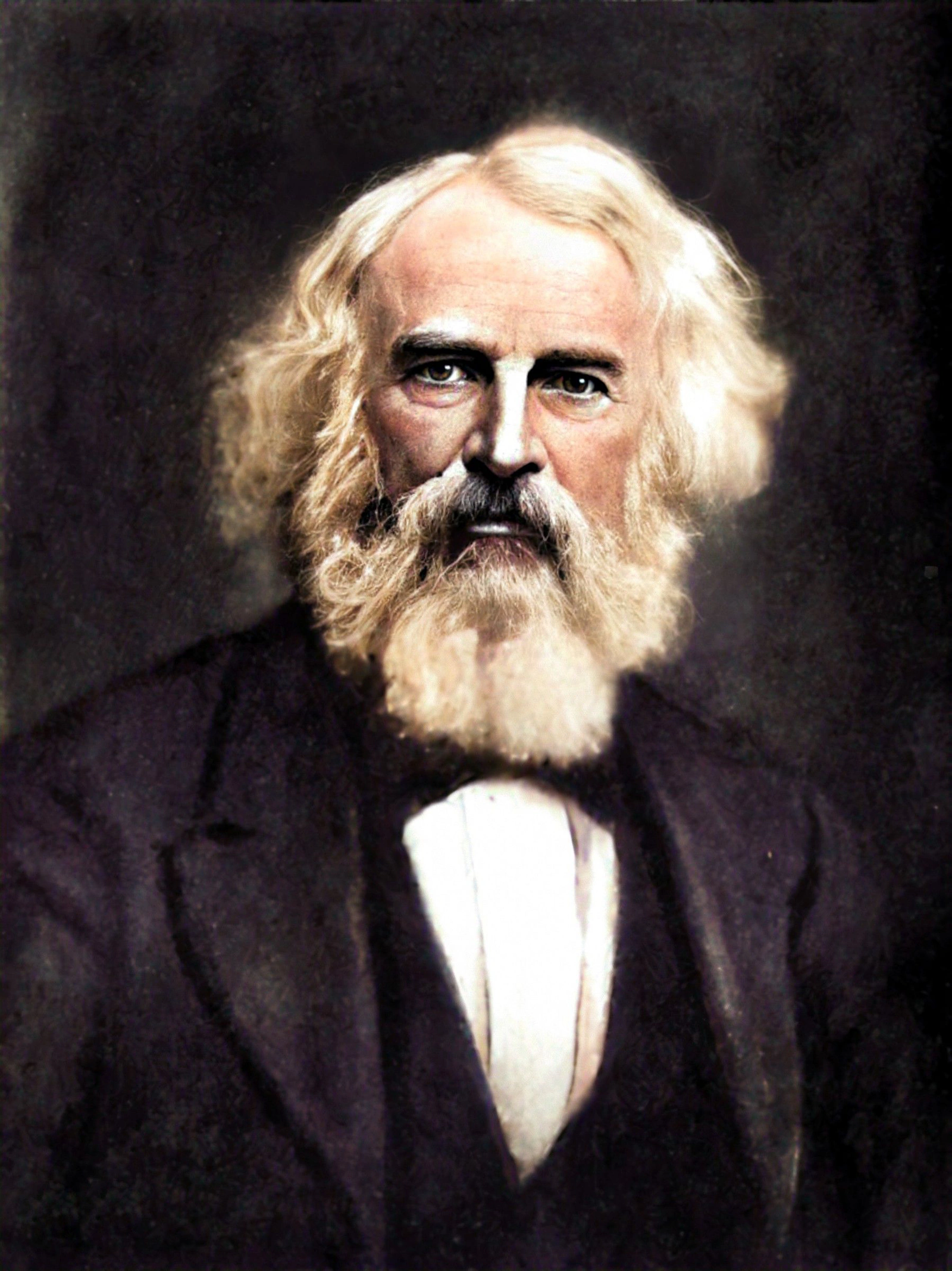
| 1 Quotes | |
| Born as | Henry Wadsworth Longfellow |
| Occup. | Poet |
| From | USA |
| Born | February 27, 1807 |
| Died | March 24, 1882 |
| Aged | 75 years |
| Cite | |
Citation Formats
APA Style (7th ed.)
Henry w. longfellow biography, facts and quotes. (2026, February 11). FixQuotes. https://fixquotes.com/authors/henry-w-longfellow/
Chicago Style
"Henry W. Longfellow biography, facts and quotes." FixQuotes. February 11, 2026. https://fixquotes.com/authors/henry-w-longfellow/.
MLA Style (9th ed.)
"Henry W. Longfellow biography, facts and quotes." FixQuotes, 11 Feb. 2026, https://fixquotes.com/authors/henry-w-longfellow/. Accessed 6 Mar. 2026.
Early Life and Background
Henry Wadsworth Longfellow was born on February 27, 1807, in Portland, Maine, then a busy Atlantic port still shadowed by the aftereffects of the Revolution and the War of 1812. He grew up in a prominent, orderly household: his father, Stephen Longfellow, was a lawyer and congressman; his mother, Zilpah Wadsworth Longfellow, came from a family tied to military and civic leadership. The young Longfellow absorbed early the manners of a professional class that prized education, public service, and self-command, habits that later shaped the calm authority of his verse.Portland offered him a living theater of ships, languages, and weathered seafaring stories, while New England Protestant culture supplied the era's moral earnestness. From childhood he wrote and published poems in local papers, learning that art could be both personal and public. Yet his temperament was inward: he preferred books, music, and measured observation to display, and he carried a lifelong desire to reconcile private feeling with a voice broad enough to address the nation.
Education and Formative Influences
Longfellow entered Bowdoin College in 1822 (class of 1825), alongside future figures such as Nathaniel Hawthorne, in a campus culture that mixed classical study with an emerging American literary ambition. Bowdoin appointed him professor of modern languages soon after graduation, on the condition that he prepare abroad; he traveled in Europe from 1826 to 1829, studying French, Spanish, Italian, and German and encountering Romantic literature at its source. That formative immersion - a disciplined, scholarly cosmopolitanism rather than bohemian rebellion - trained him to become America's great mediator of European forms, translating and adapting them for an English-speaking republic hungry for culture.Career, Major Works, and Turning Points
After teaching at Bowdoin, Longfellow became Smith Professor of Modern Languages at Harvard in 1836, settling in Cambridge in the house later known as the Longfellow House-Washington's Headquarters. His first wife, Mary Storer Potter, died in Rotterdam in 1835 during a European trip, a loss that deepened the elegiac undertow in his work. He achieved wide fame with Voices of the Night (1839), Ballads and Other Poems (1841), and Poems on Slavery (1842), then with the narrative epics that fixed his popular image: Evangeline (1847), The Song of Hiawatha (1855), and The Courtship of Miles Standish (1858). In 1843 he married Frances "Fanny" Appleton; her death in 1861 after a tragic fire - and his own severe burns - marked the most searing turning point of his inner life. In the following years he leaned into translation and cultural synthesis, culminating in his long labor on Dante, published as a complete translation of the Divine Comedy in 1867, while continuing as the best-known poet in America.Philosophy, Style, and Themes
Longfellow's art pursued consolation without denying grief, making him the era's master of what might be called moral lyricism: poems designed to steady ordinary readers facing death, labor, separation, and historical change. He favored clarity, musical cadence, and narrative legibility, often choosing meters that felt like song or story rather than experiment. His psychological signature was the disciplined management of feeling - sorrow transmuted into guidance. Even when he wrote of darkness, he aimed to leave the reader with a lamp, not a wound.That transmutation depended on a belief that experience breaks into meaning when shaped. “The rays of happiness, like those of light, are colorless when unbroken”. In that metaphor is his inner method: the mind refracts what seems featureless into distinct colors - distinct virtues - by giving it form. His best-known long poems test this ethic in public materials: Acadian exile in Evangeline, Native legend recast through trochaic chant in Hiawatha, Puritan origin story in Miles Standish. Yet beneath the cultural pageant lies a private project of repair after repeated bereavement: to keep faith with tenderness while refusing despair. The result is a voice that speaks as if to a family circle, but with a nation's scale in mind.
Legacy and Influence
Longfellow died in Cambridge, Massachusetts, on March 24, 1882, and was buried at Mount Auburn Cemetery. In the 19th century he became the emblem of American poetic respectability - memorized in classrooms, recited in parlors, translated abroad, and honored in 1884 as the first American poet given a memorial bust in Westminster Abbey's Poets' Corner. Later literary modernism often judged his smoothness as complacent, yet his influence persists in the durable reach of narrative poetry, in the American habit of seeking uplift without cynicism, and in his role as a cultural bridge: a poet-professor who helped a young republic imagine itself as both locally rooted and globally literate.Our collection contains 1 quotes written by Henry, under the main topics: Happiness.
Henry W. Longfellow Famous Works
- 1863 Tales of a Wayside Inn (Poetry Collection)
- 1860 Paul Revere's Ride (Poem)
- 1858 The Courtship of Miles Standish (Narrative Poem)
- 1855 The Song of Hiawatha (Epic Poem)
- 1847 Evangeline: A Tale of Acadie (Poetry)
- 1840 The Village Blacksmith (Poem)
Source / external links