
Henry W. Longfellow Biography Quotes 1 Report mistakes
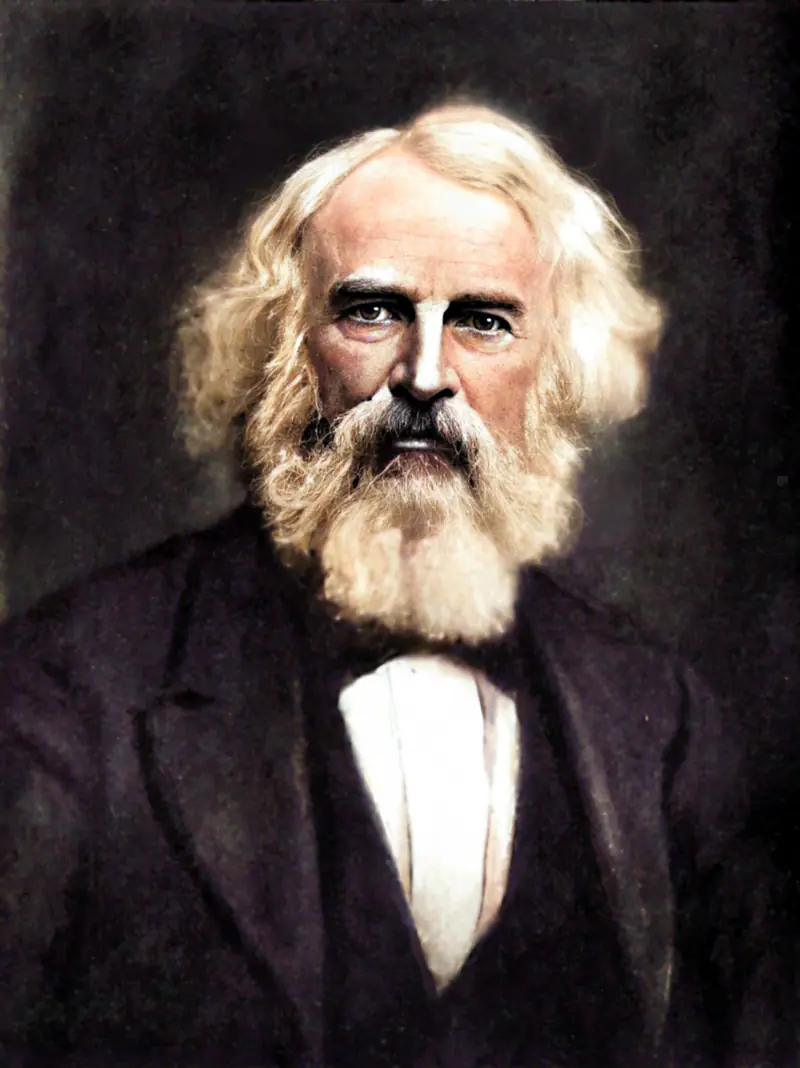
| 1 Quotes | |
| Born as | Henry Wadsworth Longfellow |
| Occup. | Poet |
| From | USA |
| Born | February 27, 1807 |
| Died | March 24, 1882 |
| Aged | 75 years |
Henry Wadsworth Longfellow was born on February 27, 1807, in Portland, then the District of Maine within Massachusetts. He was the second of eight children of Stephen Longfellow, a lawyer who later served in the U.S. Congress, and Zilpah Wadsworth Longfellow. Through his mother he was the grandson of General Peleg Wadsworth, a Revolutionary War officer, a lineage that fed his fascination with national history and legend. A precocious reader, he absorbed the classics and English poetry while attending local schools, and his first verses appeared in newspapers while he was still a teenager.
Education and Early Career
At fourteen, he entered Bowdoin College in Brunswick, Maine. Among his classmates and contemporaries were Nathaniel Hawthorne and, slightly ahead of him, Franklin Pierce. Longfellow distinguished himself in languages and literature, publishing poems in The United States Literary Gazette before graduating in 1825. Bowdoin invited him to teach modern languages on the condition that he prepare by studying abroad. From 1826 to 1829 he traveled in France, Spain, Italy, and Germany, acquiring fluency and a cosmopolitan literary outlook that shaped his career.
Returning to Bowdoin, he became a professor of modern languages, introduced continental literature to American students, and compiled language manuals and readers. In 1831 he married Mary Storer Potter of Portland, whose encouragement and companionship sustained his early scholarly work.
Harvard, Bereavement, and Renewed Purpose
In 1834 Longfellow accepted the Smith Professorship of Modern Languages at Harvard College, again traveling to Europe to deepen his expertise. Tragedy struck in 1835 when Mary died in Rotterdam after a miscarriage. Grief permeated his subsequent prose romance, Hyperion, and many of his early poems. He settled in Cambridge in 1836, joining a circle that included the classicist Cornelius Conway Felton and the reformer Charles Sumner, who became one of his closest friends. In 1837 he took rooms in the historic Craigie House on Brattle Street, George Washington's former headquarters, which would become the setting of his mature career.
Marriage to Fanny Appleton and Family Life
Longfellow met Frances (Fanny) Appleton, daughter of Boston merchant Nathan Appleton, in the 1830s. After a long courtship, they married in 1843. Nathan Appleton purchased the Craigie House for the couple, where their hospitality and literary salons drew writers, scholars, and statesmen. The couple had six children: Charles Appleton, Ernest Wadsworth, Fanny (who died in infancy), Alice Mary, Edith, and Anne Allegra. Fanny's brother, the wit Thomas Gold Appleton, was part of their intimate circle. Domestic scenes with his daughters inspired tender lyrics such as The Children's Hour.
Poetic Breakthrough and Public Voice
While teaching at Harvard, Longfellow published Voices of the Night (1839) and Ballads and Other Poems (1841), which included A Psalm of Life and The Wreck of the Hesperus. He resigned from Harvard in 1854 to write full time. His narrative poems made him a household name: Evangeline (1847) blended classical hexameters with American subject matter; The Song of Hiawatha (1855) drew on Native American legends; The Courtship of Miles Standish (1858) revisited colonial New England lore. Tales of a Wayside Inn (1863) framed sketches and ballads, among them Paul Revere's Ride, first published in The Atlantic Monthly in 1860 under editor James Russell Lowell and with the support of publisher James T. Fields. Influenced by Sumner, Longfellow quietly opposed slavery and issued Poems on Slavery in 1842.
Translator and the Dante Circle
Longfellow's mastery of languages culminated in his blank-prose translation of Dante's Divine Comedy, published in full in 1867. He worked with friends informally dubbed the "Dante Club", including James Russell Lowell, Charles Eliot Norton, and Oliver Wendell Holmes Sr., who met to critique drafts and discuss philological subtleties. The project secured his reputation as a bridge between American readers and European masterpieces.
Loss, War, and Personal Resilience
On July 9, 1861, Fanny Appleton Longfellow died after her dress caught fire at home. Longfellow was badly burned while trying to save her and thereafter wore a beard to conceal scars. The Civil War soon intensified the household's anxieties: in 1863 his eldest son, Charles Appleton Longfellow, joined the Union army and was seriously wounded that November. The father's mingled grief and hope echo in poems from the period, including his Christmas Bells. Despite tragedy, he continued to write with measured clarity and moral gravity.
Later Years, Honors, and Final Works
Longfellow's later volumes included The Golden Legend (1851, later incorporated into his dramatic trilogy), Keramos and Other Poems (1878), and Ultima Thule (1880). He enjoyed international esteem, met leading British writers such as Alfred Tennyson, and received honorary degrees from venerable universities in Britain. His Cambridge home remained a literary crossroads; friendships with Lowell, Norton, Sumner, and Holmes persisted, and exchanges with publishers like James T. Fields kept his books in wide circulation. He completed In the Harbor shortly before his death and left Michael Angelo to be published posthumously.
On March 24, 1882, Longfellow died at his home in Cambridge, Massachusetts. He was buried at Mount Auburn Cemetery.
Legacy
Longfellow was the most widely read American poet of the nineteenth century, admired for lucid narrative, musical phrasing, and an ethical sensibility that sought consolation rather than controversy. His poems entered schoolbooks and popular memory, shaping how generations imagined American history, work, faith, and duty. He helped professionalize literary life in the United States, trained students who became teachers and translators, and modeled a cosmopolitan American voice grounded in both European tradition and local legend. His home, later preserved as Longfellow House-Washington's Headquarters National Historic Site, symbolizes the fusion of national memory and literary culture that he embodied. Surrounded by friends such as Hawthorne, Sumner, Lowell, Norton, and Holmes, and sustained by the love and losses of Mary and Fanny, Longfellow fashioned a body of work that bridged continents and centuries while remaining intimate enough to be recited at the hearth.
Our collection contains 1 quotes who is written by Henry, under the main topics: Happiness.
Henry W. Longfellow Famous Works
- 1863 Tales of a Wayside Inn (Poetry Collection)
- 1860 Paul Revere's Ride (Poem)
- 1858 The Courtship of Miles Standish (Narrative Poem)
- 1855 The Song of Hiawatha (Epic Poem)
- 1847 Evangeline: A Tale of Acadie (Poetry)
- 1840 The Village Blacksmith (Poem)
Source / external links