
Henry Wadsworth Longfellow Biography Quotes 68 Report mistakes
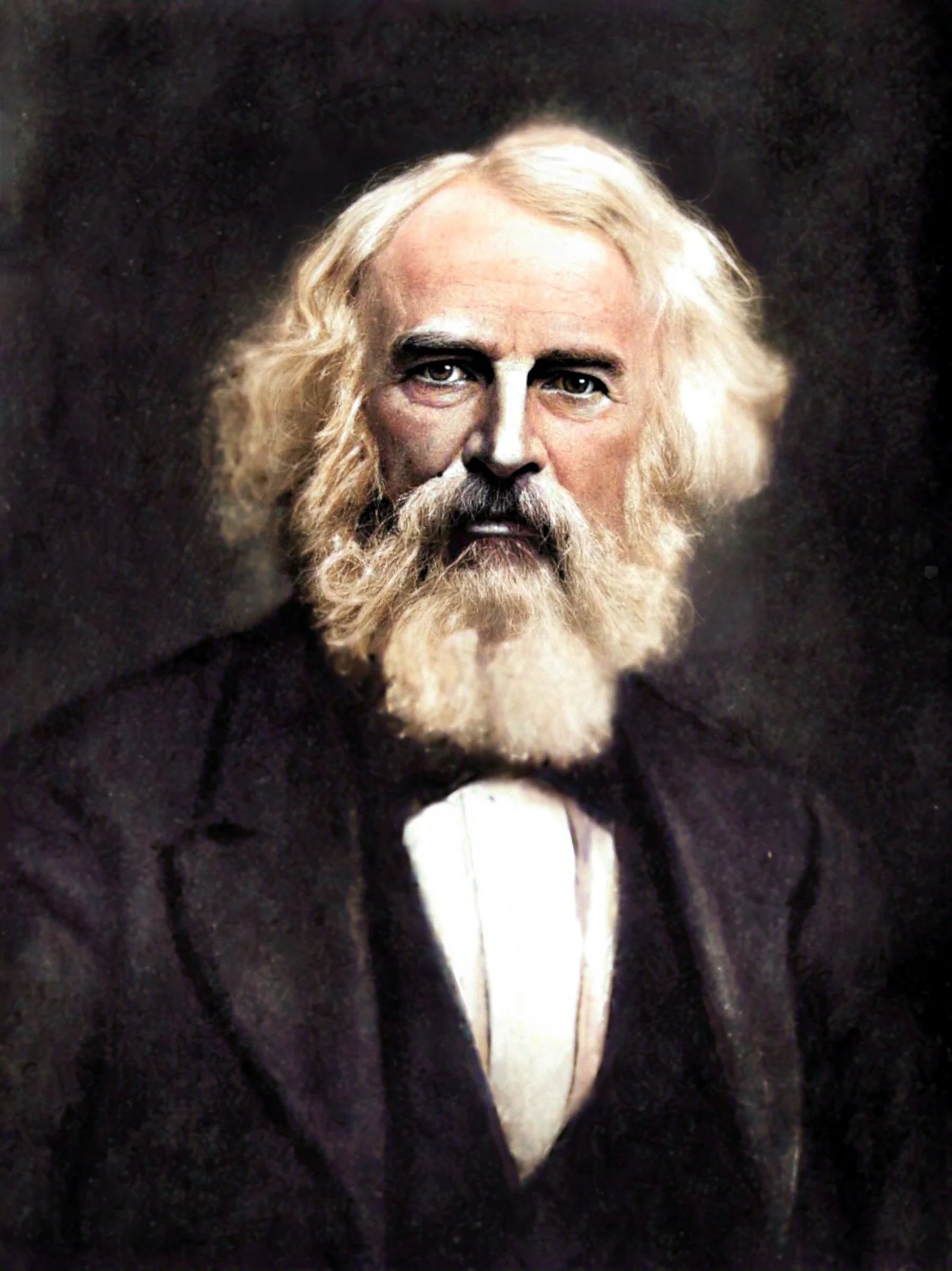
| 68 Quotes | |
| Occup. | Poet |
| From | USA |
| Spouses | Mary Storer Potter (1831-1835) Frances Elizabeth Appleton (1843-1861) |
| Born | February 27, 1807 Portland, District of Maine, Massachusetts, USA |
| Died | March 24, 1882 Cambridge, Massachusetts, USA |
| Aged | 75 years |
| Cite | |
Citation Formats
APA Style (7th ed.)
Henry wadsworth longfellow biography, facts and quotes. (2026, February 1). FixQuotes. https://fixquotes.com/authors/henry-wadsworth-longfellow/
Chicago Style
"Henry Wadsworth Longfellow biography, facts and quotes." FixQuotes. February 1, 2026. https://fixquotes.com/authors/henry-wadsworth-longfellow/.
MLA Style (9th ed.)
"Henry Wadsworth Longfellow biography, facts and quotes." FixQuotes, 1 Feb. 2026, https://fixquotes.com/authors/henry-wadsworth-longfellow/. Accessed 25 Mar. 2026.
Early Life and Background
Henry Wadsworth Longfellow was born on February 27, 1807, in Portland, Maine, then a seaport still marked by the aftershocks of Revolution and the pressures of Atlantic trade and war. Raised in a prominent New England family, he absorbed early the era's twin devotions to civic steadiness and self-improvement. The rhythms of a coastal town - ships, weather, immigrants, and printed news - gave him a lived sense of distance and connection that would later animate his gift for making far places feel intimate.From the start he seemed divided between public duty and private reverie. He wrote poetry as a boy, but his temperament favored quiet labor over spectacle, a preference that would harden into a lifelong habit of disciplined daily work. The young Longfellow watched a nation expanding westward and arguing about its moral future, while in his own inner life he cultivated an almost European hunger for languages, legend, and the consolations of art.
Education and Formative Influences
Longfellow studied at Bowdoin College in Brunswick, graduating in 1825 alongside classmates who would also shape American letters, including Nathaniel Hawthorne. Bowdoin appointed him professor of modern languages almost immediately, on the condition that he prepare through extended study abroad; the years in Europe (1826-1829, and again 1835-1836) were formative not only in language mastery but in emotional compass. He encountered the prestige of Old World literature firsthand, read widely in German, Spanish, French, and Italian traditions, and began to imagine an American poetry confident enough to translate, adapt, and rival Europe rather than merely imitate it. Personal loss also entered early: on his second European trip his first wife, Mary Storer Potter, died in Rotterdam in 1835, fusing travel with grief and giving him a private register of sorrow beneath his increasingly public career.Career, Major Works, and Turning Points
After teaching at Bowdoin, Longfellow became Smith Professor of Modern Languages at Harvard in 1836, settling in Cambridge in the Craigie House, a setting that would become inseparable from his fame. He published steadily: "Voices of the Night" (1839) brought wide recognition; "Ballads and Other Poems" (1841) included "The Wreck of the Hesperus"; "Evangeline" (1847) and "The Song of Hiawatha" (1855) turned narrative verse into national bestsellers; and "The Courtship of Miles Standish" (1858) deepened his appeal to a public hungry for usable origins. In 1854 he left Harvard to write full time, a rare choice that signaled both his popularity and his need for inward space. The great turning point of his middle life came in 1861, when his second wife, Frances "Fanny" Appleton, died after her dress caught fire; Longfellow was badly burned trying to save her. The trauma shadowed later work, including the translation that became "The Divine Comedy of Dante" (1867), a sustained act of attention and moral architecture that matched his private endurance.Philosophy, Style, and Themes
Longfellow wrote as a mediator: between Europe and America, scholarship and song, private grief and public consolation. His plainspoken meters, narrative clarity, and melodic phrasing helped poetry function as household speech, memorized by children and recited at civic gatherings. He believed sound carried meaning beyond argument, and his ear for cadence underwrote his conviction that “Music is the universal language of mankind”. That idea is not decorative in him - it is psychological. It implies a man who wanted harmony where politics and mortality offered fracture, and who sought in rhythm a common ground that could outlast disagreement.His moral center tended toward inward judgment rather than external applause. Again and again he frames destiny as something decided in conscience and endurance, not in crowds: “Not in the clamor of the crowded street, not in the shouts and plaudits of the throng, but in ourselves, are triumph and defeat”. The line reads as a self-portrait of a poet who lived amid acclaim yet distrusted it, preferring the nightly discipline of composition, translation, and revision. Even his more exhortative poems press ambition through patience, turning effort into a spiritual practice: “Heights by great men reached and kept were not obtained by sudden flight but, while their companions slept, they were toiling upward in the night”. Beneath the gentleness is a stoic ethic shaped by bereavement - the insistence that time alters pain without erasing it, and that work, faith, and affection are the only durable answers.
Legacy and Influence
By the time of his death on March 24, 1882, Longfellow had become the best-known American poet of his century, a figure whose verses traveled through classrooms, parlors, and newspapers with uncommon reach. Critics later challenged his sentiment and mythmaking, especially in poems that romanticize colonial and Indigenous materials, yet his role in legitimizing American poetry for mass readership remains central. He helped make literature a shared civic possession, proved that translation could be a national art, and modeled a writerly life in which scholarship, lyric beauty, and personal resilience reinforced one another. His enduring influence lies less in any single line than in the cultural permission he gave Americans to treat poetry as both everyday music and a serious moral companion.Our collection contains 68 quotes written by Henry, under the main topics: Motivational - Ethics & Morality - Wisdom - Art - Never Give Up.
Other people related to Henry: James Thomas Fields (Publisher), Thomas Gold Appleton (Critic), Edwin Percy Whipple (Writer), Hiawatha (Statesman), Franklin Pierce (President), C. S. Calverley (Poet)
Henry Wadsworth Longfellow Famous Works
- 1861 Paul Revere's Ride (Narrative Poem)
- 1858 The Courtship of Miles Standish (Narrative Poem)
- 1855 The Song of Hiawatha (Epic Poem)
- 1847 Evangeline, A Tale of Acadie (Epic Poem)
- 1842 The Wreck of the Hesperus (Narrative Poem)
- 1839 Hyperion: A Romance (Novel)
Source / external links