
Herb Elliott Biography Quotes 3 Report mistakes
| 3 Quotes | |
| Born as | Herbert James Elliott |
| Occup. | Athlete |
| From | Australia |
| Spouse | Karen Elliott |
| Born | February 25, 1938 Perth, Western Australia |
| Age | 88 years |
| Cite | |
Citation Formats
APA Style (7th ed.)
Herb elliott biography, facts and quotes. (2026, February 11). FixQuotes. https://fixquotes.com/authors/herb-elliott/
Chicago Style
"Herb Elliott biography, facts and quotes." FixQuotes. February 11, 2026. https://fixquotes.com/authors/herb-elliott/.
MLA Style (9th ed.)
"Herb Elliott biography, facts and quotes." FixQuotes, 11 Feb. 2026, https://fixquotes.com/authors/herb-elliott/. Accessed 27 Mar. 2026.
Early Life and Background
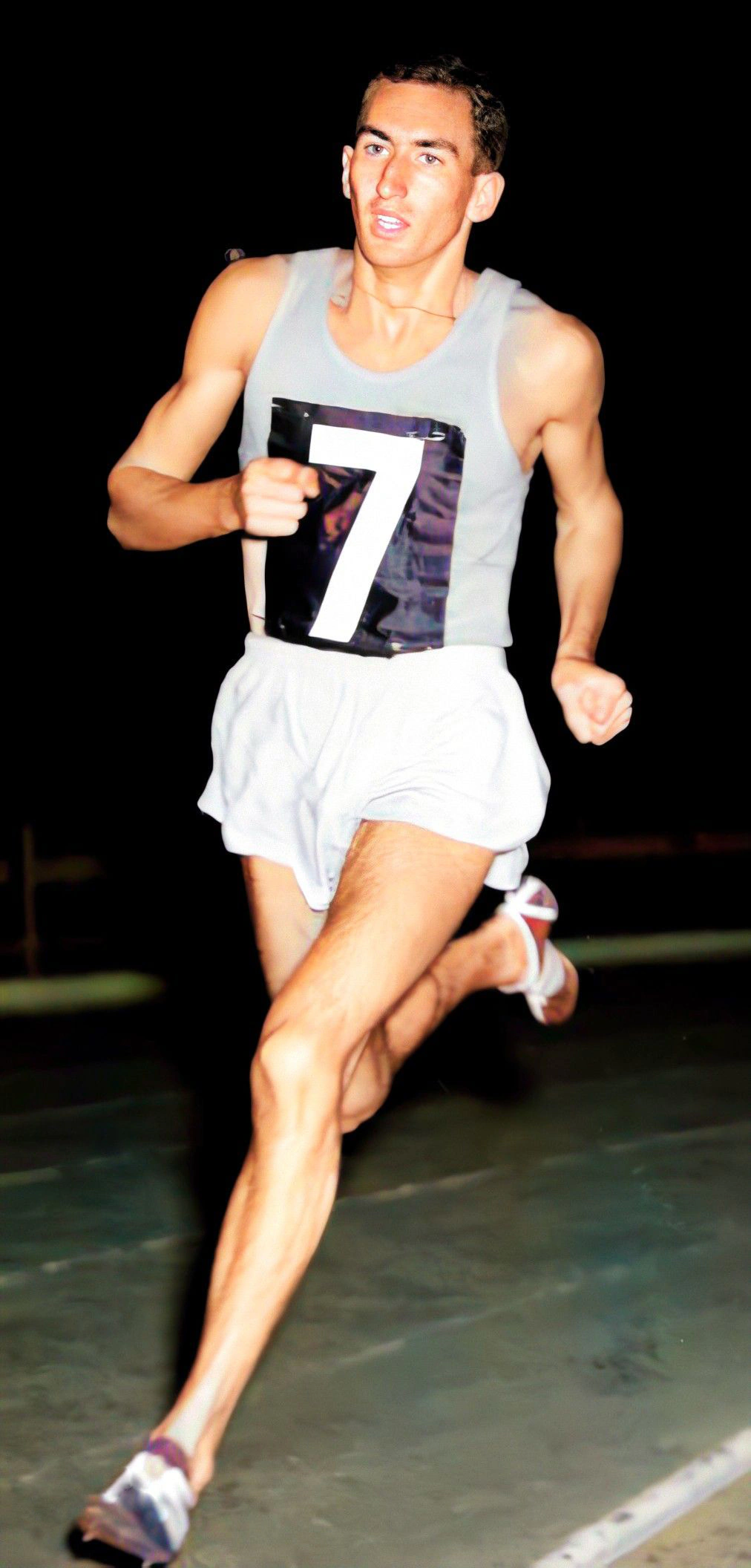
Herbert James "Herb" Elliott was born on February 25, 1938, in Perth, Western Australia, and came of age in a country that was still measuring itself against the aftershocks of war and the promises of postwar prosperity. Australian sport in the 1940s and 1950s carried a civic seriousness - an arena where discipline, stoicism, and national confidence were rehearsed in public - and the young Elliott absorbed that ethic early, gravitating toward running as both an outlet and a proving ground.In Perth, distance running was not yet the professionalized, globalized circuit it would become, and Elliott's rise depended less on systems than on temperament: the willingness to hurt, repeat, and improve when no one was watching. Those who later saw his racing - upright, ruthless, apparently effortless until it suddenly was not - often mistook it for natural ease. In truth, his adolescence sharpened a private intensity that would soon meet the right mentor and explode into a brief, incandescent reign.
Education and Formative Influences
Elliott attended Aquinas College in Perth, a setting that valued order and achievement, but his most decisive education came through coaching rather than classrooms when he connected with Percy Cerutty, the idiosyncratic Australian trainer based at Portsea in Victoria. Cerutty preached a near-mystical mix of hard physical labor, sandhills, ocean air, and literary self-fashioning - turning runners into ascetics of speed. Under Cerutty, Elliott learned to treat training as character work, not simply preparation for races, and he began to see the middle distances as a theater where courage could be quantified.Career, Major Works, and Turning Points
Elliott's competitive peak was astonishingly concentrated. From 1957 to 1961 he dominated the 1500m and mile, compiling a long winning streak and becoming the era's standard for front-running authority. The defining moment came at the 1960 Rome Olympics, where he won the 1500m gold in an Olympic record, controlling the race with a decisive surge that clarified his philosophy: do not negotiate with doubt - outrun it. Earlier he had taken the 1500m at the 1958 British Empire and Commonwealth Games in Cardiff, and in 1961 he set a mile world record of 3:54.5, the first under four minutes by an Australian and a mark that symbolized how quickly he had redrawn the boundaries of belief. Soon after, still young and still capable of more, he stepped away from elite competition, choosing a life beyond the track rather than stretching greatness into gradual decline.Philosophy, Style, and Themes
Elliott's inner life was often misread as serene confidence, but his own account emphasized a harsher engine: “The greatest stimulator of my running career was fear”. That fear was not stage fright so much as a moral pressure - the dread of wasted gifts, of arriving unprepared, of discovering in the late stages of a race that the mind had been bargaining all along. In Elliott, fear became a focusing tool, transmuted by Cerutty's regimen into a kind of courage-by-habit: the ability to do the hard thing first, daily, until race day felt like the logical conclusion of private vows.His style - high cruising speed, decisive changes of pace, and a willingness to lead - mirrored a broader theme of self-command. He described preparation as a crucible where ideals met reality: “Training was a time where resolutions made in the enthusiasm of an inspired moment were put to personal test”. That sentence captures the psychology of his era and his method: inspiration mattered, but it was valuable mainly as raw material for discipline. Even his view of the Olympics carried an ethical charge larger than medals: “It is the inspiration of the Olympic Games that drives people not only to compete but to improve, and to bring lasting spiritual and moral benefits to the athlete and inspiration to those lucky enough to witness the athletic dedication”. Elliott competed like someone protecting a standard, convinced that performance was a public form of integrity.
Legacy and Influence
Elliott's legacy rests on the rare combination of dominance and restraint: he reached the summit, validated a revolutionary training culture, then left before the story could fade into routine. His Rome victory and 1961 mile record became reference points for Australian middle-distance ambition, proof that world-leading speed could be built from ferocious preparation and psychological clarity. Later generations remembered not only the times but the template - a runner shaped by a demanding coach, a demanding conscience, and the belief that sport could refine the self as much as it could entertain a crowd.Our collection contains 3 quotes written by Herb, under the main topics: Motivational - Sports - Training & Practice.
Source / external links