
Herbert Simon Biography Quotes 22 Report mistakes
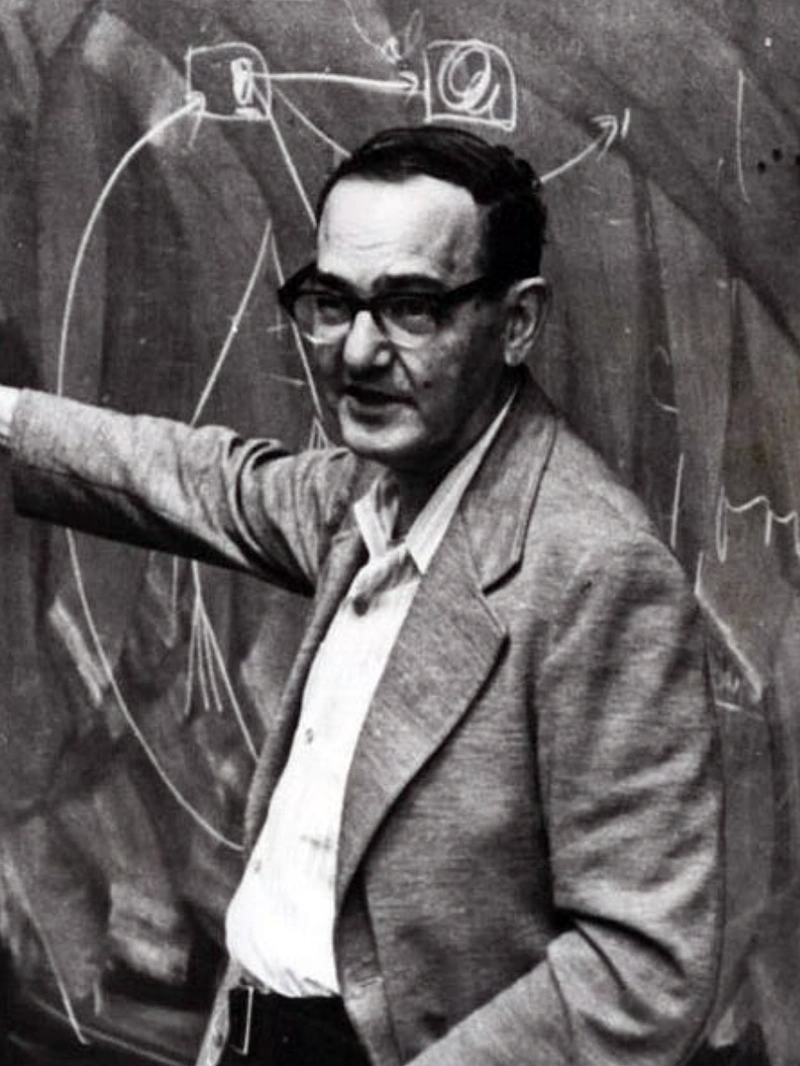
Attr: prosocial.world
| 22 Quotes | |
| Born as | Herbert Alexander Simon |
| Occup. | Scientist |
| From | USA |
| Born | June 15, 1916 Milwaukee, Wisconsin, United States |
| Died | February 9, 2001 Pittsburgh, Pennsylvania, United States |
| Aged | 84 years |
| Cite | |
Citation Formats
APA Style (7th ed.)
Herbert simon biography, facts and quotes. (2026, February 11). FixQuotes. https://fixquotes.com/authors/herbert-simon/
Chicago Style
"Herbert Simon biography, facts and quotes." FixQuotes. February 11, 2026. https://fixquotes.com/authors/herbert-simon/.
MLA Style (9th ed.)
"Herbert Simon biography, facts and quotes." FixQuotes, 11 Feb. 2026, https://fixquotes.com/authors/herbert-simon/. Accessed 5 Mar. 2026.
Early Life and Background
Herbert Alexander Simon was born on June 15, 1916, in Milwaukee, Wisconsin, a Midwestern industrial city where machine shops, union politics, and immigrant ambition sat close together. His father, Arthur Simon, was a Jewish engineer and inventor who had come from Germany; his mother, Edna (Merkel) Simon, was an accomplished pianist. The household combined practical mechanics with disciplined artistry, an early template for Simon's lifelong insistence that thought was something you could build, test, and improve rather than merely admire.Growing up between the world wars, Simon absorbed the era's faith in expertise and its dread of institutional failure. The Great Depression arrived while he was still young, making the fragility of markets and public administration hard to miss. That background helped form his mature preoccupation with how real organizations decide under pressure - not the heroic rational actor of textbooks, but the ordinary clerk, manager, or public official trying to cope with too much information and too little time.
Education and Formative Influences
Simon studied at the University of Chicago, earning his BA in 1936 and PhD in political science in 1943, in an intellectual environment that treated social questions as problems for rigorous analysis. Chicago exposed him to economics, logic, and empirically minded social science, and he gravitated toward public administration and decision processes. Early work in municipal government research and administrative studies convinced him that rules, routines, and attention constraints - not abstract optimization - often determined outcomes, an insight that would soon harden into a general theory of bounded rationality.Career, Major Works, and Turning Points
After teaching and research positions, Simon joined Carnegie Institute of Technology (later Carnegie Mellon University) in 1949, where he spent the core of his career building an interdisciplinary program that fused economics, psychology, organization theory, and computer science. He published Administrative Behavior (1947), a foundational critique of simplistic "principles" of management and a blueprint for decision-centered organizational analysis; with James G. March he wrote Organizations (1958), and with Allen Newell he pioneered artificial intelligence and cognitive modeling, including the Logic Theorist (1956) and General Problem Solver (1957). His concept of bounded rationality and the related idea of satisficing reshaped economics and decision theory, culminating in the 1978 Nobel Memorial Prize in Economic Sciences. He continued to extend these ideas through models of problem solving, attention, and complex systems, mentoring generations at Carnegie Mellon and arguing that computation could be a laboratory for theories of mind.Philosophy, Style, and Themes
Simon's inner life, as it appears in his work, is defined by impatience with mystique and a moral seriousness about clarity. He believed that reason is not a fixed trait but a set of tools that can be improved with better representations, better procedures, and better institutions. This is why he treated organizations as cognitive systems: they are devices for distributing attention, compressing complexity into routines, and turning overwhelming environments into manageable choice sets. His writing style mirrors that program - plainspoken, model-driven, and relentlessly interested in mechanisms rather than slogans.Three of his most revealing claims are also psychological self-portraits. “Human beings, viewed as behaving systems, are quite simple. The apparent complexity of our behavior over time is largely a reflection of the complexity of the environment in which we find ourselves”. Here Simon is defending human dignity without romanticizing it: error is often a property of the task, not a stain on the person. In the same vein, he warned, “I don't care how big and fast computers are, they're not as big and fast as the world”. , a reminder that both brains and machines must economize by searching selectively and stopping when a good-enough answer appears. And he broadened the meaning of rational action beyond laboratories and markets: “Everyone designs who devises courses of action aimed at changing existing situations into preferred ones”. For Simon, to decide is to design - and the central drama of modern life is how fallible designers can act responsibly inside complex systems.
Legacy and Influence
Simon died on February 9, 2001, but his vocabulary has become the common language of multiple fields: bounded rationality in economics; satisficing in behavioral decision research; organizations as information-processing systems in management; and computational models as theories in cognitive science and AI. He helped legitimate the idea that understanding intelligence requires building it, while also insisting that realistic intelligence is always constrained by attention and environment. In an era that alternated between technocratic confidence and anxiety about machines, Simon left a steadier inheritance: a practical humanism in which better knowledge, better design, and better institutions can expand rationality without pretending to abolish the limits that make it necessary.Our collection contains 22 quotes written by Herbert, under the main topics: Ethics & Morality - Wisdom - Learning - Meaning of Life - Reason & Logic.
Other people related to Herbert: Gerard Debreu (Mathematician)
Herbert Simon Famous Works
- 1991 Models of My Life (Autobiography)
- 1983 Reason in Human Affairs (Book)
- 1972 Human Problem Solving (Book)
- 1969 The Sciences of the Artificial (Book)
- 1962 The Architecture of Complexity (Essay)
- 1960 The New Science of Management Decision (Book)
- 1958 Organizations (Book)
- 1957 Models of Man: Social and Rational (Book)
- 1956 The Logic Theory Machine (Essay)
- 1955 A Behavioral Model of Rational Choice (Essay)
- 1947 Administrative Behavior: A Study of Decision-Making Processes in Administrative Organization (Book)