
Herbert V. Prochnow Biography Quotes 4 Report mistakes
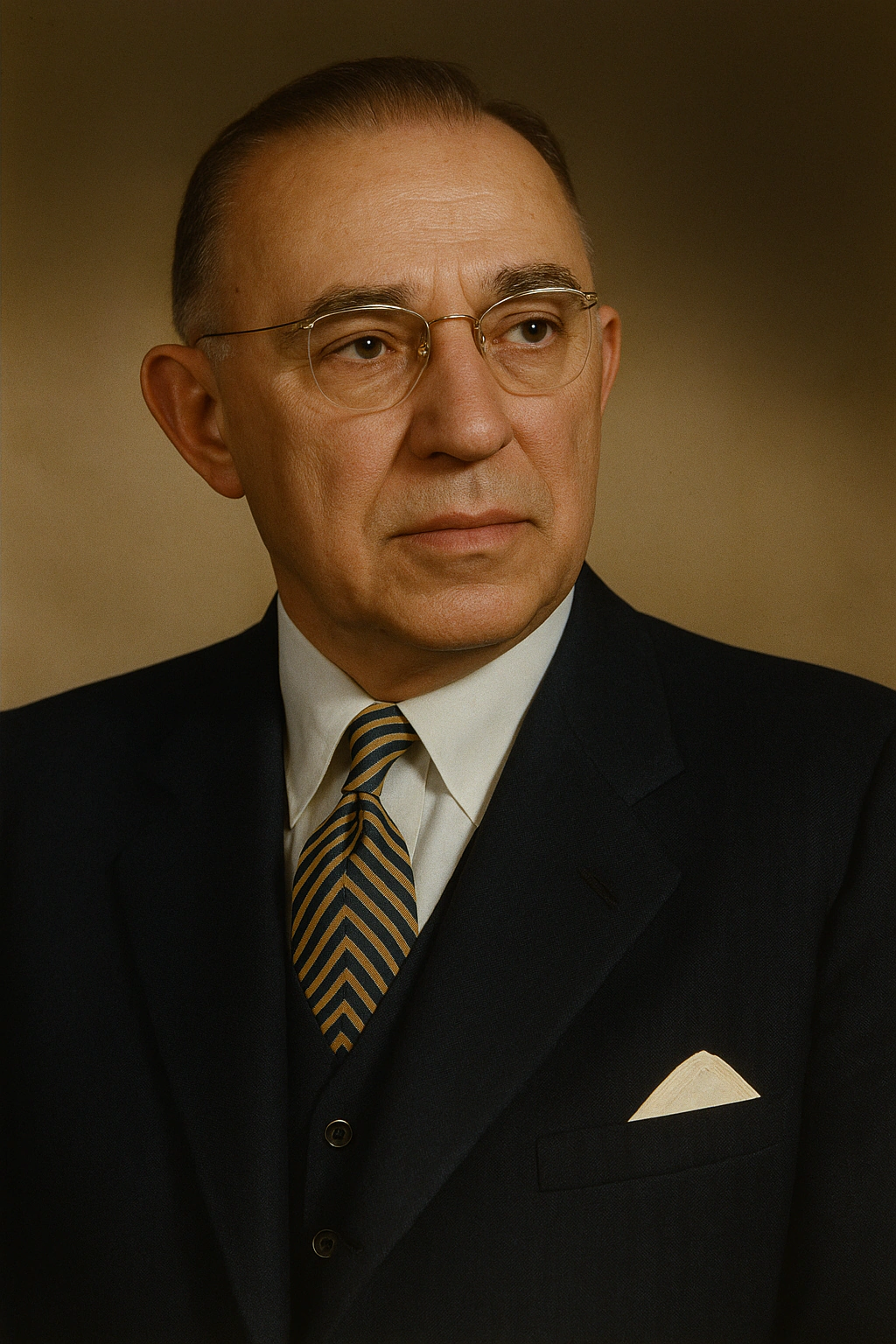
| 4 Quotes | |
| Born as | Herbert Victor Prochnow |
| Known as | Herbert Prochnow |
| Occup. | Businessman |
| From | USA |
| Spouse | Helen Prochnow |
| Born | May 19, 1897 Delavan, Wisconsin, USA |
| Died | September 29, 1998 Chicago, Illinois, USA |
| Cause | Natural Causes |
| Aged | 101 years |
| Cite | |
Citation Formats
APA Style (7th ed.)
Herbert v. prochnow biography, facts and quotes. (2026, February 11). FixQuotes. https://fixquotes.com/authors/herbert-v-prochnow/
Chicago Style
"Herbert V. Prochnow biography, facts and quotes." FixQuotes. February 11, 2026. https://fixquotes.com/authors/herbert-v-prochnow/.
MLA Style (9th ed.)
"Herbert V. Prochnow biography, facts and quotes." FixQuotes, 11 Feb. 2026, https://fixquotes.com/authors/herbert-v-prochnow/. Accessed 27 Mar. 2026.
Early Life and Background
Herbert Victor Prochnow was born on May 19, 1897, in Wisconsin, part of a Midwestern world shaped by German-American civic life, churchgoing respectability, and the fast-expanding commercial culture of the early 20th century. He came of age as the United States moved from provincial confidence into global power, watching the First World War, the boom years, and then the fragility exposed by the Great Depression. That long arc of American modernity would later inform his reputation as a businessman who treated words, reputation, and public trust as strategic assets rather than soft afterthoughts.Prochnow lived to 101, dying on September 29, 1998, and his unusual longevity made him a living bridge between eras - from pre-radio advertising to the age of cable news and professionalized corporate communications. His public persona was polished and genial, yet his writings and speeches suggest a restless inner discipline: a need to impose clarity on noise, and a belief that economic institutions could not survive without moral credibility. He was not merely a manager of products; he aimed to manage the meanings people attached to them.
Education and Formative Influences
He studied at the University of Wisconsin, a campus steeped in the "Wisconsin Idea" that expertise should serve public life, and he absorbed its pragmatic blend of economics, civics, and persuasion. The period trained him to see business as a public actor whose legitimacy had to be earned, and it helped form his conviction that leadership depended on plain language, coherent reasoning, and an alertness to the gap between what institutions say and what they actually do.Career, Major Works, and Turning Points
Prochnow became a prominent figure in American corporate leadership and public affairs, best known for his long association with the First National Bank of Chicago, where he rose to senior executive responsibilities and became a visible spokesman for banking and business. Across mid-century, as finance faced scrutiny over power, stability, and ethics, he specialized in explaining business to the public and reminding business leaders that persuasion was inseparable from conduct. He wrote and edited widely circulated books on communication and civic-minded management - including collections and guides on public relations, speeches, and business responsibility - and he chaired and advised civic organizations, positioning himself as a mediator between corporate boardrooms and the democratic demands of transparency.Philosophy, Style, and Themes
Prochnow's enduring theme was that modern life produces endless assertion but little reflection, and that institutions collapse when they confuse volume with wisdom. His aphorism, “A great many people mistake opinions for thoughts”. , captures a private impatience with lazy certainty - a psychological preference for tested reasoning over crowd emotion. It also reveals a banker-administrator's sensitivity to risk: in finance and governance, unexamined opinions can become contagious, and contagion can become crisis. He wrote and spoke in short, memorable formulations because he believed attention was scarce and responsibility was personal.A second thread in his work was a skepticism toward bureaucratic language, the kind that hides agency and replaces accountability with procedure. “'Company policy' means there's no understandable reason for this action”. The line is funny, but it is also diagnostic: he understood how institutions protect themselves by substituting slogans for explanations, and how that substitution corrodes trust from within. Even his darker geopolitical observation - “A visitor from Mars could easily pick out the civilized nations. They have the best implements of war”. - reads as a critique of modern "progress" that doubles as self-indictment, suggesting he saw civilization as morally ambiguous when technical brilliance outpaces ethical restraint.
Legacy and Influence
Prochnow's legacy lies less in a single signature invention than in a model of corporate statesmanship: the idea that business leaders must be interpreters-in-chief, translating complex systems into intelligible public commitments and then living up to them. In the history of American banking and public relations, he stands as an early advocate of reputational stewardship - not spin, but disciplined clarity tied to conduct. His aphorisms survived because they compress a lifetime of institutional observation into portable truths, and because the anxieties he named - bureaucracy without reasons, opinion without thought, power without moral ballast - only grew more familiar after his century ended.Our collection contains 4 quotes written by Herbert, under the main topics: Reason & Logic - War - Decision-Making.
Herbert V. Prochnow Famous Works
- 1954 Speaker's Treasury of Stories for All Occasions (Book)
- 1941 The Toastmaster's Handbook (Book)
Source / external links