
Herman Melville Biography Quotes 45 Report mistakes
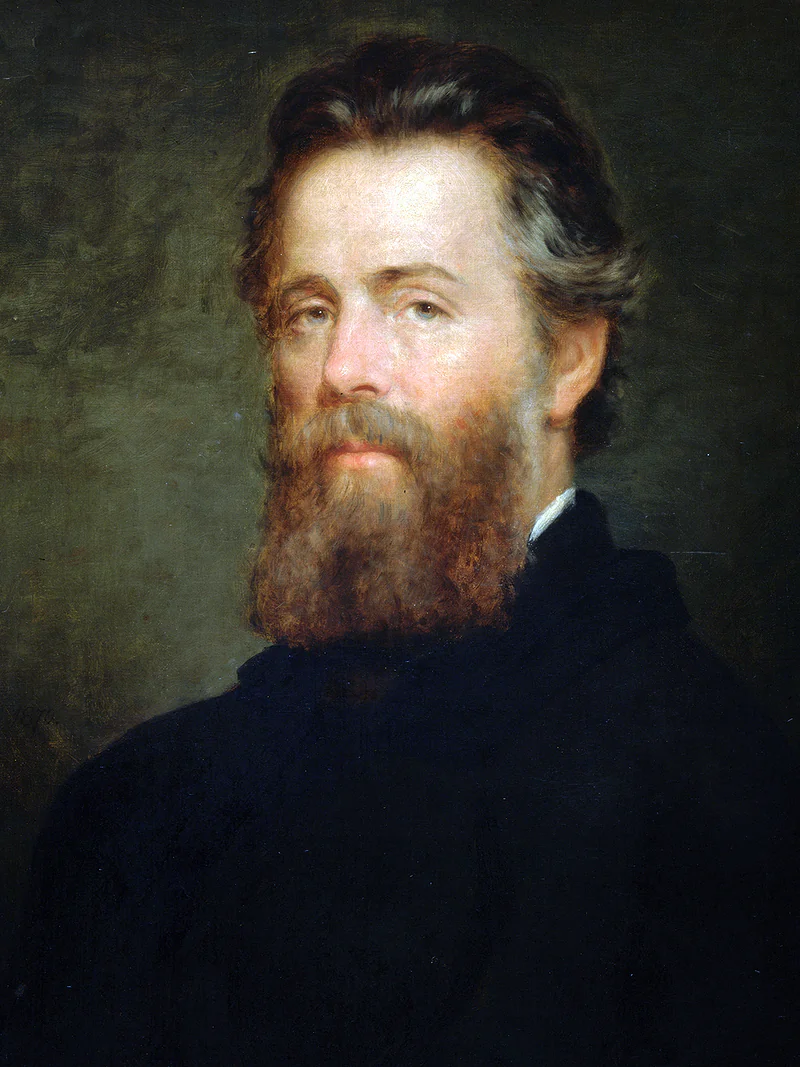
| 45 Quotes | |
| Occup. | Novelist |
| From | USA |
| Born | August 1, 1819 New York City, USA |
| Died | September 28, 1891 New York City, USA |
| Aged | 72 years |
| Cite | |
Citation Formats
APA Style (7th ed.)
Herman melville biography, facts and quotes. (2026, February 11). FixQuotes. https://fixquotes.com/authors/herman-melville/
Chicago Style
"Herman Melville biography, facts and quotes." FixQuotes. February 11, 2026. https://fixquotes.com/authors/herman-melville/.
MLA Style (9th ed.)
"Herman Melville biography, facts and quotes." FixQuotes, 11 Feb. 2026, https://fixquotes.com/authors/herman-melville/. Accessed 5 Mar. 2026.
Early Life and Background
Herman Melville was born August 1, 1819, in New York City, into a family whose sense of gentility was repeatedly shaken by money trouble. His father, Allan Melvill, traded in imported goods; his mother, Maria Gansevoort, came from an Albany family with Revolutionary-era stature and a stern moral confidence. The household moved between Manhattan and Albany as fortunes rose and collapsed, and the boy learned early the unstable border between respectability and ruin that later animates his portraits of captains, clerks, and kings.When Allan died in 1832, debts turned the family into reluctant strivers, and Melville was pushed toward work before his imagination had any settled outlet. He tried clerking and teaching, but what stayed with him was the inward pressure of ambition in a society that praised self-making while quietly sorting men by money and pedigree. That tension - between democratic promise and private dread - became the emotional engine of his later fiction.
Education and Formative Influences
Melville had no smooth, continuous schooling; he attended local academies in New York and Albany and read voraciously in the gaps left by employment. Shakespeare, the Bible, and the era's travel narratives fed his appetite for grand speech and metaphysical argument, while Jacksonian America and its booming ports offered daily theater: rough labor, speculative wealth, and moral rhetoric colliding on the docks. His most decisive education, however, came from leaving shore - the early 1840s were an age when American ships stitched the Pacific to New England profit, and a young man could exchange a stalled life for peril, discipline, and strange freedom.Career, Major Works, and Turning Points
In 1839 he sailed as a hand on the merchant ship St. Lawrence; in 1841 he shipped on the whaler Acushnet out of New Bedford, then deserted in the Marquesas, lived among islanders, and drifted through mutiny, naval service, and return. Those experiences became Typee (1846) and Omoo (1847), instant successes that marketed him as a vivid reporter of the exotic. He married Elizabeth Shaw in 1847, moved toward the Berkshires, and, in a burst of risk-taking, turned from travel narrative to darker allegory: Mardi (1849), Redburn (1849), White-Jacket (1850), and then Moby-Dick (1851), followed by Pierre (1852). Critical bewilderment and sales failure shifted his life: he wrote short fiction including "Bartleby, the Scrivener" (1853) and "Benito Cereno" (1855), turned increasingly to poetry after the Civil War with Battle-Pieces (1866), and spent 1866-1885 as a New York Customs Inspector while privately laboring over the late novella Billy Budd, published posthumously.Philosophy, Style, and Themes
Melville's art is built from collisions: sermon against sea-yarn, legal brief against lyric hymn, slapstick against apocalypse. He believed experience was a harsher tutor than institutions, and he made apprenticeship - especially the brutal schooling of labor - the prerequisite for knowledge. “A whale ship was my Yale College and my Harvard”. That sentence is less boast than self-diagnosis: he distrusted inherited authority, yet could not stop craving a comprehensive education, so he forged one out of danger, hierarchy, and the cramped democracy of a ship.His deepest theme is the mind confronting what will not yield - nature, God, history, the self. He writes as if every confident doctrine is a mask stretched over dread, and his narrators oscillate between analytic wit and prophetic thunder. “There is one knows not what sweet mystery about this sea, whose gently awful stirrings seem to speak of some hidden soul beneath”. The ocean becomes his favored image for metaphysical suspicion: beneath daily appearances lies an intelligence or vacancy that cannot be proven, only felt. When that suspicion hardens into obsession, it turns Ahab's will into a theology of revenge: “To the last, I grapple with thee; From Hell's heart, I stab at thee; For hate's sake, I spit my last breath at thee”. Melville understood such fury from the inside - not as villainy alone, but as the terminal stage of a personality that cannot accept limits, and would rather be damned than be answered with silence.
Legacy and Influence
Melville died September 28, 1891, in New York City, with his reputation diminished and Moby-Dick largely misunderstood; the 20th-century Melville Revival remade him into a central American writer, praised for psychological extremity and formal daring. His influence runs through modernism's fractured narration and the American tradition of moral inquiry under pressure - from sea epics to courtroom and office parables, from Faulkner's density to existential fiction's arguments with God. More than a chronicler of whaling, he became a biographer of the driven mind, and his era's anxieties - capitalism, empire, democracy, and the loneliness of conscience - still churn in his pages like weather that never fully clears.Our collection contains 45 quotes written by Herman, under the main topics: Witty One-Liners - Motivational - Ethics & Morality - Wisdom - Truth.
Other people related to Herman: James F. Cooper (Novelist), C. L. R. James (Journalist), Crispin Glover (Actor), Charles Olson (Poet), Benjamin Britten (Composer), Rockwell Kent (Artist), Hart Crane (Poet), Elizabeth Hardwick (Critic)
Herman Melville Famous Works
- 1924 Billy Budd, Sailor (Novella)
- 1888 John Marr and Other Sailors (Poetry)
- 1876 Clarel: A Poem and Pilgrimage in the Holy Land (Poetry)
- 1866 Battle-Pieces and Aspects of the War (Poetry)
- 1857 The Confidence-Man (Novel)
- 1856 The Piazza Tales (Collection)
- 1855 Benito Cereno (Novella)
- 1855 Israel Potter (Novel)
- 1854 The Encantadas (Essay)
- 1853 Bartleby, the Scrivener (Short Story)
- 1852 Pierre (Novel)
- 1851 Moby-Dick (Novel)
- 1850 White-Jacket (Novel)
- 1849 Redburn (Novel)
- 1849 Mardi (Novel)
- 1847 Omoo (Novel)
- 1846 Typee (Novel)